Bu ırk rehberi şu an İngilizce sunuluyor. Bu dil için tam çeviri henüz hazır değil.
Tanıyan kuruluşlar
Bu ırkı listelerinde tutan bağımsız kayıt kuruluşları. Ayrıntı için rozete dokunun.
Bu statüler kuruluşların kayıt ve yarışma sistemlerindeki konumu gösterir; sağlık, kalite veya üstünlük puanı değildir.
Irk Özellikleri
Çok enerjik
Yüksek uyum
Düşük bakım ihtiyacı
Kolay eğitilebilir
Apartmanda iyi uyum
Çok kısa yalnızlık (birkaç saat)
Rehberlikle yönetilebilir
Çok yüksek uyum gösterir
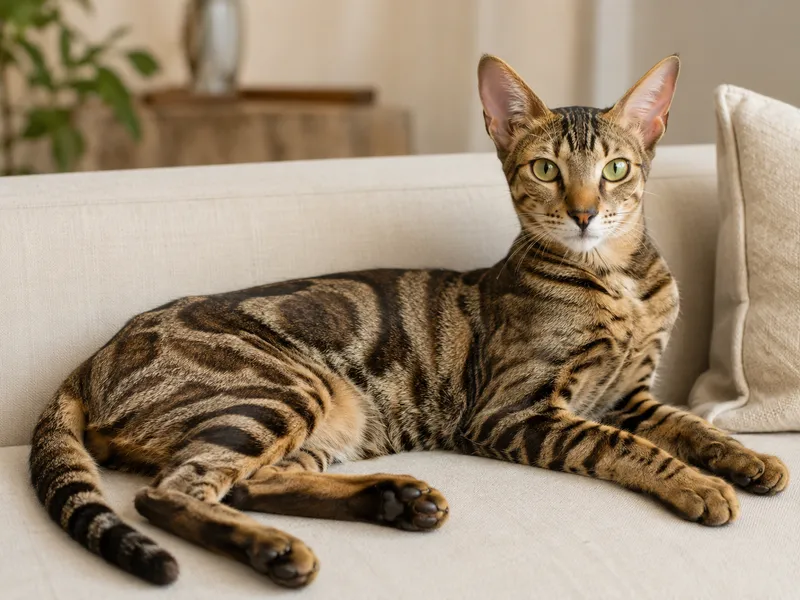
The Sokoke is a medium-sized, long and athletic cat with a slender but muscular body, a well-developed chest, long legs, and hind legs that are slightly longer than the forelegs. Its characteristic rear posture can create a tiptoe-like gait, particularly when the cat is alert or excited. The head is a modified wedge with prominent cheekbones, large upright ears, and expressive eyes ranging from amber to light green.
The very short, close-lying coat has little or no undercoat and feels glossy rather than silky. The best-known pattern is a modified brown classic tabby in which ticking appears both in the lighter ground color and inside the darker markings. This creates hollow-looking pattern centres and a camouflage effect often compared with tree bark.
The modern breed was developed from free-ranging domestic cats found around Watamu and the greater Arabuko-Sokoke area of coastal Kenya. Jeni Slater began the organised breeding programme in 1978, and Gloria Moeldrop brought foundation cats to Denmark in 1983. Genetic research supports the Sokoke as a domestic cat population related to cats from coastal Kenya rather than a domestic-wildcat hybrid.
Are Sokokes good family cats?
Sokokes can be affectionate, playful, and closely involved family companions. They generally live well with respectful children who understand gentle handling and can provide suitable interactive play.
Do Sokokes get along with other pets?
Well-socialized Sokokes often form strong relationships with compatible cats and cat-friendly dogs. Introductions should still be gradual because age, previous experience, and individual temperament affect every relationship.
Can a Sokoke live in an apartment?
A Sokoke can live successfully in an apartment when provided with substantial vertical space, stable climbing furniture, energetic daily play, puzzle activities, scratching areas, and regular companionship.
Can Sokokes be left alone during the day?
Most adults can manage ordinary short absences, but the breed is poorly suited to frequent prolonged isolation. Sokokes form deep social bonds and generally need a predictable routine, extensive enrichment, and dependable human or animal companionship.
How much grooming does a Sokoke need?
The very short coat normally needs only light weekly brushing or wiping with a soft cloth. Dental hygiene, nail trimming, ear checks, and body-condition monitoring usually require more attention than coat maintenance.
Is the Sokoke a wild-cat hybrid?
No. Although its athletic build and camouflage-like coat can create a wild appearance, genetic research supports the Sokoke as a domestic cat population associated with coastal Kenya rather than a domestic-wildcat hybrid.
What is the difference between a Sokoke, Bengal, and Ocicat?
The Sokoke is a natural Kenyan domestic breed with a distinctive ticked modified classic-tabby pattern. The Bengal was developed using Asian leopard cat ancestry, while the Ocicat was deliberately created entirely from established domestic breeds to produce a spotted appearance.
What health information should a Sokoke breeder provide?
A responsible breeder should discuss family longevity, known illnesses, causes of death, heart and kidney health, mobility, dental health, veterinary records, pedigree diversity, and any line-specific genetic or clinical screening used in the breeding programme.
- Tür
- Cat
Sokoke hakkında daha fazla
Pet profilleri ve genel hesaplar yakında açılacak. Şimdilik doğrulanmış ırk rehberlerini atlas’ta keşfedebilirsin.