Bu ırk rehberi şu an İngilizce sunuluyor. Bu dil için tam çeviri henüz hazır değil.
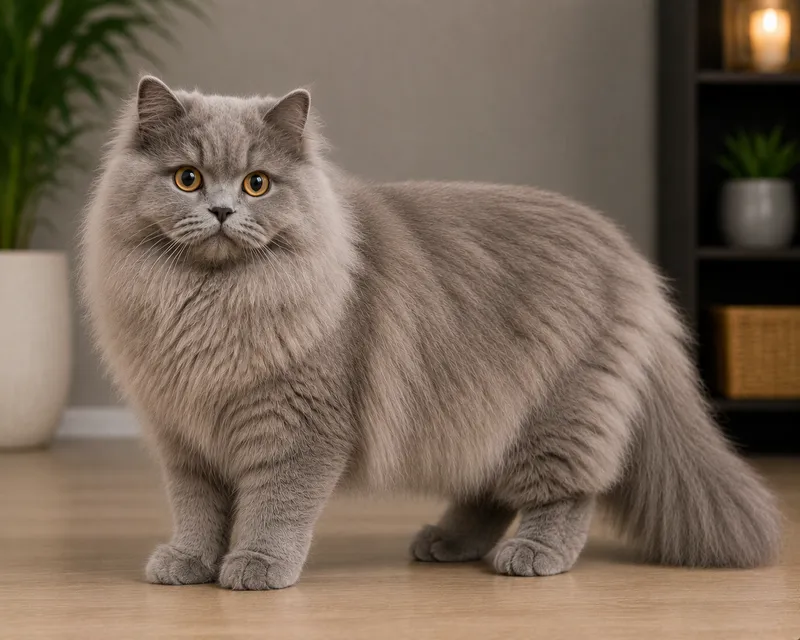
British Longhair
Large
3.2–7.7 kg
12–20 yıl
Tanıyan kuruluşlar
Bu ırkı listelerinde tutan bağımsız kayıt kuruluşları. Ayrıntı için rozete dokunun.
Bu statüler kuruluşların kayıt ve yarışma sistemlerindeki konumu gösterir; sağlık, kalite veya üstünlük puanı değildir.
Irk Özellikleri
Düşük enerji
Yüksek uyum
Yüksek bakım ihtiyacı
Orta eğitilebilirlik
Apartmana çok uygun
Tipik iş günü idare eder
Rehberlikle yönetilebilir
Genellikle diğer evcil hayvanlarla iyi anlaşır
The British Longhair is the semi-longhaired member of the British breed family. Its development is closely connected with the British Shorthair: Persian cats were used during periods of breed rebuilding in the twentieth century, introducing recessive longhair genes that could later produce longhaired kittens from apparently shorthaired parents. Dedicated breeding programmes eventually established the longhaired form as a consistent registry entry in its own right.
This is a medium-to-large, compact, and powerful cat with strong boning, a broad chest, short sturdy legs, rounded paws, and a thick tail with a rounded tip. The head is large and round, with full cheeks, a broad muzzle, widely spaced round eyes, and small-to-medium ears. Males are usually noticeably larger and develop more prominent jowls than females.
The coat is dense, straight, and semi-long, standing away from the body rather than flowing flat like a fine single coat. A full ruff, substantial britches, and a well-furnished tail contribute to the mature appearance. Blue is widely associated with the British family, but British Longhairs occur in many solid, tabby, tortoiseshell, silver, golden, bicolour, and colourpointed combinations, subject to registry-specific rules.
Are British Longhairs good family cats?
British Longhairs are generally calm, affectionate, and comfortable in predictable households. They often enjoy staying near their family without demanding constant handling, making them suitable for people who appreciate a quieter companion.
Are British Longhairs good with children?
Many well-socialized British Longhairs live successfully with respectful children. Children should support the cat's body properly, avoid carrying it against its wishes, and allow it to retreat to a quiet resting place.
Do British Longhairs get along with other pets?
They often adapt to compatible cats and calm, cat-friendly dogs after gradual introductions. Separate food, water, litter, resting, and hiding resources help prevent conflict, especially when another animal is more active or intrusive.
Can a British Longhair live in an apartment?
The breed is generally well suited to apartment living because of its moderate activity level and calm nature. The home should still provide daily play, sturdy scratching surfaces, comfortable observation points, and secure windows or balconies.
Can British Longhairs be left alone during the day?
Many adults can manage an ordinary workday absence when their routine and environment are stable. Frequent prolonged isolation is not ideal, and daily grooming, appetite, breathing, activity, and litter-box habits still require dependable observation.
How much grooming does a British Longhair need?
The dense semi-long coat usually needs combing several times a week, and daily grooming is often the safest routine for preventing mats. The ruff, belly, armpits, hindquarters, and tail require particular attention during seasonal shedding.
Is the British Longhair a separate breed or a longhaired British Shorthair?
The two forms belong to the same British breed family and share the same basic body type and temperament tendencies. TICA, FIFe, and GCCF recognise British Longhair as a showable registry entry, while CFA currently lists British Shorthair but not British Longhair as a recognised breed.
What health screening should a British Longhair breeder provide?
Documented PKD1 testing is appropriate for the breed, and cardiac screening by echocardiography is valuable because HCM is established in the closely related British Shorthair population. Family history, veterinary examination, and repeated age-appropriate assessment remain important because a DNA result does not guarantee overall health.
- Tür
- Cat
British Longhair hakkında daha fazla
Pet profilleri ve genel hesaplar yakında açılacak. Şimdilik doğrulanmış ırk rehberlerini atlas’ta keşfedebilirsin.