

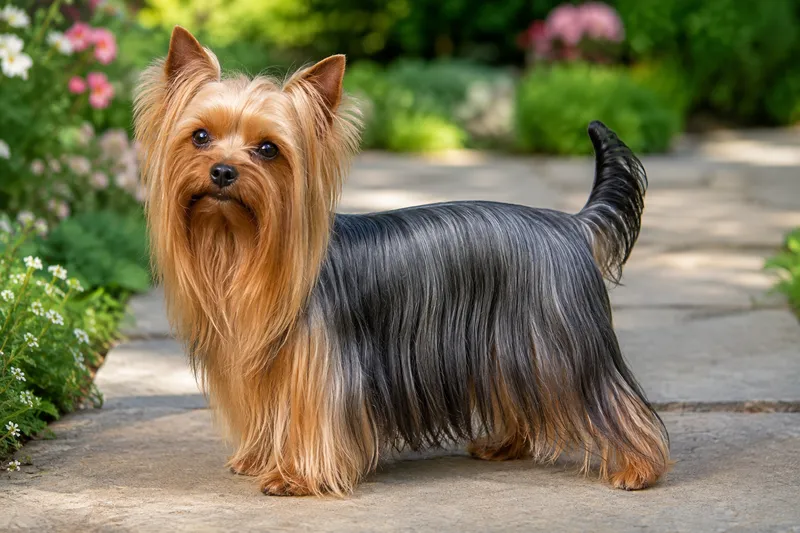
Yorkshire Terrier
The Yorkshire Terrier, often called the Yorkie, is a very small British breed developed in northern England during the 19th century. Its early history is linked to terriers used for vermin control in Yorkshire's mines…
Recognized by: AKC · ANKC · +5
Size
Small
Weight
1.8–3.2 kg
Life span
12–15 years
Breed Traits
Energy Level
Moderate energy
Energy Level: 3 of 5
Low energyHigh energyChild / Family Compatibility
Limited compatibility
Child / Family Compatibility: 2 of 5
Low compatibilityHigh compatibilityGrooming Need
Intensive grooming need
Grooming Need: 5 of 5
Low maintenanceHigh maintenanceTrainability
Moderately trainable
Trainability: 3 of 5
Hard to trainEasy to trainApartment / Home Suitability
Excellent apartment fit
Apartment / Home Suitability: 5 of 5
Needs space / yardExcellent for apartmentsAlone-Time Tolerance
Half-day is hard
Alone-Time Tolerance: 2 of 5
Needs frequent companyHandles long alone timeFirst-Time Owner Suitability
Manageable with guidance
First-Time Owner Suitability: 3 of 5
Needs experienced ownerGreat for first-time ownersCompatibility with Other Pets
Can adapt with proper socialization
Compatibility with Other Pets: 3 of 5
Single-pet homes are a better fitHighly compatible with other animals
The Yorkshire Terrier, often called the Yorkie, is a very small British breed developed in northern England during the 19th century. Its early history is linked to terriers used for vermin control in Yorkshire's mines and textile mills, although the exact mix of ancestral breeds is not fully documented. Over time, selective breeding produced the compact companion known today.
Despite its Toy Group classification and delicate appearance, the Yorkie retains a distinctly terrier-like outlook. The breed standard describes a compact, well-proportioned dog with an alert expression and a fine, straight, silky coat that matures to steel blue and rich tan. Adult weight is capped at about 3.2 kg (7 lb) in several major standards.
Yorkies fit readily into small homes, but their size should not be confused with low social or mental needs. They tend to form close attachments, notice changes around the home, and enjoy being involved in daily life. Terms such as "teacup" and "micro" do not identify officially recognized Yorkshire Terrier varieties and can encourage selection for extreme smallness rather than sound health.
A typical Yorkshire Terrier is lively, curious, confident, and affectionate with familiar people. Many behave as though they are much larger than they are, readily investigating new sounds and announcing visitors. Individual temperament varies, and thoughtful early socialization helps confidence develop without encouraging fearfulness or excessive reactivity.
The breed is intelligent and can learn quickly, but terrier independence may appear when an activity is repetitive or unrewarding. Short, upbeat sessions using food, play, and praise generally work better than force or harsh correction. Calm reinforcement of quiet behavior is especially useful because alert barking can become a habit.
Yorkies can live successfully with considerate older children and compatible pets, but their small bodies make rough handling risky. Interactions with young children should be closely supervised, and introductions to dogs and cats should be gradual. Their historical vermin-control role also means that some individuals may chase rodents or other very small animals.
A Yorkie needs regular movement and mental activity, though not the mileage expected of a large working breed. Short daily walks, indoor games, scent activities, and brief training sessions can meet most needs; exercise should be adjusted for age, weather, and physical condition. A secure harness and leash help protect this tiny dog around traffic, larger animals, and gaps in fencing.
The traditional long coat requires careful brushing and combing every day to prevent tangles, with particular attention behind the ears, under the legs, and around friction points. Many pet Yorkies wear a shorter clip that is easier to manage, but it still needs routine brushing, bathing, trimming, and professional grooming as appropriate. The fine coat sheds relatively little, yet no dog is guaranteed to be allergen-free.
Dental care is a major part of routine maintenance in this small breed. Regular toothbrushing, veterinary dental checks, nail trimming, ear checks, and a complete diet measured to maintain a lean body condition should begin early. Toilet training may take patience because a small bladder and bad-weather reluctance can complicate the schedule, so frequent opportunities and consistent reward-based routines are helpful.
Yorkshire Terriers are often long-lived, but responsible breeding and preventive care still matter. The Yorkshire Terrier Club of America recommends patellar evaluation and eye examination for breeding dogs, and it also identifies optional DNA tests for progressive retinal atrophy-prcd and primary lens luxation. Screening reduces risk; it does not guarantee that an individual dog will remain free of disease.
Conditions reported in the breed include luxating patellas, Legg-Calve-Perthes disease, congenital portosystemic shunts or related liver vascular abnormalities, and several eye disorders. Dental disease is also an important concern in such a small mouth. Owners should arrange routine veterinary examinations and promptly discuss signs such as persistent limping, vision changes, unusual neurologic behavior, poor growth, repeated digestive illness, or loss of appetite rather than trying to diagnose them at home.
Choose breeders who discuss health openly, provide verifiable results for the parents, avoid deliberately producing extremely undersized dogs, and prioritize stable temperament and sound structure. Daily dental care, appropriate parasite prevention, vaccination based on veterinary guidance, a healthy body condition, and protection from falls or rough handling support long-term wellbeing. This information is for general educational purposes and is not a substitute for diagnosis or treatment by a veterinarian.
Recognizing organizations
Independent registries that list this breed. Tap a badge to learn more.
These statuses reflect each registry’s recording and show systems. They are not a health, quality, or superiority score.
AKCFull recognitionhttps://www.akc.org/dog-breeds/yorkshire-terrier/ ANKCFull recognitionhttps://dogsaustralia.org.au/members/breeds/breed-standards/Yorkshire-Terrier CKCRecognized breedhttps://www.ckc.ca/fr/Choosing-a-Dog/Choix-d%E2%80%99une-race/Chiens-nains/Terrier-du-Yorkshire FCIDefinitive recognitionhttps://www.fci.be/en/nomenclature/YORKSHIRE-TERRIER-86.html NZKCRecognised breedhttps://www.dogsnz.org.nz/breeds/yorkshire-terrier RKCBreed Registerhttps://www.royalkennelclub.com/search/breeds-a-to-z/breeds/toy/yorkshire-terrier/ UKCFull recognitionhttps://www.ukcdogs.com/yorkshire-terrier
Frequently asked questions
Are Yorkshire Terriers good apartment dogs?
Yes, their tiny size and moderate exercise requirement suit apartment living well. They still need daily activity, enrichment, toilet breaks, and companionship. Early training is important because alert barking can otherwise disturb nearby neighbors.
How much exercise does a Yorkshire Terrier need?
Most healthy adult Yorkies do well with short daily walks plus play and training at home. The Royal Kennel Club suggests up to about 30 minutes of exercise per day as a general breed guide. Puppies, seniors, and dogs with medical conditions need an individualized routine from their veterinarian.
Are Yorkshire Terriers good with children?
Yorkies can bond warmly with gentle, dog-aware children, especially when both are taught respectful interaction. Their very small frame is vulnerable to falls, squeezing, and rough play, so they are often a better match for older children. An adult should actively supervise every interaction with young children.
Can a Yorkshire Terrier live with other pets?
Many Yorkies live peacefully with compatible dogs or cats when introductions are gradual and resources are managed. Size differences matter, because accidental injury can occur during rough play with a much larger dog. Some retain enough terrier prey drive to make close access to rodents or other tiny pets unsafe.
Do Yorkshire Terriers shed, and how much grooming do they need?
The fine, hair-like coat tends to shed relatively little, but low shedding does not make every Yorkie suitable for every person with allergies. A full-length coat needs daily brushing and careful detangling, while a short pet clip is easier but not maintenance-free. Regular baths, trims, nail care, and daily toothbrushing should be part of the routine.
Are Yorkshire Terriers easy to train?
Yorkies are bright and capable learners, but they may be independent and easily distracted. Short reward-based sessions, clear household rules, and early socialization usually produce the best results. Toilet training can require extra consistency, with frequent outdoor opportunities and calm reinforcement.
What health screening should a Yorkshire Terrier breeder perform?
The Yorkshire Terrier Club of America recommends patellar evaluation and ophthalmologist examination for breeding stock. It also encourages optional DNA testing for progressive retinal atrophy-prcd and primary lens luxation. Buyers should ask to see verifiable results for both parents and discuss the wider family health history with the breeder.
Is a teacup Yorkshire Terrier a separate breed or size?
No, "teacup," "micro," and similar labels are not recognized Yorkshire Terrier varieties under major breed standards. Deliberately selecting for extreme smallness can increase vulnerability to injury and health problems. Choose a dog for sound structure, health, and temperament rather than a marketing label.
More about Yorkshire Terrier
Pet profiles are coming soon. For now, keep exploring trusted breed knowledge in the Breed Guide.
Back to Breed Guide