

Turkish Van
The Turkish Van is a large, powerful cat with a long muscular body, broad chest, strong hind legs, a substantial head, and a full plumed tail. Its semi-long coat has a fine, cashmere-like texture with little evident…
Recognized by: CFA · FIFe · +2
Size
Large
Weight
3.2–9.1 kg
Life span
12–17 years
Breed Traits
Energy Level
Very energetic
Energy Level: 5 of 5
Low energyHigh energyChild / Family Compatibility
High compatibility
Child / Family Compatibility: 4 of 5
Low compatibilityHigh compatibilityGrooming Need
Light grooming need
Grooming Need: 2 of 5
Low maintenanceHigh maintenanceTrainability
Very easy to train
Trainability: 5 of 5
Hard to trainEasy to trainApartment / Home Suitability
Moderate — depends on setup
Apartment / Home Suitability: 3 of 5
Needs space / yardExcellent for apartmentsAlone-Time Tolerance
Half-day is hard
Alone-Time Tolerance: 2 of 5
Needs frequent companyHandles long alone timeFirst-Time Owner Suitability
Manageable with guidance
First-Time Owner Suitability: 3 of 5
Needs experienced ownerGreat for first-time ownersCompatibility with Other Pets
Generally gets along well with other pets
Compatibility with Other Pets: 4 of 5
Single-pet homes are a better fitHighly compatible with other animals
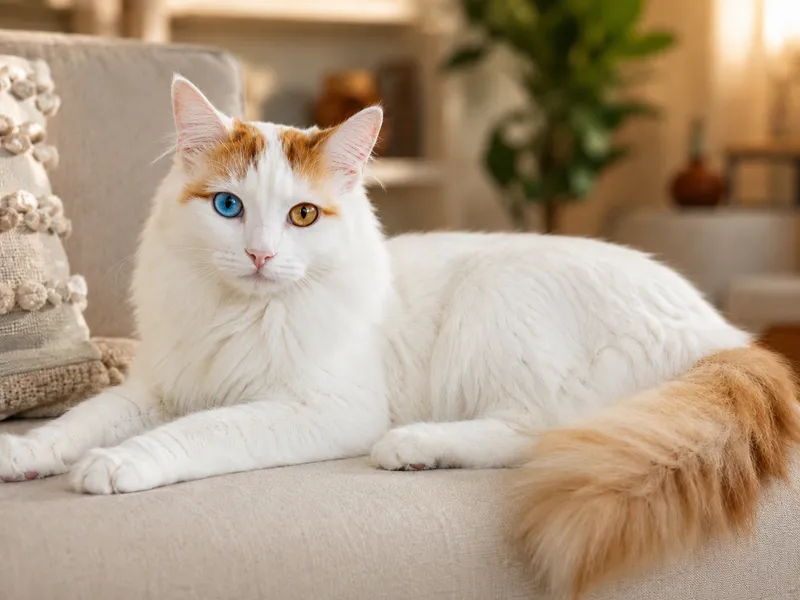
The Turkish Van is a large, powerful cat with a long muscular body, broad chest, strong hind legs, a substantial head, and a full plumed tail. Its semi-long coat has a fine, cashmere-like texture with little evident undercoat and changes noticeably between the lighter summer coat and the fuller winter coat.
The traditional coat is predominantly white, with color concentrated mainly on the head and tail in the pattern now widely known as the Van pattern. Amber, blue, and odd-colored eyes may occur, while the accepted coat colors and the treatment of solid-white cats vary between registries.
The modern pedigree breed was established from cats obtained in Turkey during the mid-twentieth century, particularly from areas associated with eastern Anatolia and Lake Van. Turkish Vans mature slowly and may take three to five years to develop their full size, muscularity, and adult coat.
Turkish Vans are generally intelligent, active, curious, and strongly attached to familiar people. Many follow their owners around the home and enjoy staying nearby, but they often prefer sitting beside someone to being carried or restrained for long periods.
They are powerful jumpers and enthusiastic problem-solvers that commonly enjoy retrieving toys, climbing, running, puzzle feeders, and interactive games. Many show an unusual interest in taps, bowls, or moving water, although an interest in water varies between individuals and swimming should never be forced.
Well-socialized Turkish Vans can live successfully with respectful older children, compatible cats, and cat-friendly dogs. They can be confident or assertive around other animals, so gradual introductions and access to separate food, litter, and resting resources remain important.
The silky coat is relatively resistant to tangling and generally benefits from thorough weekly combing. Grooming may need to increase during seasonal coat changes, especially when the heavier winter coat is being shed and loose hair collects around the chest, hindquarters, and tail.
Daily life should include tall and stable climbing furniture, vigorous interactive play, scratching surfaces, puzzle activities, and enough secure space for running and jumping. Because Turkish Vans are large and athletic, shelves, cat trees, and wall-mounted platforms should be strong enough to support an adult safely.
Cats that enjoy water should be supervised around baths, pools, open toilets, and deep containers, and they should always have an easy exit route. Routine care should also include dental hygiene, nail trimming, ear checks, body-condition monitoring, and regular veterinary examinations.
Turkish Vans are generally regarded as a robust natural breed, and no single breed-specific inherited disorder has been consistently established as defining the population. This does not mean that every cat or family line is free from inherited or acquired illness, and general commercial DNA panels cannot guarantee lifelong health.
The classic Van-patterned coat should not be confused with an entirely white coat. In solid-white Turkish Vankedisi cats, particularly those with one or two blue eyes, pigment-associated congenital deafness may be a relevant consideration; a brainstem auditory evoked response, or BAER, test can assess hearing in each ear.
Prospective owners should ask about family longevity, known illnesses, hearing information where relevant, veterinary records, and causes of death in related cats. Maintaining a healthy body condition is also important because the large frame and seasonal coat can make gradual weight gain difficult to notice. This information is for general educational purposes and is not a substitute for diagnosis or treatment by a veterinarian.
Recognizing organizations
Independent registries that list this breed. Tap a badge to learn more.
These statuses reflect each registry’s recording and show systems. They are not a health, quality, or superiority score.
Frequently asked questions
Are Turkish Vans good family cats?
Turkish Vans are often affectionate, playful, and highly involved family companions. They generally suit respectful older children who understand that many individuals dislike being carried or tightly restrained.
Do Turkish Vans get along with other pets?
Well-socialized Turkish Vans often live successfully with compatible cats and cat-friendly dogs. Some individuals can be confident or controlling, so introductions should be gradual and each animal should have access to separate essential resources.
Can a Turkish Van live in an apartment?
A Turkish Van can live in an apartment when the home provides substantial climbing space, vigorous daily play, scratching areas, and mental stimulation. A small or poorly enriched environment may not suit this large and athletic breed.
Can Turkish Vans be left alone during the day?
Many adults can manage ordinary short absences when they have a predictable routine and sufficient enrichment. They form strong social bonds and are not well suited to frequent prolonged isolation.
How much grooming does a Turkish Van need?
The silky coat generally needs thorough combing about once a week and is less prone to matting than many dense long coats. More frequent grooming may be needed during seasonal shedding.
Do all Turkish Vans like swimming?
No. Many Turkish Vans show curiosity about taps, bowls, or moving water, but interest in entering water varies between individuals. Swimming should never be forced, and any access to deep water should be supervised.
What is the difference between a Turkish Van, Turkish Vankedisi, and Turkish Angora?
The Turkish Van and Turkish Angora are separate pedigree breeds with different standards, body types, and histories. Turkish Vankedisi generally refers to an all-white cat of the Van type and may be treated as a variety or related population depending on the registry.
What health information should a Turkish Van breeder provide?
A responsible breeder should discuss family longevity, known illnesses, veterinary records, and causes of death in related cats. Hearing information or BAER results are particularly relevant when an all-white Turkish Vankedisi is involved.
More about Turkish Van
Pet profiles are coming soon. For now, keep exploring trusted breed knowledge in the Breed Guide.
Back to Breed Guide