

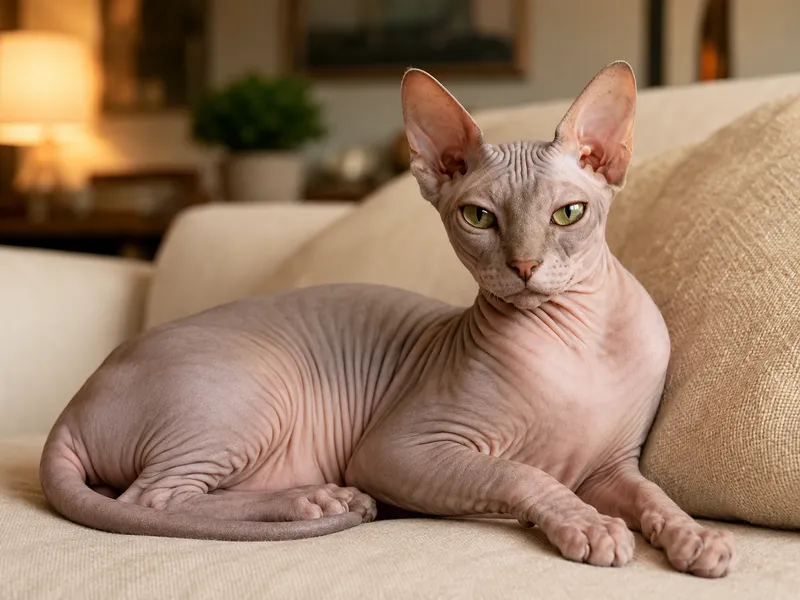
Sphynx
The Sphynx is a medium-sized, muscular cat with a broad chest, rounded abdomen, prominent cheekbones, very large ears, and expressive lemon-shaped eyes. Although it appears hairless, most individuals carry a fine layer…
Recognized by: CFA · FIFe · +2
Size
Medium
Weight
2.7–5.4 kg
Life span
7–15 years
Breed Traits
Energy Level
High energy
Energy Level: 4 of 5
Low energyHigh energyChild / Family Compatibility
Very high compatibility
Child / Family Compatibility: 5 of 5
Low compatibilityHigh compatibilityGrooming Need
High grooming need
Grooming Need: 4 of 5
Low maintenanceHigh maintenanceTrainability
Easy to train
Trainability: 4 of 5
Hard to trainEasy to trainApartment / Home Suitability
Excellent apartment fit
Apartment / Home Suitability: 5 of 5
Needs space / yardExcellent for apartmentsAlone-Time Tolerance
Very short alone time (a few hours)
Alone-Time Tolerance: 1 of 5
Needs frequent companyHandles long alone timeFirst-Time Owner Suitability
Challenging for beginners
First-Time Owner Suitability: 2 of 5
Needs experienced ownerGreat for first-time ownersCompatibility with Other Pets
Shows very high compatibility
Compatibility with Other Pets: 5 of 5
Single-pet homes are a better fitHighly compatible with other animals
The Sphynx is a medium-sized, muscular cat with a broad chest, rounded abdomen, prominent cheekbones, very large ears, and expressive lemon-shaped eyes. Although it appears hairless, most individuals carry a fine layer of down that gives the skin a warm, suede-like texture, and small amounts of hair may occur on the nose, ears, feet, or tail.
The modern breed developed from naturally occurring hairless kittens found in North America during the 1960s and 1970s. Early breeding programs used carefully selected coated cats and breeds such as the Devon Rex to establish a broader gene pool and preserve the recessive hairless trait.
Colors and patterns remain visible through skin pigmentation and any fine hair that is present. The breed's unusual appearance is paired with an athletic body, high social engagement, and care requirements that differ substantially from those of conventionally coated cats.
Sphynx cats are typically outgoing, affectionate, playful, and intensely people-oriented. Many follow their owners throughout the home, greet visitors confidently, seek physical contact, and prefer to participate in everyday household activity.
They often enjoy climbing, retrieving toys, investigating cupboards, using puzzle feeders, and learning through short reward-based training sessions. Their dexterous paws and persistent curiosity can make them skilled at opening doors or reaching objects that less determined cats might ignore.
Well-socialized Sphynx cats can live successfully with respectful children, compatible cats, and cat-friendly dogs. Their strong need for companionship means they are poorly suited to homes where they would routinely spend long periods alone without meaningful interaction.
The Sphynx does not need conventional coat brushing, but it is not maintenance-free. Natural skin oils are not absorbed by a full coat and may collect on the body, ears, toes, and nail beds, so gentle wiping or bathing should be adjusted to the individual cat rather than imposed on a rigid schedule.
Exposed skin should be protected from strong sunlight, cold drafts, and unsafe hot surfaces. Warm bedding, a comfortable indoor temperature, and supervised outdoor access in suitable weather help reduce the risk of sunburn, chilling, injury, and other environmental problems.
Daily care should also include interactive play, stable climbing furniture, dental hygiene, nail trimming, ear checks, body-condition monitoring, and regular veterinary examinations. Food portions should reflect the individual cat's age, activity, health, and body condition rather than relying on the assumption that every Sphynx needs unrestricted calories.
Hypertrophic cardiomyopathy is an important health concern in the Sphynx. There is no validated Sphynx-specific DNA test that can rule out HCM, so responsible breeding programs may use repeated echocardiographic examinations performed by appropriately qualified veterinary professionals together with a documented family cardiac history.
Congenital myasthenic syndrome is a rare inherited neuromuscular condition documented in Sphynx and Devon Rex cats. A DNA test is available for the associated recessive COLQ variant, allowing breeders to identify clear cats, carriers, and cats genetically at risk.
The exposed skin may also be vulnerable to oil accumulation, irritation, sunburn, and temperature-related discomfort. Prospective owners should ask about cardiac screening, CMS results, family longevity, skin health, and veterinary records. This information is for general educational purposes and is not a substitute for diagnosis or treatment by a veterinarian.
Recognizing organizations
Independent registries that list this breed. Tap a badge to learn more.
These statuses reflect each registry’s recording and show systems. They are not a health, quality, or superiority score.
Frequently asked questions
Are Sphynx cats completely hairless?
Most Sphynx cats are not completely hairless. Their skin commonly carries a very fine layer of down, and small amounts of hair may appear on the nose, ears, feet, or tail.
Are Sphynx cats hypoallergenic?
No cat breed is guaranteed to be hypoallergenic because feline allergens are produced in saliva, skin glands, and other tissues rather than in fur alone. People with allergies should spend time with individual cats and seek medical guidance before making a long-term commitment.
How often should a Sphynx be bathed?
There is no single bathing schedule that suits every Sphynx. Some need regular bathing or gentle wiping because of oil accumulation, while excessive washing may dry or irritate the skin, so care should reflect the individual cat's condition.
Do Sphynx cats get cold easily?
They can lose body heat more readily than conventionally coated cats and often seek blankets, warm beds, or human contact. The home should remain comfortably heated, and the cat should have safe places to warm itself without direct exposure to dangerous heaters or hot surfaces.
Can a Sphynx cat go outside?
Unrestricted outdoor access carries added risks because the exposed skin is vulnerable to strong sunlight, cold, injury, and temperature extremes. Outdoor experiences should be closely supervised and limited according to the weather and the individual cat's comfort.
Can a Sphynx live in an apartment?
Sphynx cats can adapt very well to apartment life when they receive daily play, climbing opportunities, a comfortable temperature, and frequent companionship. Their activity and curiosity mean the home should still provide enough enrichment and secure exploration areas.
Can Sphynx cats be left alone during the day?
Most adults can manage ordinary short absences, but they are highly social and may struggle with frequent or prolonged isolation. A predictable routine, enrichment, warm resting areas, and dependable interaction before and after absences are important.
What health screening should a Sphynx breeder discuss?
A responsible breeder should discuss repeated echocardiographic screening for hypertrophic cardiomyopathy and provide documented DNA results for congenital myasthenic syndrome. Buyers should also ask about family cardiac history, longevity, skin health, and veterinary records for breeding cats.
More about Sphynx
Pet profiles are coming soon. For now, keep exploring trusted breed knowledge in the Breed Guide.
Back to Breed Guide