

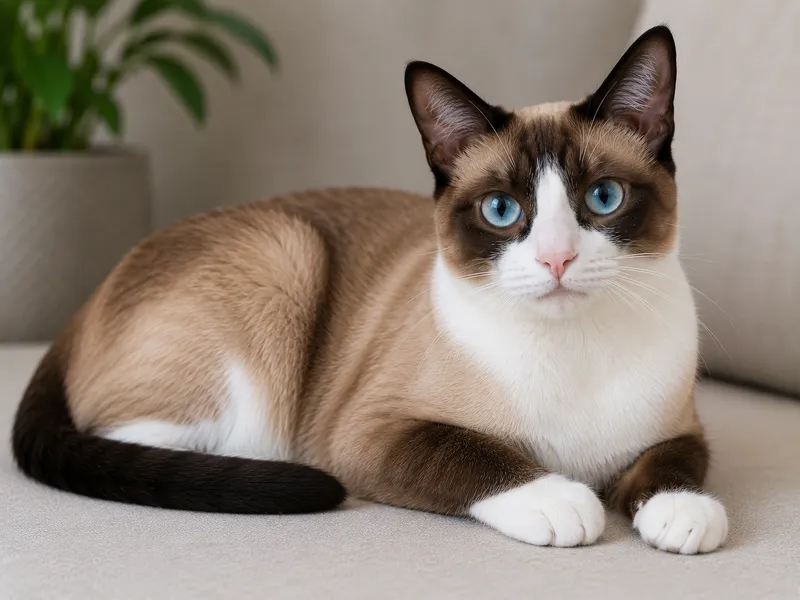
Snowshoe
The Snowshoe is a medium-sized, balanced and muscular cat with a moderately long rectangular body, a broad modified wedge-shaped head, medium-large ears, and oval blue eyes. It should look athletic and powerful without…
Recognized by: FIFe · GCCF · +1
Size
Medium
Weight
3.2–5.4 kg
Life span
14–20 years
Breed Traits
Energy Level
High energy
Energy Level: 4 of 5
Low energyHigh energyChild / Family Compatibility
Very high compatibility
Child / Family Compatibility: 5 of 5
Low compatibilityHigh compatibilityGrooming Need
Low grooming need
Grooming Need: 1 of 5
Low maintenanceHigh maintenanceTrainability
Very easy to train
Trainability: 5 of 5
Hard to trainEasy to trainApartment / Home Suitability
Fits apartments well
Apartment / Home Suitability: 4 of 5
Needs space / yardExcellent for apartmentsAlone-Time Tolerance
Very short alone time (a few hours)
Alone-Time Tolerance: 1 of 5
Needs frequent companyHandles long alone timeFirst-Time Owner Suitability
Suitable for many first-timers
First-Time Owner Suitability: 4 of 5
Needs experienced ownerGreat for first-time ownersCompatibility with Other Pets
Shows very high compatibility
Compatibility with Other Pets: 5 of 5
Single-pet homes are a better fitHighly compatible with other animals
The Snowshoe is a medium-sized, balanced and muscular cat with a moderately long rectangular body, a broad modified wedge-shaped head, medium-large ears, and oval blue eyes. It should look athletic and powerful without appearing bulky or extremely slender.
Its short, smooth coat combines the temperature-sensitive colorpoint pattern with clearly visible white markings. The white feet inspired the breed's name, while many cats also display an inverted white V on the face. Snowshoe kittens are born almost completely white; their point color and contrast develop gradually during the first weeks and may continue darkening as they mature.
The modern breed began in Philadelphia during the early 1960s after Siamese breeder Dorothy Hinds-Daugherty found three white-footed kittens in a Siamese litter. Her breeding work used pointed Siamese and bicolour shorthaired cats to establish the combination of blue eyes, colored points, white feet, and a moderate athletic body. Because white spotting is difficult to predict, every Snowshoe has an individual pattern and show-quality symmetry is uncommon.
Snowshoes are generally affectionate, intelligent, playful, and strongly interested in household life. Many form a particularly close bond with one person while remaining friendly with other family members, and they often prefer staying near their people rather than resting alone in another part of the home.
They are active and quick learners that commonly enjoy retrieving toys, climbing, puzzle feeders, clicker training, harness walking, and interactive games. Some are confident and outgoing, while others may initially be cautious with unfamiliar visitors. Their voices are usually softer and more melodic than the louder voices associated with some Siamese lines.
Well-socialized Snowshoes often live successfully with respectful children, compatible cats, and cat-friendly dogs. Their social temperament makes them poorly suited to frequent prolonged isolation, although personality varies and some individuals prefer more personal space than others.
The short, close-lying coat requires little maintenance and normally needs only gentle weekly brushing or wiping with a soft grooming cloth. The coat has little heavy undercoat, so matting is uncommon and routine bathing is generally unnecessary.
Daily life should include interactive play, secure climbing furniture, scratching surfaces, puzzle activities, and regular social contact. Snowshoes can adapt well to apartment living when their exercise and mental-stimulation needs are met, but they should not be expected to remain inactive for long periods.
Routine care should include dental hygiene, nail trimming, ear checks, body-condition monitoring, and regular veterinary examinations. Feeding should be adjusted to the individual cat's age and activity because a firm muscular build can make gradual excess weight less obvious.
The Snowshoe is generally considered a relatively healthy breed, and no single inherited disorder is established as a defining condition across the entire population. Health can still vary between family lines, so pedigree records, veterinary history, and careful breeding selection remain important.
Polycystic kidney disease has been reported in the breed, and veterinary genetic guidance currently places Snowshoes in a low-prevalence risk group for the common PKD1 variant. When PKD is relevant to a line, breeders may use an appropriate DNA test and, where advised by a veterinarian, kidney imaging. A negative result for one known variant does not exclude every possible kidney disorder.
Prospective owners should ask about family kidney health, longevity, dental disease, heart health, known illnesses, causes of death, and any genetic or veterinary screening used in the breeding programme. No commercial panel can guarantee lifelong health. This information is for general educational purposes and is not a substitute for diagnosis or treatment by a veterinarian.
Recognizing organizations
Independent registries that list this breed. Tap a badge to learn more.
These statuses reflect each registry’s recording and show systems. They are not a health, quality, or superiority score.
Frequently asked questions
Are Snowshoe cats good family pets?
Snowshoes are often affectionate, playful, and involved family companions. They commonly live well with respectful children who understand gentle handling and provide regular interactive play.
Do Snowshoe cats get along with other pets?
Well-socialized Snowshoes generally have a high potential to live successfully with compatible cats and cat-friendly dogs. Introductions should still be gradual because age, confidence, and previous experience affect every relationship.
Can a Snowshoe live in an apartment?
A Snowshoe can adapt well to apartment living when provided with climbing space, daily interactive play, scratching areas, puzzle activities, and dependable companionship. Enrichment is more important than the physical size of the home.
Can Snowshoe cats be left alone during the day?
Most adults can manage ordinary short absences, but the breed is poorly suited to frequent prolonged isolation. A predictable routine, substantial enrichment, and a compatible human or animal companion can help meet its social needs.
How much grooming does a Snowshoe need?
The short coat normally needs only gentle weekly brushing or wiping with a soft cloth. Dental care, nail trimming, ear checks, and body-condition monitoring usually require more attention than coat maintenance.
Are Snowshoe kittens born with their markings?
Snowshoe kittens are born almost completely white. Their darker point color begins developing during the first weeks of life, and the contrast between the points, white markings, and body can continue changing as the cat matures.
How is a Snowshoe different from a Siamese, Birman, or Ragdoll?
The Snowshoe is a separate shorthaired breed with an athletic moderate body, blue eyes, pointed coloring, and required white feet. The Siamese normally lacks the Snowshoe's white pattern, while the Birman and Ragdoll are semi-longhaired breeds with different body and pattern standards.
What health testing should a Snowshoe breeder discuss?
A responsible breeder should discuss family kidney health and whether PKD1 testing or veterinary kidney screening is relevant to the line. Buyers should also ask about longevity, dental and heart health, known illnesses, and causes of death in related cats.
More about Snowshoe
Pet profiles are coming soon. For now, keep exploring trusted breed knowledge in the Breed Guide.
Back to Breed Guide