

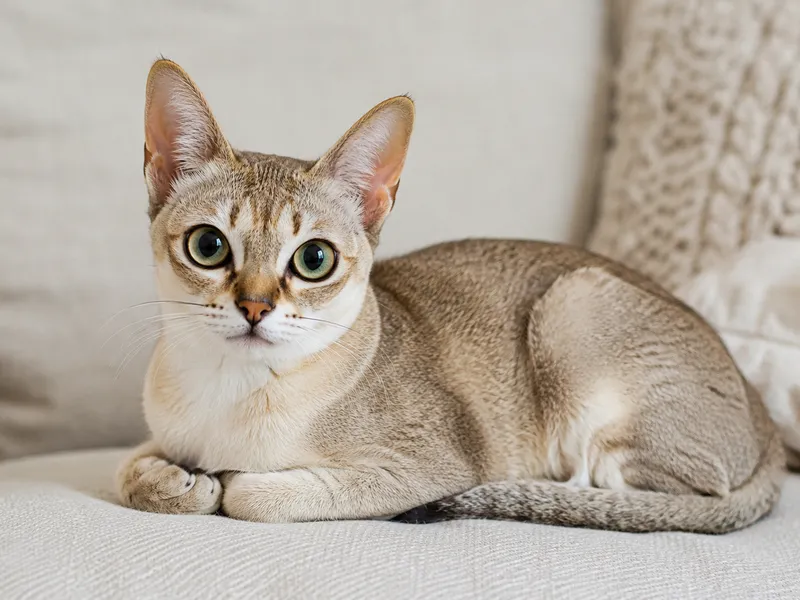
Singapura
The Singapura is a small but firmly muscular cat with a compact body, medium bone, a rounded head, a broad short muzzle, and noticeably large ears and eyes. Its delicate appearance can be misleading, as the breed is…
Recognized by: CFA · FIFe · +2
Size
Small
Weight
1.8–3.6 kg
Life span
11–18 years
Breed Traits
Energy Level
Very energetic
Energy Level: 5 of 5
Low energyHigh energyChild / Family Compatibility
Very high compatibility
Child / Family Compatibility: 5 of 5
Low compatibilityHigh compatibilityGrooming Need
Low grooming need
Grooming Need: 1 of 5
Low maintenanceHigh maintenanceTrainability
Very easy to train
Trainability: 5 of 5
Hard to trainEasy to trainApartment / Home Suitability
Excellent apartment fit
Apartment / Home Suitability: 5 of 5
Needs space / yardExcellent for apartmentsAlone-Time Tolerance
Very short alone time (a few hours)
Alone-Time Tolerance: 1 of 5
Needs frequent companyHandles long alone timeFirst-Time Owner Suitability
Suitable for many first-timers
First-Time Owner Suitability: 4 of 5
Needs experienced ownerGreat for first-time ownersCompatibility with Other Pets
Shows very high compatibility
Compatibility with Other Pets: 5 of 5
Single-pet homes are a better fitHighly compatible with other animals
The Singapura is a small but firmly muscular cat with a compact body, medium bone, a rounded head, a broad short muzzle, and noticeably large ears and eyes. Its delicate appearance can be misleading, as the breed is athletic, strong, and surprisingly substantial for its size.
The short, fine coat occurs in one recognised colour pattern, commonly called sepia agouti or sable ticked tabby depending on the registry. Each hair carries alternating light and dark bands, creating warm brown ticking over an old-ivory ground colour. Dark facial lines, brown paw pads, and green, hazel, or yellow-gold eyes complete the characteristic appearance.
The modern pedigree breed was developed in the United States from a small foundation of cats associated with Singapore, although details of its early foundation history have been debated. Additional cats were later imported from Singapore, and programmes introducing carefully documented new foundation cats have been used to improve genetic diversity. The name Singapura is derived from the Malay name for Singapore, where the breed has also been promoted as Kucinta, meaning love cat.
Singapuras are generally affectionate, curious, intelligent, playful, and intensely interested in household activity. Many follow familiar people between rooms, investigate whatever they are doing, and prefer resting on a lap or shoulder rather than remaining alone in another part of the home.
They are highly active climbers and quick learners that commonly enjoy retrieving toys, puzzle feeders, clicker training, interactive games, and exploring elevated spaces. Their small body should not be mistaken for a low activity level, as many remain energetic and kitten-like well into adulthood.
Well-socialized Singapuras usually live successfully with respectful children, compatible cats, and cat-friendly dogs. They form strong social attachments and are poorly suited to frequent prolonged isolation, with many individuals benefiting from another compatible feline companion.
The short, close-lying coat requires very little maintenance. Gentle weekly brushing or wiping with a soft grooming cloth is normally sufficient to remove loose hair and maintain the coat's natural sheen. Routine bathing is generally unnecessary.
Daily life should include stable climbing furniture, elevated observation points, scratching surfaces, puzzle activities, and energetic interactive play. Singapuras adapt very well to apartment living when the home provides enough vertical space, stimulation, exercise, and dependable companionship.
Routine care should include dental hygiene, nail trimming, ear checks, body-condition monitoring, and regular veterinary examinations. Their naturally small frame should not be confused with underweight condition, so feeding decisions should be based on muscle coverage, body condition, age, and activity rather than size alone.
Erythrocyte pyruvate kinase deficiency is an autosomal recessive inherited condition documented in Singapuras. It can cause intermittent haemolytic anaemia, with possible signs including lethargy, weakness, weight loss, jaundice, reduced appetite, or abdominal enlargement. A DNA test can identify genetically clear, carrier, and affected cats.
Progressive retinal atrophy rdAc is another autosomal recessive condition relevant to the breed. Cats with two copies of the associated CEP290 variant begin life with normal vision, but retinal degeneration may later progress to severe visual impairment or blindness. The Burmese hypokalaemia variant is also considered appropriate for testing in Singapuras and can cause episodes of low potassium and skeletal muscle weakness in genetically affected cats.
The breed developed from a relatively small foundation population, making genetic diversity and detailed family records particularly important. Cardiomyopathy has also been reported in some family lines, but there is no Singapura-specific DNA test that excludes every form of heart disease. Prospective owners should request documented PK deficiency and PRA results, ask whether hypokalaemia testing is relevant, and discuss heart screening, longevity, known illnesses, and causes of death. This information is for general educational purposes and is not a substitute for diagnosis or treatment by a veterinarian.
Recognizing organizations
Independent registries that list this breed. Tap a badge to learn more.
These statuses reflect each registry’s recording and show systems. They are not a health, quality, or superiority score.
Frequently asked questions
Are Singapuras good family cats?
Singapuras are often affectionate, playful, and highly involved family companions. They commonly live well with respectful children who understand gentle handling and enjoy frequent interactive play.
Do Singapuras get along with other pets?
Well-socialized Singapuras generally have a high potential to live successfully with compatible cats and cat-friendly dogs. Many individuals actively benefit from having another social and playful feline companion.
Can a Singapura live in an apartment?
A Singapura can adapt extremely well to apartment living when provided with climbing furniture, elevated resting places, daily interactive play, scratching areas, puzzle activities, and dependable companionship.
Can Singapuras be left alone during the day?
Most adults can manage ordinary short absences, but the breed is poorly suited to frequent prolonged isolation. A predictable routine, extensive enrichment, and a compatible human or animal companion can help meet its strong social needs.
How much grooming does a Singapura need?
The short, fine coat normally needs only gentle weekly brushing or wiping with a soft cloth. Dental hygiene, nail trimming, ear checks, and body-condition monitoring usually require more attention than coat maintenance.
Is the Singapura the smallest cat breed?
The Singapura is widely regarded as one of the smallest established pedigree cat breeds. Adult females may weigh around 1.8 to 2.7 kilograms, while males are usually larger and can approach approximately 3.6 kilograms.
What colours can a Singapura be?
Major registries recognise the breed in a single warm ticked colour pattern, generally called sepia agouti or sable ticked tabby. Cats with other colours or unticked solid coats are not shown as Singapuras under the principal breed standards.
What health testing should a Singapura breeder discuss?
A responsible breeder should provide documented pyruvate kinase deficiency and PRA rdAc results and explain whether Burmese hypokalaemia testing is included. Buyers should also ask about heart screening, family longevity, genetic diversity, known illnesses, and causes of death.
More about Singapura
Pet profiles are coming soon. For now, keep exploring trusted breed knowledge in the Breed Guide.
Back to Breed Guide