

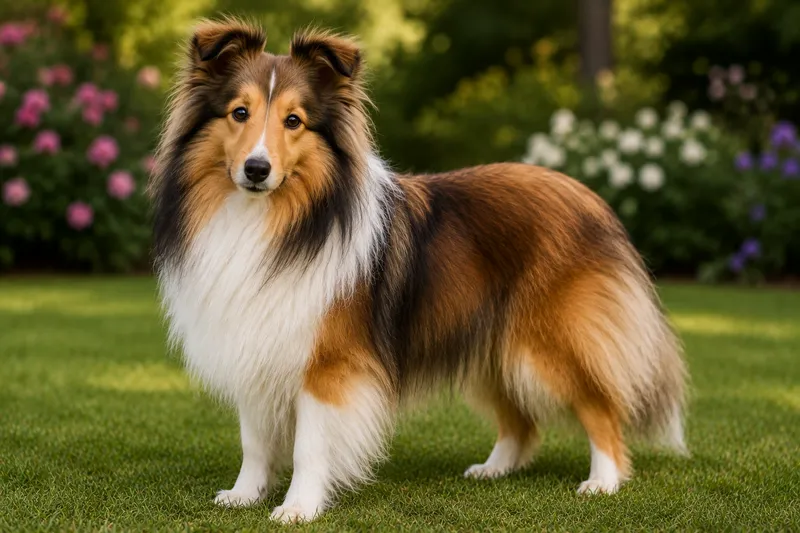
Shetland Sheepdog
The Shetland Sheepdog, commonly called the Sheltie, is a small, agile herding dog developed in Scotland's Shetland Islands. Its balanced outline, long double coat, refined wedge-shaped head, and alert expression reflect…
Recognized by: AKC · ANKC · +5
Size
Small
Weight
6.8–11.3 kg
Life span
12–14 years
Breed Traits
Energy Level
High energy
Energy Level: 4 of 5
Low energyHigh energyChild / Family Compatibility
High compatibility
Child / Family Compatibility: 4 of 5
Low compatibilityHigh compatibilityGrooming Need
High grooming need
Grooming Need: 4 of 5
Low maintenanceHigh maintenanceTrainability
Very easy to train
Trainability: 5 of 5
Hard to trainEasy to trainApartment / Home Suitability
Fits apartments well
Apartment / Home Suitability: 4 of 5
Needs space / yardExcellent for apartmentsAlone-Time Tolerance
Half-day is hard
Alone-Time Tolerance: 2 of 5
Needs frequent companyHandles long alone timeFirst-Time Owner Suitability
Suitable for many first-timers
First-Time Owner Suitability: 4 of 5
Needs experienced ownerGreat for first-time ownersCompatibility with Other Pets
Generally gets along well with other pets
Compatibility with Other Pets: 4 of 5
Single-pet homes are a better fitHighly compatible with other animals
The Shetland Sheepdog, commonly called the Sheltie, is a small, agile herding dog developed in Scotland's Shetland Islands. Its balanced outline, long double coat, refined wedge-shaped head, and alert expression reflect a working breed adapted to a demanding island environment.
The natural ears are small and semi-erect, with the tips folding forward when the dog is alert. The long, well-feathered natural tail is carried low or slightly raised in motion, while established coat colors include sable, tricolor, blue merle, black and white, and black and tan under major standards.
Although the Sheltie resembles the Rough Collie and shares historical connections with Collie-type dogs, it is a distinct breed rather than a miniature variety of the Collie. Sound movement, stable temperament, functional proportions, and genetic health should take priority over extreme coat, head, or size characteristics.
Shetland Sheepdogs are commonly affectionate, responsive, sensitive, and strongly attached to their households. They are often reserved with unfamiliar people and quick to notice changes in their environment, but appropriate reserve should not become persistent fearfulness or nervousness.
The breed is exceptionally capable of learning and often excels in obedience, agility, herding, and other dog sports. Reward-based training should begin early and include recall, calm greetings, settling, handling, and control around movement because herding instincts can encourage chasing, circling, or nipping at heels.
Many Shelties live successfully with considerate children and compatible pets. Their sensitivity means rough handling and chaotic environments may be difficult for some individuals, while their alert nature and readiness to vocalize require patient training rather than punishment.
A Shetland Sheepdog needs daily physical activity together with meaningful mental work. Walks, play, training, scent games, herding activities, and agility-style exercises can meet these needs, while secure fencing and reliable leash skills help manage the breed's tendency to chase moving animals, bicycles, or vehicles.
The abundant double coat sheds throughout the year and more heavily during seasonal coat changes. Brush thoroughly several times each week, working through the undercoat and areas behind the ears, under the legs, and around the feathering where mats can form; more frequent grooming is useful during heavy shedding.
Routine care also includes nail trimming, dental care, ear and skin checks, and monitoring body condition beneath the coat. Shelties thrive on regular family contact and structured activity, and prolonged isolation without exercise or engagement can contribute to excessive barking, anxiety, or destructive behavior.
Important health concerns in Shetland Sheepdogs include hip dysplasia and inherited eye disorders such as Collie eye anomaly and progressive retinal atrophy. Autoimmune thyroid disease, epilepsy, dermatomyositis, von Willebrand disease, and sensitivity associated with the MDR1 gene can also occur.
Current official screening programs prioritize hip evaluation and specialist eye examination. Depending on the country and family line, relevant DNA testing can include CEA/CH, MDR1, vWD3-2, BBS2-PRA, CNGA1-PRA, and dermatomyositis-associated variants, with elbow and thyroid evaluations providing additional information in some programs.
Merle-to-merle breeding increases the risk of serious hearing and vision impairment and should be avoided. Owners should tell their veterinarian about any known MDR1 result before medication decisions, and breeders should provide independently verifiable health records rather than treating a DNA panel or registration number as a guarantee of lifelong health.
This information is for general educational purposes and is not a substitute for diagnosis or treatment by a veterinarian.
Recognizing organizations
Independent registries that list this breed. Tap a badge to learn more.
These statuses reflect each registry’s recording and show systems. They are not a health, quality, or superiority score.
AKCFull recognitionhttps://www.akc.org/dog-breeds/shetland-sheepdog/ ANKCFull recognitionhttps://www.dogsaustralia.org.au/members/breeds/breed-standards/Shetland-Sheepdog CKCRecognized breedhttps://www.ckc.ca/en/Choosing-a-Dog/Choosing-a-Breed/Herding-Dogs/Shetland-Sheepdog FCIDefinitive recognitionhttps://www.fci.be/en/nomenclature/SHETLAND-SHEEPDOG-88.html NZKCRecognised breedhttps://www.dogsnz.org.nz/breeds/info/shetland-sheepdog/540 RKCBreed Registerhttps://www.royalkennelclub.com/search/breeds-a-to-z/breeds/pastoral/shetland-sheepdog/ UKCFull recognitionhttps://www.ukcdogs.com/conformation-breed-standards/shetland-sheepdog
Frequently asked questions
Can a Shetland Sheepdog live in an apartment?
A Sheltie can adapt to apartment living when daily exercise, mental enrichment, and close companionship are provided. Its smaller size helps, but alert barking and sensitivity to hallway, neighbor, or street sounds require considerate training and management.
How much exercise does a Shetland Sheepdog need?
Most healthy adults benefit from daily walks, active play, and mentally demanding training. They are athletic and often enjoy agility, herding, scent work, or obedience, although activity should be adjusted to the dog's age, health, fitness, and weather.
Are Shetland Sheepdogs good with children?
Many well-socialized Shelties are affectionate and gentle with considerate children. Their sensitivity and herding instincts can make rough play, loud behavior, chasing, or heel-nipping concerns, so adults should supervise interactions and teach calm, respectful boundaries.
Can Shetland Sheepdogs live with other pets?
Many Shelties live successfully with compatible dogs and cats after gradual introductions. Some may try to chase or herd other animals, so individual behavior, size differences, escape risks, and the comfort of every animal should guide supervision.
Are Shetland Sheepdogs easy to train?
Shelties are highly intelligent, attentive, and usually eager to work with their people. Gentle reward-based methods are particularly suitable because harsh correction can undermine confidence; recall, calm behavior, socialization, and control around moving objects should be priorities.
Do Shetland Sheepdogs bark a lot?
Many Shelties are naturally vocal and use barking to announce people, animals, movement, or unfamiliar sounds. Early training, sufficient activity, predictable routines, and preventing repeated rehearsal of alert barking can make the behavior more manageable.
Is a Shetland Sheepdog a miniature Collie?
No. The Sheltie resembles the Rough Collie and has historical connections with Collie-type dogs, but it is an independently recognized breed with its own standard, ancestry, proportions, and working history.
What health screening should a Shetland Sheepdog breeder provide?
Ask for independently verifiable hip and specialist eye results for both parents. Relevant DNA results may include CEA/CH, MDR1, vWD3-2, BBS2-PRA, CNGA1-PRA, and dermatomyositis-associated variants, with thyroid and elbow evaluations also useful in some programs.
More about Shetland Sheepdog
Pet profiles are coming soon. For now, keep exploring trusted breed knowledge in the Breed Guide.
Back to Breed Guide