

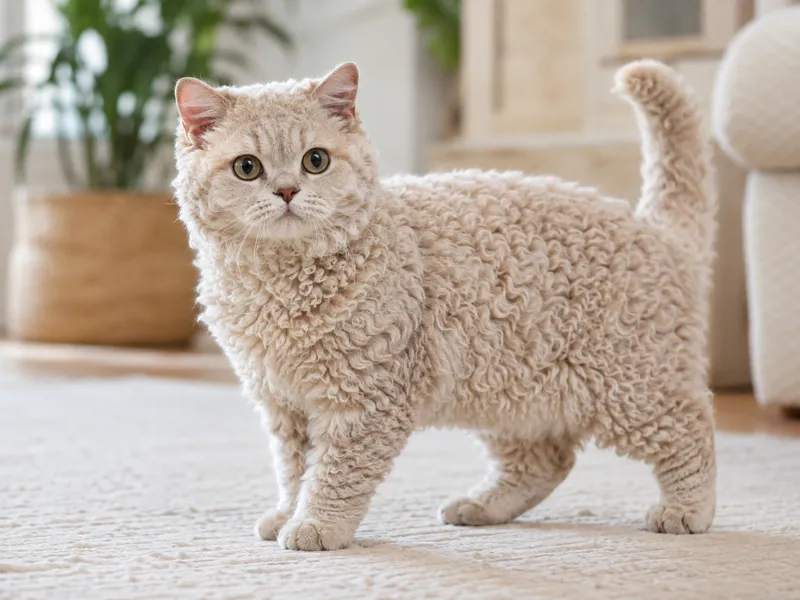
Selkirk Rex Shorthair
The Selkirk Rex Shorthair is the short-coated form of the Selkirk Rex, a modern breed founded from a naturally curly kitten born in Montana in the late 1980s. Persian breeder Jeri Newman named the foundation female Miss…
Recognized by: CFA · FIFe · +2
Size
Large
Weight
4.1–7.3 kg
Life span
10–15 years
Breed Traits
Energy Level
Moderate energy
Energy Level: 3 of 5
Low energyHigh energyChild / Family Compatibility
High compatibility
Child / Family Compatibility: 4 of 5
Low compatibilityHigh compatibilityGrooming Need
Moderate grooming need
Grooming Need: 3 of 5
Low maintenanceHigh maintenanceTrainability
Easy to train
Trainability: 4 of 5
Hard to trainEasy to trainApartment / Home Suitability
Fits apartments well
Apartment / Home Suitability: 4 of 5
Needs space / yardExcellent for apartmentsAlone-Time Tolerance
Half-day is hard
Alone-Time Tolerance: 2 of 5
Needs frequent companyHandles long alone timeFirst-Time Owner Suitability
Manageable with guidance
First-Time Owner Suitability: 3 of 5
Needs experienced ownerGreat for first-time ownersCompatibility with Other Pets
Generally gets along well with other pets
Compatibility with Other Pets: 4 of 5
Single-pet homes are a better fitHighly compatible with other animals
The Selkirk Rex Shorthair is the short-coated form of the Selkirk Rex, a modern breed founded from a naturally curly kitten born in Montana in the late 1980s. Persian breeder Jeri Newman named the foundation female Miss DePesto of NoFace and bred her to a black Persian. Curly kittens in the resulting litter demonstrated that the new coat trait followed dominant inheritance.
This is a medium-to-large, substantial cat with strong boning, firm musculature, a slightly rectangular body, a broad rounded head, full cheeks, a clearly defined muzzle, and large round eyes. The overall impression should be sturdy and balanced rather than slender or extremely compact.
The Shorthair has a dense, plush coat that stands away from the body and forms loose, irregular curls rather than a uniform wave. Curls may be especially noticeable around the neck, belly, flanks, and tail. The whiskers and eyebrows are also commonly curled or broken, and the coat occurs in many genetically possible colours and patterns.
Selkirk Rex Shorthairs are generally affectionate, patient, sociable, and relaxed without being inactive. Many enjoy remaining near familiar people, settling beside them, and participating quietly in household routines while still seeking attention and play at comfortable intervals.
They are moderately active cats that often enjoy wand toys, retrieving games, food puzzles, short training sessions, and sturdy climbing furniture. Daily play helps maintain muscle and body condition, particularly because their substantial build and calm manner can make gradual weight gain easy to overlook.
Well-socialized individuals commonly live successfully with respectful children, compatible cats, and calm cat-friendly dogs. They usually appreciate regular companionship and may become bored when repeatedly left without interaction or enrichment. Individual temperament and gradual introductions remain more important than breed reputation alone.
The dense short coat usually benefits from gentle combing once or twice a week. A wide-toothed comb, grooming glove, or careful finger separation can remove loose hair without repeatedly pulling the curls apart. Grooming may need to increase during seasonal shedding or when the undercoat begins to compact.
Some Selkirk Rex Shorthairs develop an oily or greasy coat and may need occasional bathing. Bathing should be based on the individual cat's skin and coat condition rather than a rigid schedule. Use a cat-appropriate product, rinse thoroughly, and allow the coat to dry naturally or with gentle airflow rather than harsh heat.
Routine care should also include interactive play, stable scratching and climbing furniture, dental hygiene, nail trimming, clean litter facilities, and measured portions of a complete life-stage-appropriate diet. Persistent greasiness, itching, hair breakage, bald areas, skin irritation, or sudden coat changes warrant veterinary assessment.
The Selkirk Rex curl is associated with a splice variant in KRT71 and follows an autosomal incomplete dominant pattern. One copy generally produces a wavy coat, while two copies can produce a tighter curl together with differences in body and head type. KRT71 testing identifies the breed-defining coat trait and should not be treated as complete health clearance.
Polycystic kidney disease caused by the autosomal dominant PKD1 variant is relevant because Persian and related breeds contributed to Selkirk Rex development. Veterinary genetics laboratories list Selkirk Rex as appropriate for PKD1 testing. A negative result excludes the tested variant but does not rule out every possible kidney disorder.
Reliable breed-wide prevalence data for hypertrophic cardiomyopathy, orthopaedic disease, and other inherited conditions remain limited. Prospective owners should request documented PKD1 results, veterinary records, and family information covering heart and kidney disease, mobility, longevity, and causes of death. Breeding programmes should combine DNA testing with physical examinations, line-appropriate clinical screening, and attention to genetic diversity. This information is for general educational purposes and is not a substitute for diagnosis or treatment by a veterinarian.
Recognizing organizations
Independent registries that list this breed. Tap a badge to learn more.
These statuses reflect each registry’s recording and show systems. They are not a health, quality, or superiority score.
Frequently asked questions
Are Selkirk Rex Shorthairs good family cats?
Selkirk Rex Shorthairs are generally affectionate, patient, and comfortable in family life. Well-socialized individuals often live successfully with respectful children when handling is gentle and the cat has quiet places to retreat.
Do Selkirk Rex Shorthairs get along with other pets?
Many adapt well to compatible cats and calm cat-friendly dogs after gradual introductions. Separate food, water, litter, resting, and hiding resources help prevent conflict, especially when another animal is more energetic or intrusive.
Can a Selkirk Rex Shorthair live in an apartment?
The variety can adapt well to apartment living when provided with daily play, scratching surfaces, sturdy climbing furniture, observation points, and regular companionship. Secure windows and balconies and appropriate weight control remain important.
Can Selkirk Rex Shorthairs be left alone during the day?
Many adults can manage ordinary short absences when their routine is predictable. Frequent prolonged isolation is not ideal for this sociable cat, and toys or food puzzles do not fully replace dependable human or compatible animal companionship.
How much grooming does a Selkirk Rex Shorthair need?
Gentle combing once or twice a week is sufficient for many cats. Dense coats, seasonal shedding, or excess oiliness may require additional care, but excessive brushing can separate the natural curls and make the coat appear frizzy.
What is the difference between a Selkirk Rex Shorthair and a Selkirk Rex Longhair?
Both share the same substantial body type, dominant curl trait, and general temperament tendencies. The Shorthair has a dense plush coat with compact curls, while the Longhair has a semi-long, more tousled coat with a fuller ruff and plumed tail.
Is the Selkirk Rex Shorthair a separate breed or a coat variety?
Classification depends on the registry. BondPals maintains a separate Atlas entry, TICA uses Selkirk Rex for the shorthaired form, FIFe uses the SRS code, and CFA and GCCF recognise both coat lengths within the wider Selkirk Rex breed.
What health screening should a Selkirk Rex Shorthair breeder provide?
Documented PKD1 testing is particularly relevant because of Persian-derived ancestry. Buyers should also ask for family health and longevity records and any veterinarian-guided heart, kidney, or mobility assessments used in the breeding line; a KRT71 coat result does not guarantee overall health.
More about Selkirk Rex Shorthair
Pet profiles are coming soon. For now, keep exploring trusted breed knowledge in the Breed Guide.
Back to Breed Guide