

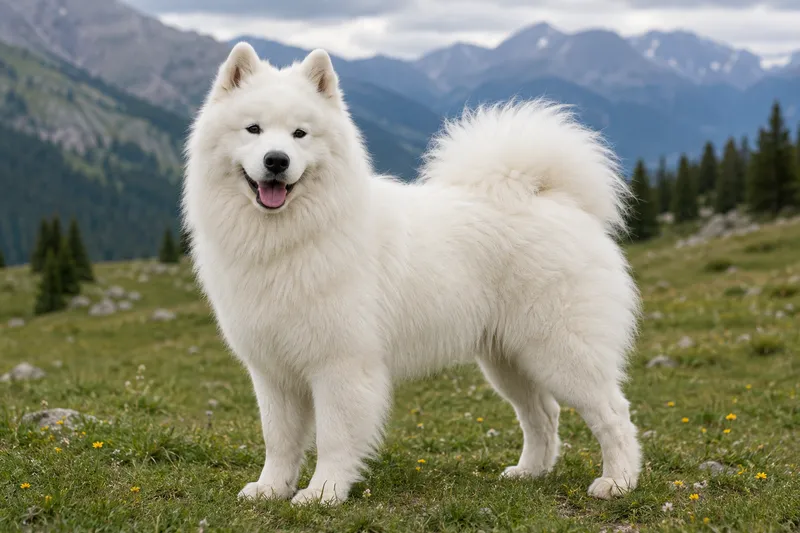
Samoyed
The Samoyed is a medium-sized northern working dog with a strong but graceful body, erect ears, dark almond-shaped eyes, a weather-resistant double coat, and a heavily plumed tail carried over the back when alert. White…
Recognized by: AKC · ANKC · +5
Size
Medium
Weight
15.9–29.5 kg
Life span
12–14 years
Breed Traits
Energy Level
Very energetic
Energy Level: 5 of 5
Low energyHigh energyChild / Family Compatibility
High compatibility
Child / Family Compatibility: 4 of 5
Low compatibilityHigh compatibilityGrooming Need
Intensive grooming need
Grooming Need: 5 of 5
Low maintenanceHigh maintenanceTrainability
Easy to train
Trainability: 4 of 5
Hard to trainEasy to trainApartment / Home Suitability
Struggles in small spaces
Apartment / Home Suitability: 2 of 5
Needs space / yardExcellent for apartmentsAlone-Time Tolerance
Half-day is hard
Alone-Time Tolerance: 2 of 5
Needs frequent companyHandles long alone timeFirst-Time Owner Suitability
Challenging for beginners
First-Time Owner Suitability: 2 of 5
Needs experienced ownerGreat for first-time ownersCompatibility with Other Pets
Generally gets along well with other pets
Compatibility with Other Pets: 4 of 5
Single-pet homes are a better fitHighly compatible with other animals
The Samoyed is a medium-sized northern working dog with a strong but graceful body, erect ears, dark almond-shaped eyes, a weather-resistant double coat, and a heavily plumed tail carried over the back when alert. White is most familiar, while cream, biscuit, and white-and-biscuit are also accepted by major standards.
The breed developed in northern Russia and Siberia, where dogs worked in severe climates as sled dogs, hunting or herding helpers, guardians, and close household companions. The FCI lists the breed under the title Samoiedskaïa Sabaka, while Sammy is a common affectionate nickname; neither represents a separate breed.
The characteristic upturned mouth corners contribute to the well-known Samoyed expression, but appearance should remain secondary to sound movement, endurance, stable temperament, and functional anatomy. The abundant coat should not conceal weakness, excessive bulk, or poor physical condition.
Samoyeds are commonly friendly, affectionate, alert, playful, and highly social. They tend to form close bonds with their households and usually want to participate in everyday activities rather than live separately in a yard.
They are intelligent and capable learners, but their independence, energy, vocal behavior, and curiosity require patient consistency. Reward-based training should begin early and prioritize recall, loose-leash walking, calm greetings, settling, handling, and reliable behavior around distractions.
Many Samoyeds are gentle with considerate children and sociable with compatible dogs. Individual prey drive and herding or chasing behavior can vary, so introductions to cats and smaller animals should be gradual and supervised rather than based on the breed's friendly reputation alone.
A Samoyed needs substantial daily exercise together with mental work. Long walks, hiking in suitable weather, training, scent activities, structured play, and appropriate pulling sports can be useful, while secure fencing and reliable leash habits help manage the breed's tendency to roam.
The dense double coat sheds throughout the year and very heavily during seasonal coat changes. Thorough brushing and combing several times a week, often daily while shedding, are needed to remove loose undercoat and prevent mats; routine shaving can damage normal coat function and should not replace proper grooming.
Samoyeds tolerate cold well but can overheat in warm or humid conditions. Schedule exercise for cooler hours, provide shade, water, and indoor cooling, monitor recovery carefully, and avoid assuming that a white coat makes prolonged sun or heat exposure safe.
Important health concerns in Samoyeds include hip dysplasia, eye disorders, cardiac disease, hypothyroidism, diabetes mellitus, and inherited kidney disease such as Samoyed hereditary glomerulopathy. Breed-specific retinal dysplasia/oculoskeletal dysplasia and X-linked progressive retinal atrophy are also relevant inherited conditions.
Recommended breeding evaluations include hip, cardiac, and specialist eye examinations, together with DNA tests for RD/OSD2 and XLPRA1. DNA results should be interpreted with the inheritance pattern and the proposed mating in mind; screening supports informed breeding decisions but cannot guarantee an individual puppy's future health.
Owners should maintain a lean, well-conditioned body, arrange regular veterinary examinations, and monitor mobility, vision, thirst, urination, appetite, energy, and exercise recovery. Persistent limping, fainting, coughing, vision changes, marked increases in drinking or urination, unexplained weight change, or swelling warrant veterinary assessment.
This information is for general educational purposes and is not a substitute for diagnosis or treatment by a veterinarian.
Recognizing organizations
Independent registries that list this breed. Tap a badge to learn more.
These statuses reflect each registry’s recording and show systems. They are not a health, quality, or superiority score.
AKCFull recognitionhttps://www.akc.org/dog-breeds/samoyed/ ANKCFull recognitionhttps://dogsaustralia.org.au/members/breeds/breed-standards/Samoyed CKCRecognized breedhttps://www.ckc.ca/en/Choosing-a-Dog/Choosing-a-Breed/Working-Dogs/Samoyed FCIDefinitive recognitionhttps://www.fci.be/en/nomenclature/SAMOYED-212.html NZKCRecognised breedhttps://www.dogsnz.org.nz/breeds/info/samoyed/680 RKCBreed Registerhttps://www.royalkennelclub.com/search/breeds-a-to-z/breeds/pastoral/samoyed/ UKCFull recognitionhttps://www.ukcdogs.com/samoyed
Frequently asked questions
Can a Samoyed live in an apartment?
Apartment living is possible only when the dog receives substantial daily exercise, training, mental enrichment, and companionship. Heavy shedding, vocal behavior, heat management, and the need for secure outdoor activity make a spacious, cool home easier for many owners.
How much exercise does a Samoyed need?
A healthy adult generally needs vigorous daily activity combined with mental challenges. Walks, hiking in cool conditions, structured play, training, and appropriate pulling sports can help, while puppies need age-appropriate exercise that protects developing joints.
Are Samoyeds good with children?
Many well-socialized Samoyeds are affectionate and playful with considerate children. Their strength and enthusiasm can cause accidental knocks, so adults should supervise interactions and teach both dog and child calm, respectful behavior.
Can Samoyeds live with other pets?
Many Samoyeds live successfully with compatible dogs and cats after careful introductions. Chasing, prey drive, and herding behavior vary among individuals, so interactions with cats and small animals should be introduced gradually and managed.
Are Samoyeds easy to train?
Samoyeds are intelligent and can learn quickly, but they may be independent, vocal, and easily attracted by the environment. Short reward-based sessions, consistent boundaries, early socialization, and extensive recall practice usually produce the best results.
How much grooming does a Samoyed require?
The dense double coat needs thorough brushing and combing several times each week and often daily during heavy seasonal shedding. Mats must be removed carefully, nails and teeth require routine care, and any bathing should be followed by complete drying through the coat.
Do Samoyeds tolerate hot weather?
Samoyeds are adapted to cold climates and can overheat during warm or humid weather. Exercise during cooler hours, provide water, shade, and indoor cooling, and stop activity if panting, coordination, energy, or recovery becomes abnormal.
What health screening should a Samoyed breeder provide?
Ask for independently verifiable hip, cardiac, and specialist eye evaluations for both parents, plus RD/OSD2 and XLPRA1 DNA results. Review the actual findings and family health history rather than treating testing or a registry number as a guarantee.
More about Samoyed
Pet profiles are coming soon. For now, keep exploring trusted breed knowledge in the Breed Guide.
Back to Breed Guide