

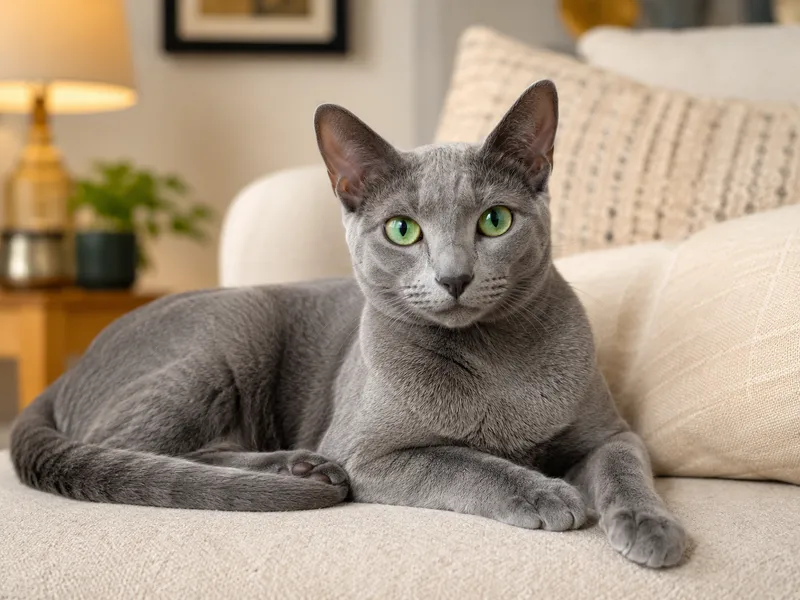
Russian Blue
The Russian Blue is a medium-sized, graceful cat with a long, finely built but muscular body, slender legs, large ears, and vivid green eyes. Its defining feature is a short, exceptionally dense double coat in an even…
Recognized by: CFA · FIFe · +2
Size
Medium
Weight
2.3–4.5 kg
Life span
12–18 years
Breed Traits
Energy Level
Moderate energy
Energy Level: 3 of 5
Low energyHigh energyChild / Family Compatibility
High compatibility
Child / Family Compatibility: 4 of 5
Low compatibilityHigh compatibilityGrooming Need
Low grooming need
Grooming Need: 1 of 5
Low maintenanceHigh maintenanceTrainability
Easy to train
Trainability: 4 of 5
Hard to trainEasy to trainApartment / Home Suitability
Excellent apartment fit
Apartment / Home Suitability: 5 of 5
Needs space / yardExcellent for apartmentsAlone-Time Tolerance
Handles long alone stretches well
Alone-Time Tolerance: 4 of 5
Needs frequent companyHandles long alone timeFirst-Time Owner Suitability
Suitable for many first-timers
First-Time Owner Suitability: 4 of 5
Needs experienced ownerGreat for first-time ownersCompatibility with Other Pets
Can adapt with proper socialization
Compatibility with Other Pets: 3 of 5
Single-pet homes are a better fitHighly compatible with other animals
The Russian Blue is a medium-sized, graceful cat with a long, finely built but muscular body, slender legs, large ears, and vivid green eyes. Its defining feature is a short, exceptionally dense double coat in an even blue tone, with silver-tipped guard hairs that create a luminous sheen.
The breed is historically associated with the Russian port of Arkhangelsk and was once known as the Archangel Cat. Written documentation of its earliest ancestry is limited, while the modern pedigree breed was developed through organized breeding programs in Britain, Scandinavia, and North America.
Russian Blues combine an elegant appearance with intelligence, playfulness, and a preference for stable household routines. They are well suited to indoor homes that provide regular interaction, quiet retreat areas, climbing opportunities, and consistent mental stimulation.
Russian Blues are generally gentle, intelligent, observant, and deeply affectionate with people they know. Many follow household members quietly, enjoy sitting nearby or on a lap, and participate in daily routines without constantly demanding attention.
They can be reserved around unfamiliar visitors and may prefer to observe a new person or situation from a safe distance before approaching. This caution should not automatically be interpreted as fearfulness or lack of affection, as many become warm and socially engaged once they feel secure.
Russian Blues often enjoy retrieving toys, climbing, solving food puzzles, and learning short reward-based routines. Well-socialized individuals can live successfully with respectful children, compatible cats, and calm, cat-friendly dogs.
The short, dense double coat is low maintenance and usually needs gentle brushing once a week or several times a month to remove loose hair. More frequent grooming may be useful during seasonal shedding, but the coat is not normally prone to tangles or mats.
Daily life should include interactive play, scratching surfaces, stable climbing furniture, puzzle feeders, and access to quiet resting places. Russian Blues generally adapt well to apartment living and ordinary working-day absences when their routine remains predictable and their environment is enriched.
Routine care should include dental hygiene, nail trimming, ear checks, body-condition monitoring, and regular veterinary examinations. Because some Russian Blues have strong appetites, measured portions and regular activity are important for maintaining a healthy weight.
Russian Blues are generally regarded as a healthy natural breed, and no single major breed-specific inherited disorder is consistently reported across the population. This does not mean that every individual is free from genetic or acquired illness, and no pedigree or commercial DNA panel can guarantee lifelong health.
Some registry breeding policies require specific testing for imported cats or animals from approved outcross programs, including screening related to PKD, pyruvate kinase deficiency, PRA-CEP290, and blood group status. These requirements depend on pedigree and breeding circumstances and should not be interpreted as evidence that every listed condition is common throughout the breed.
Prospective owners should ask about family longevity, known illnesses, causes of death in related cats, relevant test results, and veterinary records. Maintaining a healthy body condition is also important because excess weight can affect mobility and overall health. This information is for general educational purposes and is not a substitute for diagnosis or treatment by a veterinarian.
Recognizing organizations
Independent registries that list this breed. Tap a badge to learn more.
These statuses reflect each registry’s recording and show systems. They are not a health, quality, or superiority score.
CFAChampionshiphttps://cfa.org/breed/russian-blue/ FIFeFully recognisedhttps://fifeweb.org/cats/breeds/ GCCFChampionship statusBlue — Championship statushttps://www.gccfcats.org/wp-content/uploads/2025/08/Russian-Registration-Policy-June-2025.pdf TICAChampionshiphttps://tica.org/find-a-cat/find-a-cat-breeder-listings/
Frequently asked questions
Are Russian Blue cats affectionate?
Russian Blues are often deeply affectionate with people they know and trust. Many enjoy following their owners, resting nearby, or sitting on a lap while remaining more reserved around unfamiliar visitors.
Are Russian Blues good family cats?
They can be excellent family companions in homes that provide gentle handling and predictable routines. They often live well with respectful children and compatible pets, but a quiet retreat should always be available.
Can a Russian Blue live in an apartment?
Russian Blues generally adapt very well to apartment living when they have daily play, climbing space, scratching areas, and mental stimulation. Their typically moderate vocal and activity levels can also suit shared buildings, although individual behavior varies.
Can Russian Blue cats be left alone during the day?
Many adult Russian Blues tolerate ordinary working-day absences reasonably well when they have a secure environment and a consistent routine. They still need daily companionship, play, and observation and should not be left isolated for prolonged periods.
How much grooming does a Russian Blue need?
The short double coat usually needs light brushing once a week or several times a month. Grooming may need to increase during seasonal shedding, while dental care, nail trimming, and ear checks remain part of routine maintenance.
Are Russian Blue cats hypoallergenic?
No cat breed is guaranteed to be hypoallergenic, and Russian Blues still produce common feline allergens. Coat type and shedding level cannot reliably predict whether a particular person will experience an allergic reaction.
Is every solid blue-grey cat a Russian Blue?
No. Solid blue-grey coloring occurs in pedigree and non-pedigree cats, including several other recognized breeds. A Russian Blue is identified through its complete physical type and documented pedigree rather than coat color alone.
What health information should a Russian Blue breeder provide?
A responsible breeder should discuss family longevity, known illnesses, causes of death in related cats, and the veterinary or genetic screening relevant to the pedigree. Buyers should be cautious of claims that one commercial DNA panel guarantees that a kitten will never develop disease.
More about Russian Blue
Pet profiles are coming soon. For now, keep exploring trusted breed knowledge in the Breed Guide.
Back to Breed Guide