

Poodle
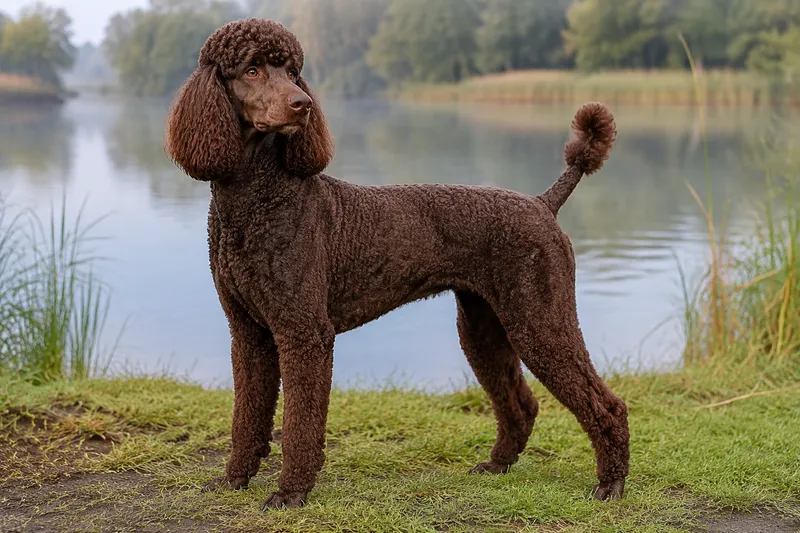
The Poodle is an elegant, squarely built, athletic dog with a long head, drop ears, dark expressive eyes, and a dense curly or corded coat. Major registries organize its sizes differently: the AKC recognizes Standard,…
Recognized by: AKC · ANKC · +5
Size
Medium
Weight
2–32 kg
Life span
10–18 years
Breed Traits
Energy Level
High energy
Energy Level: 4 of 5
Low energyHigh energyChild / Family Compatibility
High compatibility
Child / Family Compatibility: 4 of 5
Low compatibilityHigh compatibilityGrooming Need
Intensive grooming need
Grooming Need: 5 of 5
Low maintenanceHigh maintenanceTrainability
Very easy to train
Trainability: 5 of 5
Hard to trainEasy to trainApartment / Home Suitability
Fits apartments well
Apartment / Home Suitability: 4 of 5
Needs space / yardExcellent for apartmentsAlone-Time Tolerance
Half-day is hard
Alone-Time Tolerance: 2 of 5
Needs frequent companyHandles long alone timeFirst-Time Owner Suitability
Suitable for many first-timers
First-Time Owner Suitability: 4 of 5
Needs experienced ownerGreat for first-time ownersCompatibility with Other Pets
Generally gets along well with other pets
Compatibility with Other Pets: 4 of 5
Single-pet homes are a better fitHighly compatible with other animals
The Poodle is an elegant, squarely built, athletic dog with a long head, drop ears, dark expressive eyes, and a dense curly or corded coat. Major registries organize its sizes differently: the AKC recognizes Standard, Miniature, and Toy varieties, the FCI also recognizes a Medium variety, and the UKC registers the Standard Poodle separately from its Miniature and Toy Poodle varieties.
Despite its polished show-ring image, the breed developed from European water dogs and worked as a water retriever. Its name is linked to a German word associated with splashing in water, while France played a major role in developing and popularizing the breed; the traditional clipped coat was intended to aid swimming while leaving protection over vulnerable areas.
All sizes share the same basic outline, keen intelligence, trainability, and people-oriented nature, but exercise, handling, housing, and certain health priorities vary with size. Poodles can excel in retrieving, obedience, agility, tracking, scent work, assistance roles, and many other activities when their physical and mental needs are met.
Poodles are typically alert, lively, responsive, and exceptionally quick to learn. They often form close bonds with their household, enjoy participating in daily routines, and can be sensitive to tone and handling, so clear reward-based training is preferable to harsh correction.
Their intelligence does not make them maintenance-free. Without training, exercise, novelty, and appropriate social contact, a Poodle may invent unwanted activities, become noisy, or develop anxious and attention-seeking behavior; early socialization should include calm exposure to people, animals, grooming, travel, sounds, and unfamiliar environments.
Well-socialized Poodles can be affectionate family dogs and often live successfully with respectful children and compatible pets. Adult supervision remains important, especially with small Toy dogs that can be injured by rough handling and with energetic Standard dogs that may accidentally overwhelm a young child.
Poodles need daily physical exercise and purposeful mental activity, with the amount adjusted for size, age, health, and conditioning. Walks, retrieving, swimming where safe, training games, scent work, and suitable dog sports provide useful outlets, while growing puppies should avoid repetitive high-impact exercise.
The low-shedding coat grows continuously and requires substantial maintenance. A short pet trim still needs thorough brushing and combing to the skin plus professional or skilled home clipping at regular intervals, while longer coats demand even more frequent care to prevent painful mats; ears, nails, teeth, and the hair around the eyes and feet also need routine attention.
Poodles generally thrive when included in household life and may struggle with frequent prolonged isolation. Alone-time skills should be developed gradually, and owners should budget time and money for lifelong coat care rather than assuming that low shedding means low maintenance or that every individual will be suitable for a person with allergies.
Health priorities differ among Poodle sizes. Inherited eye disease is relevant across the breed, while patellar luxation and Legg-Calve-Perthes disease are more prominent concerns in Toy and Miniature Poodles and hip dysplasia is an important screening priority in Miniature and Standard Poodles.
Standard Poodles can also be affected by sebaceous adenitis, von Willebrand disease, immune-mediated disease, epilepsy, and gastric dilatation-volvulus. A distended abdomen, repeated unproductive retching, drooling, restlessness, weakness, or collapse may indicate gastric dilatation-volvulus and requires immediate emergency veterinary care.
Screening must match the dog's size variety: all breeding dogs should have a specialist eye examination; Toy and Miniature dogs should have patella and prcd-PRA testing; Miniature and Standard dogs should have hip evaluation; and Standard dogs should have the additional DNA and thyroid testing recommended by the relevant national program. Prospective owners should request verifiable results rather than relying on a general claim that the parents were health tested. This information is for general educational purposes and is not a substitute for diagnosis or treatment by a veterinarian.
Recognizing organizations
Independent registries that list this breed. Tap a badge to learn more.
These statuses reflect each registry’s recording and show systems. They are not a health, quality, or superiority score.
AKCFull recognitionhttps://www.akc.org/dog-breeds/poodle-standard/ ANKCFull recognitionhttps://www.dogsaustralia.org.au/members/breeds/breed-standards/Poodle-%28Standard%29 CKCRecognized breedhttps://www.ckc.ca/en/Choosing-a-Dog/Choosing-a-Breed/Non-Sporting-Dogs/Poodle-Standard FCIDefinitive recognitionhttps://www.fci.be/en/nomenclature/POODLE-172.html NZKCRecognised breedhttps://www.dogsnz.org.nz/breeds/select-breed RKCBreed Registerhttps://www.royalkennelclub.com/search/breeds-a-to-z/breeds/utility/poodle-standard/ UKCFull recognitionhttps://www.ukcdogs.com/breed-groups/standard-poodle
Frequently asked questions
Are Poodles good family dogs?
A well-bred, well-socialized Poodle can be an affectionate, playful, and highly trainable family companion. Interactions should be supervised because small Toy dogs are physically delicate and energetic Standard dogs may accidentally knock over a young child.
How much exercise does a Poodle need?
Most healthy adult Poodles need daily walks together with retrieving, training, scent games, swimming, or another form of mental and physical activity. Exact requirements vary considerably by size, age, health, conditioning, and individual drive.
Can a Poodle live in an apartment?
Yes, many Poodles can adapt to apartment living when their exercise, toilet, training, enrichment, and social needs are consistently met. Miniature and Toy varieties are easier to accommodate physically, but every size can become noisy or restless when bored.
Can Poodles be left alone during the day?
Poodles can learn to tolerate reasonable periods alone, but their people-oriented and intelligent nature makes frequent prolonged isolation a poor fit. Alone-time training should progress gradually, with exercise, enrichment, and dependable interaction arranged around absences.
Do Poodles shed, and are they hypoallergenic?
Poodles usually release relatively little loose hair because shed hairs tend to remain trapped in the curly coat. No dog is guaranteed to be hypoallergenic, so a person with allergies should spend time with the individual dog and seek medical guidance before making a commitment.
How much grooming does a Poodle need?
Even a Poodle kept in a short pet trim needs regular brushing and combing to the skin plus clipping by a professional or capable owner at consistent intervals. Longer coats mat quickly and require substantially more frequent brushing, bathing, drying, trimming, and coat inspection.
Are Poodles easy to train?
Poodles are exceptionally trainable and often learn new behaviors very quickly. Short reward-based sessions, varied activities, early socialization, and consistent household rules help channel their intelligence without creating boredom or sensitivity.
What health screening should a Poodle breeder discuss?
Testing should match the size variety and include a specialist eye examination, with patella and prcd-PRA testing for Toy and Miniature dogs and hip evaluation for Miniature and Standard dogs. Standard breeders should also discuss the additional DNA and thyroid evaluations recommended by their national program and provide verifiable results for both parents.
More about Poodle
Pet profiles are coming soon. For now, keep exploring trusted breed knowledge in the Breed Guide.
Back to Breed Guide