

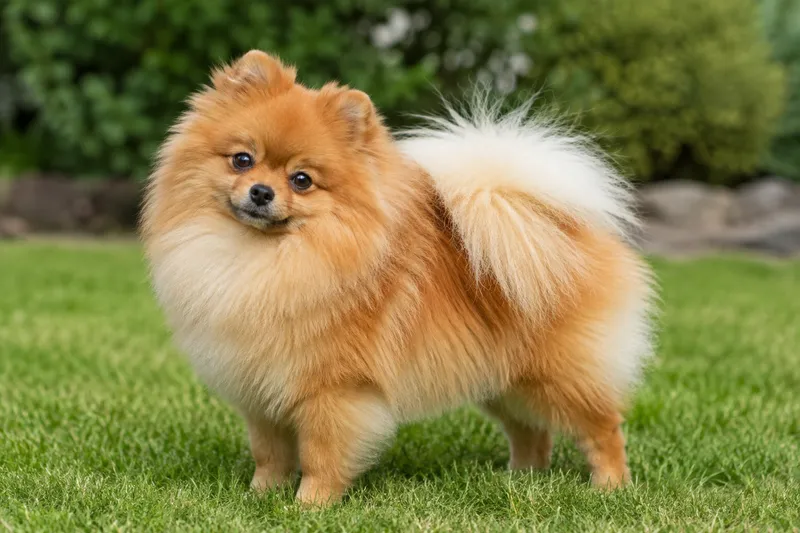
Pomeranian
The Pomeranian is a compact toy dog with a dense double coat, small upright ears, a foxlike expression, and a heavily plumed tail carried over the back. Its diminutive frame contrasts with an animated, self-assured…
Recognized by: AKC · ANKC · +5
Size
Small
Weight
1.4–3.2 kg
Life span
12–16 years
Breed Traits
Energy Level
Moderate energy
Energy Level: 3 of 5
Low energyHigh energyChild / Family Compatibility
Limited compatibility
Child / Family Compatibility: 2 of 5
Low compatibilityHigh compatibilityGrooming Need
High grooming need
Grooming Need: 4 of 5
Low maintenanceHigh maintenanceTrainability
Easy to train
Trainability: 4 of 5
Hard to trainEasy to trainApartment / Home Suitability
Excellent apartment fit
Apartment / Home Suitability: 5 of 5
Needs space / yardExcellent for apartmentsAlone-Time Tolerance
Half-day is hard
Alone-Time Tolerance: 2 of 5
Needs frequent companyHandles long alone timeFirst-Time Owner Suitability
Suitable for many first-timers
First-Time Owner Suitability: 4 of 5
Needs experienced ownerGreat for first-time ownersCompatibility with Other Pets
Can adapt with proper socialization
Compatibility with Other Pets: 3 of 5
Single-pet homes are a better fitHighly compatible with other animals
The Pomeranian is a compact toy dog with a dense double coat, small upright ears, a foxlike expression, and a heavily plumed tail carried over the back. Its diminutive frame contrasts with an animated, self-assured presence.
The breed developed from larger European Spitz dogs and takes its name from the historic Pomerania region. Smaller examples became especially fashionable in Britain during the nineteenth century, and selective breeding helped establish the modern toy-sized companion.
Registry classification varies by organization. Several major registries recognize the Pomeranian as a breed in its own right, while the FCI lists Pomeranian, or Zwergspitz, as a variety within the German Spitz standard.
Pomeranians are typically alert, curious, affectionate, and lively. Many form close bonds with their household and enjoy being involved in daily activities, but their confidence can make them seem unaware of their very small size.
They are quick learners and often enjoy tricks, short training sessions, and interactive games. Reward-based teaching, early socialization, and consistent household rules can channel their intelligence while limiting nuisance barking or overprotective behavior.
Their fragile build calls for careful handling around young children and much larger dogs. Calm, respectful children and thoughtfully introduced pets can be suitable companions, but all interactions should be supervised and each dog's individual temperament considered.
A Pomeranian can meet much of its exercise requirement through short walks, indoor play, and brief training games. Daily activity remains important, but long forced runs, repeated high jumps, rough play, and overheating are poor matches for such a small dog.
The profuse double coat needs thorough brushing several times a week and more often during periods of heavy shedding. Work gently down to the skin to prevent tangles, keep nails short, check the ears, and arrange professional grooming when needed; routine close shaving is not appropriate coat care.
Dental care deserves special attention because small mouths can become crowded. Brush the teeth regularly with dog-safe products, maintain routine veterinary dental checks, and use appropriately sized food, toys, walking equipment, and secure barriers to reduce everyday risks.
Pomeranians may be affected by patellar luxation, cardiac conditions, eye disorders, dental disease, tracheal collapse, and coat-loss disorders such as alopecia X. These risks vary among individuals, and a veterinarian should assess coughing, limping, exercise intolerance, eye changes, dental discomfort, or unusual hair loss.
Before breeding, recommended evaluations include patella, cardiac, and ophthalmologist examinations. Prospective owners should ask for verifiable results for both parents, avoid sellers promoting extreme undersizing, and support the dog with appropriate body condition, routine preventive care, safe handling, and regular veterinary examinations.
This information is for general educational purposes and is not a substitute for diagnosis or treatment by a veterinarian.
Recognizing organizations
Independent registries that list this breed. Tap a badge to learn more.
These statuses reflect each registry’s recording and show systems. They are not a health, quality, or superiority score.
AKCFull recognitionhttps://www.akc.org/dog-breeds/pomeranian/ ANKCFull recognitionhttps://dogsaustralia.org.au/members/breeds/breed-standards/Pomeranian CKCRecognized breedhttps://www.ckc.ca/en/Choosing-a-Dog/Choosing-a-Breed/Toy-Dogs/Pomeranian FCIDefinitive recognitionhttps://www.fci.be/en/nomenclature/DEUTSCHER-SPITZ-97.html NZKCRecognised breedhttps://www.dogsnz.org.nz/breeds/info/pomeranian/156 RKCBreed Registerhttps://www.royalkennelclub.com/search/breeds-a-to-z/breeds/toy/pomeranian/ UKCFull recognitionhttps://www.ukcdogs.com/pomeranian
Frequently asked questions
Is a Pomeranian suitable for apartment living?
A Pomeranian's small size and moderate exercise needs can suit an apartment well. Daily activity, mental enrichment, and early training for alert barking are still essential, and the dog should not be left to exercise only indoors.
How much exercise does a Pomeranian need?
Most Pomeranians do well with several short walks or play sessions spread through the day. Add training games and food puzzles for mental exercise, while avoiding forced long-distance running, excessive jumping, and activity in hot conditions.
Are Pomeranians good with children?
Pomeranians can live happily with calm children who understand gentle handling. Because the breed is physically fragile, adults should supervise every interaction, and a home with very young or boisterous children may require especially careful management.
Can Pomeranians live with other pets?
Many Pomeranians can live with compatible dogs or cats when introductions are gradual and positive. Their bold behavior may put them at risk around much larger animals, so supervise play and provide separate resting and feeding spaces.
Do Pomeranians shed, and how often should they be groomed?
Pomeranians shed from a dense double coat and are not a no-shedding breed. Brush thoroughly several times each week, increase grooming during seasonal shedding, and pay particular attention to friction areas where tangles form.
Are Pomeranians easy to train, and do they bark a lot?
Pomeranians are intelligent and often learn quickly when sessions are short, consistent, and reward based. Their alert nature can produce frequent barking, so teach a quiet cue, reward calm behavior, and manage triggers rather than punishing vocalization.
What health screening should a Pomeranian breeder provide?
Recommended pre-breeding checks include patella, cardiac, and ophthalmologist evaluations. Ask to see verifiable results for both parents, discuss health and longevity in the pedigree, and remember that screening reduces uncertainty but cannot guarantee a disease-free puppy.
Are teacup or teddy bear Pomeranians separate varieties?
Teacup, micro, and teddy bear are marketing descriptions, not separately recognized Pomeranian varieties in the major standards cited here. Extreme undersizing or exaggerated facial features may increase welfare concerns, so prioritize sound structure, health testing, and transparent breeding practices over labels.
More about Pomeranian
Pet profiles are coming soon. For now, keep exploring trusted breed knowledge in the Breed Guide.
Back to Breed Guide