

Persian
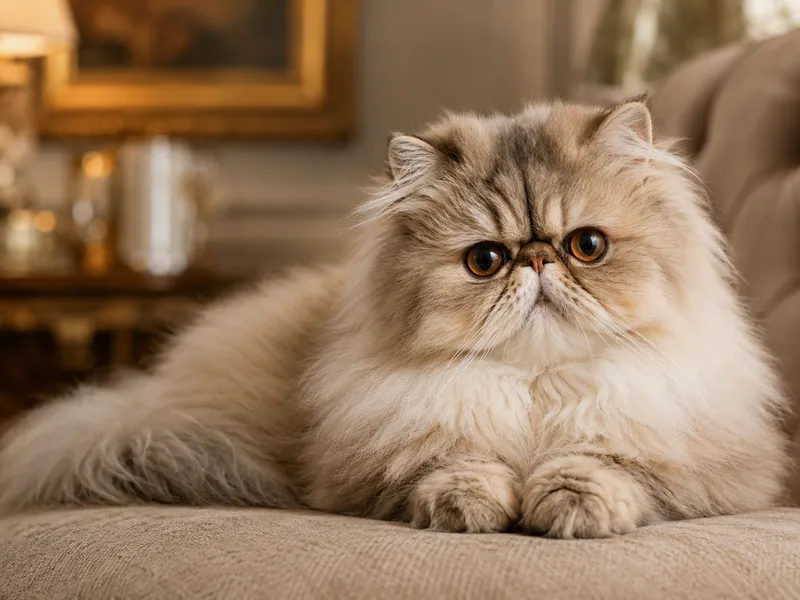
The Persian is a medium-sized, heavily boned cat with a compact body, broad chest, short sturdy legs, and a long, dense coat. Its rounded head, large expressive eyes, small ears, full cheeks, and flowing ruff create the…
Recognized by: CFA · FIFe · +2
Size
Medium
Weight
2.7–5.4 kg
Life span
10–16 years
Breed Traits
Energy Level
Low energy
Energy Level: 2 of 5
Low energyHigh energyChild / Family Compatibility
Moderate compatibility
Child / Family Compatibility: 3 of 5
Low compatibilityHigh compatibilityGrooming Need
Intensive grooming need
Grooming Need: 5 of 5
Low maintenanceHigh maintenanceTrainability
Moderately trainable
Trainability: 3 of 5
Hard to trainEasy to trainApartment / Home Suitability
Excellent apartment fit
Apartment / Home Suitability: 5 of 5
Needs space / yardExcellent for apartmentsAlone-Time Tolerance
Handles a typical workday
Alone-Time Tolerance: 3 of 5
Needs frequent companyHandles long alone timeFirst-Time Owner Suitability
Challenging for beginners
First-Time Owner Suitability: 2 of 5
Needs experienced ownerGreat for first-time ownersCompatibility with Other Pets
Can adapt with proper socialization
Compatibility with Other Pets: 3 of 5
Single-pet homes are a better fitHighly compatible with other animals
The Persian is a medium-sized, heavily boned cat with a compact body, broad chest, short sturdy legs, and a long, dense coat. Its rounded head, large expressive eyes, small ears, full cheeks, and flowing ruff create the soft, substantial appearance associated with the breed.
Persians occur in a wide range of colors and patterns, including solid, tabby, smoke, shaded, silver, golden, bicolor, tortoiseshell, and pointed varieties. Although the breed's name reflects historical associations with Persia, its exact ancestry is not fully documented, and the modern Persian was shaped through selective breeding in Europe and North America.
The breed is generally quiet, affectionate, and less athletic than many shorthaired cats. Persians are best suited to indoor homes that can provide calm companionship, daily coat care, regular facial cleaning when needed, and close attention to breathing and eye comfort.
Persians are typically gentle, calm, observant, and closely attached to familiar people. Many enjoy resting beside their owners, sitting on a lap when comfortable, or quietly watching household activity from a favorite bed or sofa.
They usually prefer predictable routines, soft voices, and gentle handling. Persians can be playful and curious, but their activity commonly occurs in short, moderate sessions rather than prolonged climbing, chasing, or high-speed exploration.
Well-socialized Persians can live successfully with respectful children, compatible cats, and calm, cat-friendly dogs. They may withdraw from loud or boisterous activity, so every cat should have access to quiet resting places and control over social interaction.
The long, dense coat requires thorough daily combing to prevent loose hair from forming painful tangles and mats. Particular attention should be given to the chest, armpits, belly, hindquarters, and full ruff, while some owners may also use professional grooming support.
The eyes and facial area may need regular gentle cleaning because tears and debris can accumulate around the shortened face. Persistent discharge, redness, irritation, unpleasant odor, noisy breathing, or visible discomfort should not be treated as normal breed features.
Daily life should include low-impact interactive play, scratching surfaces, accessible resting places, dental hygiene, nail trimming, ear checks, body-condition monitoring, and regular veterinary examinations. Food portions should reflect the individual cat's age, activity, health, and body condition because a calm indoor lifestyle can make unwanted weight gain easier.
Polycystic kidney disease is a well-recognized inherited concern in Persians, and a PKD1 DNA test is available. A Persian-specific inherited form of progressive retinal atrophy, known as PRA-pd, can also be identified through genetic testing and may lead to progressive vision loss in affected cats.
The shortened facial structure of some Persians can be associated with restricted nostrils, noisy or difficult breathing, excessive tearing, eye irritation, dental crowding, skin-fold problems, and reduced tolerance of heat or exertion. Risk varies between individuals, and more extreme facial conformation may increase the likelihood of functional problems.
Prospective owners should request documented PKD1 and PRA-pd results, ask about breathing, eye and dental health in related cats, and review relevant veterinary records and family history. This information is for general educational purposes and is not a substitute for diagnosis or treatment by a veterinarian.
Recognizing organizations
Independent registries that list this breed. Tap a badge to learn more.
These statuses reflect each registry’s recording and show systems. They are not a health, quality, or superiority score.
Frequently asked questions
Are Persian cats good family pets?
Persians can be affectionate family companions in homes that value calm routines and gentle handling. They often live well with respectful children, but noisy play, chasing, and frequent unwanted carrying may be stressful.
Can a Persian cat live in an apartment?
Persians generally adapt very well to apartment and indoor living because they are usually calm and moderately active. They still need daily play, scratching areas, comfortable resting places, and enough room to move freely.
How often does a Persian cat need grooming?
A Persian normally needs thorough combing every day to prevent tangles from developing into mats. The comb should reach through the full coat, especially around the chest, armpits, belly, and hindquarters.
Do Persian cats need their faces cleaned?
Many Persians need regular gentle cleaning around the eyes and facial area because tears and debris can accumulate. Persistent discharge, redness, discomfort, odor, or changes in breathing should be assessed by a veterinarian.
Can Persian cats be left alone during the day?
Many adult Persians can manage ordinary working-day absences when they have a safe environment and a predictable routine. They still need daily companionship, grooming, play, and health monitoring, so frequent prolonged isolation is not ideal.
Are Persian cats hypoallergenic?
No cat breed is guaranteed to be hypoallergenic, and Persians produce common feline allergens like other cats. Their long coat can also distribute shed hair and dander through the home.
Are flat-faced Persian cats prone to breathing problems?
Some Persians breathe comfortably, while others with more extreme facial shortening may experience restricted airflow, noisy breathing, or reduced tolerance of heat and exertion. Open nostrils, comfortable breathing, and functional facial structure are important health considerations.
What health testing should a Persian breeder discuss?
A responsible breeder should provide documented PKD1 and Persian PRA-pd DNA results. Buyers should also ask about breathing, eye, dental, cardiac, and kidney health in related cats because genetic tests do not evaluate every possible problem.
More about Persian
Pet profiles are coming soon. For now, keep exploring trusted breed knowledge in the Breed Guide.
Back to Breed Guide