

Maltese
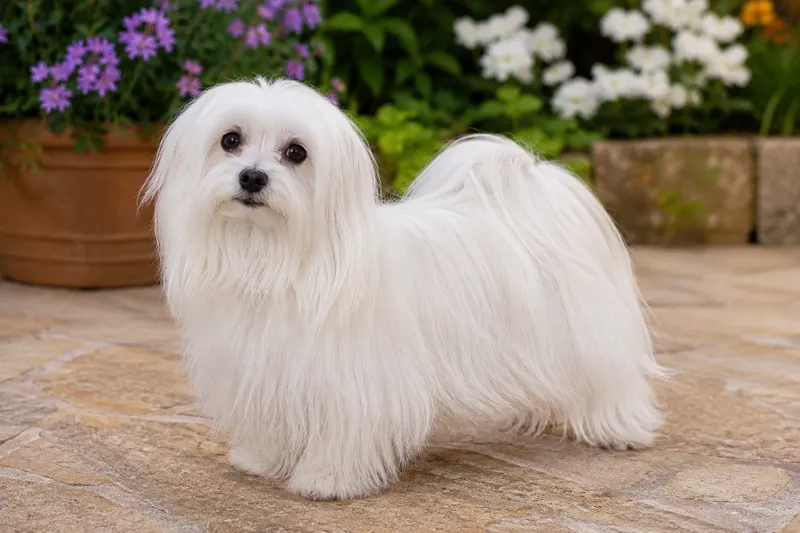
The Maltese is a toy companion dog with a compact body, dark expressive eyes, hanging ears, and a long, silky white coat without a woolly undercoat. The feathered tail curves over the back, and the dog's movement should…
Recognized by: AKC · ANKC · +5
Size
Small
Weight
1.8–3.2 kg
Life span
12–15 years
Breed Traits
Energy Level
Moderate energy
Energy Level: 3 of 5
Low energyHigh energyChild / Family Compatibility
Moderate compatibility
Child / Family Compatibility: 3 of 5
Low compatibilityHigh compatibilityGrooming Need
Intensive grooming need
Grooming Need: 5 of 5
Low maintenanceHigh maintenanceTrainability
Easy to train
Trainability: 4 of 5
Hard to trainEasy to trainApartment / Home Suitability
Excellent apartment fit
Apartment / Home Suitability: 5 of 5
Needs space / yardExcellent for apartmentsAlone-Time Tolerance
Half-day is hard
Alone-Time Tolerance: 2 of 5
Needs frequent companyHandles long alone timeFirst-Time Owner Suitability
Suitable for many first-timers
First-Time Owner Suitability: 4 of 5
Needs experienced ownerGreat for first-time ownersCompatibility with Other Pets
Generally gets along well with other pets
Compatibility with Other Pets: 4 of 5
Single-pet homes are a better fitHighly compatible with other animals
The Maltese is a toy companion dog with a compact body, dark expressive eyes, hanging ears, and a long, silky white coat without a woolly undercoat. The feathered tail curves over the back, and the dog's movement should remain free and comfortable rather than being restricted by excessive coat.
The breed belongs to an ancient family of small companion dogs associated with the central Mediterranean. Although its name has long connected it with Malta, the exact development of these early dogs cannot be assigned with certainty to the modern island alone; the FCI records the Central Mediterranean Basin as the origin and Italy as the country of patronage.
Maltese were developed for companionship rather than as reduced versions of a larger working breed. Terms such as “teacup Maltese” do not identify a separately recognized variety, and breeding for extremely small size can increase fragility and health risk.
Maltese are commonly affectionate, lively, alert, and strongly interested in their people. Many are confident beyond what their size suggests and will readily investigate visitors, sounds, and new activities when properly socialized.
They are intelligent and can learn household manners, tricks, and dog sports, although inconsistency may encourage demanding behavior or excessive barking. Brief reward-based sessions, predictable routines, and early practice with calm separation are more effective than harsh correction.
Many Maltese can live well with considerate older children and compatible pets. Because the breed is physically delicate, interactions with young children, large dogs, or energetic playmates require close supervision regardless of how friendly the animals appear.
Daily walks, indoor play, training games, and opportunities to explore usually meet the exercise needs of a healthy Maltese. Small size does not eliminate the need for activity or socialization, but strenuous exercise and high jumps should be avoided when they exceed the individual dog's fitness or physical safety.
A full-length coat needs gentle daily combing to prevent tangles and mats, together with regular bathing and careful drying. A shorter companion trim reduces coat length but does not remove the need for brushing, nail care, ear checks, or attention to the hair around the eyes; persistent tearing, redness, odor, or discharge should be assessed rather than treated only as a cosmetic problem.
Dental care is especially important in this toy breed, including frequent tooth brushing and regular veterinary examinations. Maltese thrive on human contact and may struggle with long periods alone, so independence should be introduced gradually without making constant carrying or continuous attention the dog's only routine.
Important health concerns in Maltese include patellar luxation, congenital cardiac defects such as patent ductus arteriosus, portosystemic vascular anomalies or liver shunt, and microvascular dysplasia. Dental disease is common in small dogs, while eye disorders and inflammatory brain diseases such as granulomatous or necrotizing meningoencephalitis have also been reported.
The American Maltese Association's CHIC recommendations include patella and congenital cardiac evaluations, and the club recommends bile-acid testing, particularly for puppies, to help assess congenital liver concerns. The Royal Kennel Club also lists eye examination as a best-practice screening test; prospective owners should ask to see independently verifiable results rather than relying on a general statement that the parents are healthy.
Owners should maintain a healthy body condition, provide consistent dental care, and seek veterinary assessment for persistent limping, coughing, fainting, poor growth, recurrent digestive or neurologic signs, unusual disorientation, seizures, or sudden behavioral change. Screening improves breeding decisions but cannot guarantee that an individual dog will remain free of disease.
This information is for general educational purposes and is not a substitute for diagnosis or treatment by a veterinarian.
Recognizing organizations
Independent registries that list this breed. Tap a badge to learn more.
These statuses reflect each registry’s recording and show systems. They are not a health, quality, or superiority score.
AKCFull recognitionhttps://www.akc.org/dog-breeds/maltese/ ANKCFull recognitionhttps://dogsaustralia.org.au/members/breeds/breed-standards/Maltese CKCRecognized breedhttps://www.ckc.ca/en/Choosing-a-Dog/Choosing-a-Breed/Toy-Dogs/Maltese FCIDefinitive recognitionhttps://www.fci.be/en/nomenclature/MALTESE-65.html NZKCRecognised breedhttps://www.dogsnz.org.nz/breeds/info/maltese/140 RKCBreed Registerhttps://www.royalkennelclub.com/search/breeds-a-to-z/breeds/toy/maltese/ UKCFull recognitionhttps://www.ukcdogs.com/maltese
Frequently asked questions
Is a Maltese suitable for apartment living?
A Maltese can adapt very well to an apartment because of its small size and moderate exercise needs. Daily activity, mental engagement, toilet training, and management of alert barking are still necessary, and apartment suitability does not mean the dog should remain indoors without walks or socialization.
How much exercise does a Maltese need?
Most healthy adults do well with short daily walks, indoor or outdoor play, and training games. Exercise should suit the dog's age, fitness, and health, while repeated high jumps or rough activity should be limited because a toy dog's small body is vulnerable to injury.
Are Maltese good with children?
Many Maltese are affectionate with calm, considerate children, but their tiny size makes them easy to injure through dropping, squeezing, or rough play. Homes with older children who understand gentle handling are often easier, and an adult should supervise every interaction with young children.
Can Maltese live with other pets?
Many Maltese can live successfully with compatible dogs and cats after gradual introductions. Friendly intent does not remove the physical risk posed by a much larger or highly energetic animal, so play and shared resources should be supervised and managed for the individuals involved.
Are Maltese easy to train?
Maltese are intelligent and often respond well to brief, reward-based training, but they can learn unwanted habits when rules are inconsistent. Early toilet routines, calm handling, polite barking behavior, socialization, and gradual practice being alone are particularly valuable.
Do Maltese shed, and are they hypoallergenic?
The single silky coat generally sheds less visibly than many double coats, but it still requires frequent grooming. No dog is guaranteed to be hypoallergenic because allergens also come from skin flakes and saliva, so a person with allergies should spend time around adult Maltese before making a commitment.
What health screening should a Maltese breeder provide?
Ask for documented patella and congenital cardiac evaluations for both parents, together with information about bile-acid testing, especially for puppies. A current eye examination is also valuable under Royal Kennel Club guidance, and buyers should review the actual results and family health history rather than accept verbal assurances.
Is a teacup Maltese a separate breed or variety?
No major kennel organization recognizes a separate teacup Maltese variety. The term is a marketing label for unusually small dogs, and selecting for extreme miniaturization can increase risks such as injury, low blood sugar, dental crowding, and other health complications.
More about Maltese
Pet profiles are coming soon. For now, keep exploring trusted breed knowledge in the Breed Guide.
Back to Breed Guide