

Lykoi
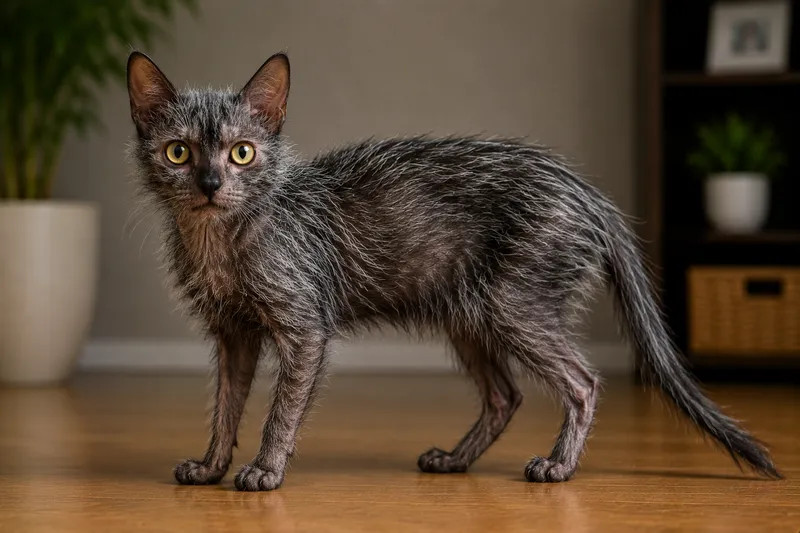
The Lykoi is a modern domestic breed developed from naturally occurring cats with an unusual sparse, roaned coat. The organised breed programme began in the United States in 2011 after unrelated cats with the same…
Recognized by: CFA · FIFe · +2
Size
Medium
Weight
2.7–5.4 kg
Life span
12–15 years
Breed Traits
Energy Level
Very energetic
Energy Level: 5 of 5
Low energyHigh energyChild / Family Compatibility
High compatibility
Child / Family Compatibility: 4 of 5
Low compatibilityHigh compatibilityGrooming Need
Moderate grooming need
Grooming Need: 3 of 5
Low maintenanceHigh maintenanceTrainability
Easy to train
Trainability: 4 of 5
Hard to trainEasy to trainApartment / Home Suitability
Fits apartments well
Apartment / Home Suitability: 4 of 5
Needs space / yardExcellent for apartmentsAlone-Time Tolerance
Handles a typical workday
Alone-Time Tolerance: 3 of 5
Needs frequent companyHandles long alone timeFirst-Time Owner Suitability
Manageable with guidance
First-Time Owner Suitability: 3 of 5
Needs experienced ownerGreat for first-time ownersCompatibility with Other Pets
Generally gets along well with other pets
Compatibility with Other Pets: 4 of 5
Single-pet homes are a better fitHighly compatible with other animals
The Lykoi is a modern domestic breed developed from naturally occurring cats with an unusual sparse, roaned coat. The organised breed programme began in the United States in 2011 after unrelated cats with the same appearance were evaluated and bred. Its name comes from a Greek word associated with wolves, reflecting the facial mask and grizzled appearance that led to the nickname werewolf cat.
This is a small-to-medium, lean, muscular cat with a modified wedge-shaped head, large expressive eyes, tall ears, medium legs, and a tapering tail. The coat has no undercoat and consists of variably sparse guard hairs. Hair is usually thinnest around the eyes, muzzle, chin, ears, legs, and feet, creating the characteristic open facial mask.
The roan effect is produced by intermixed pigmented and unpigmented hairs rather than by ordinary silver tipping. Coat coverage can change dramatically with age and the moulting cycle, and some cats temporarily lose most of their hair before regrowth. Black roan is the best-known presentation and the only colour accepted for TICA Championship competition, although Lykoi cats can occur in other colours under different registry rules.
Lykoi cats are generally active, intelligent, curious, and strongly interested in their surroundings. Many enjoy stalking games, retrieving toys, food puzzles, climbing, and investigating objects or spaces that offer a problem to solve. Their hunting-style play can be intense, so daily structured activity is important.
They often form close bonds with familiar people and may actively seek attention, warmth, or involvement in household routines. Some are cautious when meeting unfamiliar people or animals and prefer time to observe before approaching, but well-socialized individuals commonly become confident once they feel secure.
Many Lykoi cats can live successfully with respectful children, compatible cats, and cat-friendly dogs after gradual introductions. Their prey drive may make birds, rodents, fish, or other small animals unsafe housemates without secure separation. Individual temperament and early socialisation remain more important than the breed label alone.
The sparse coat does not make the Lykoi maintenance-free. Gentle weekly grooming can remove loose hair and help owners examine the skin, while bathing or careful cleansing may be needed when oil, debris, or comedones accumulate. Care should be adjusted to the individual cat rather than imposed on a rigid schedule, because excessive washing can irritate the skin.
The lack of undercoat and areas of exposed skin reduce protection from cold and strong sunlight. Provide warm resting places, avoid prolonged direct sun exposure, and discuss any topical product with a veterinarian before use. Regularly inspect the face, ears, paws, nail folds, and sparsely coated areas for redness, papules, blackheads, cyst-like swellings, crusting, discharge, or soreness.
Daily care should also include energetic interactive play, secure climbing and scratching furniture, food puzzles, dental hygiene, nail trimming, clean litter facilities, and measured portions of a complete life-stage-appropriate diet. Sudden coat loss outside the usual cycle, persistent itching, odour, ulceration, pain, or behavioural changes warrants veterinary assessment.
The Lykoi coat phenotype is a form of hereditary hypotrichia associated with loss-of-function variants in the Hairless gene, abbreviated HR. Research has identified six likely causal HR variants across different founder lineages. These variants affect hair-follicle development and produce the absent undercoat, sparse guard hairs, roaning, and cyclical coat loss that define the breed; an HR result is a coat-trait test rather than complete health clearance.
A 2026 prospective study described cutaneous adnexal polycystic syndrome in affected Lykoi cats. Reported signs included papules, comedones, nodules, and cystic changes involving hair follicles, sebaceous structures, and sweat glands, with severity ranging from mild to generalised. The study was small and did not establish breed-wide prevalence, but it shows that persistent blackheads or cyst-like lesions should not automatically be dismissed as a harmless cosmetic feature.
Prospective owners should request veterinary and family records covering chronic skin disease, recurrent infection, pain, coat cycling, longevity, and other known illnesses. Breeding programmes should combine HR genotyping with dermatologic examination, family history, genetic diversity, and routine health screening; genotype alone did not explain the severity of the newly described skin syndrome. This information is for general educational purposes and is not a substitute for diagnosis or treatment by a veterinarian.
Recognizing organizations
Independent registries that list this breed. Tap a badge to learn more.
These statuses reflect each registry’s recording and show systems. They are not a health, quality, or superiority score.
Frequently asked questions
Are Lykoi cats good family pets?
Lykoi cats can be affectionate, interactive companions for households that provide daily play, warmth, and regular skin observation. Their activity level and grooming needs make them a better match for families prepared to participate consistently in their care.
Are Lykoi cats good with children?
Many well-socialized Lykoi cats live successfully with respectful children who understand gentle handling and feline body language. Adults should supervise interactions and make sure the cat can leave when it wants rest or quiet.
Do Lykoi cats get along with other pets?
They may live successfully with compatible cats and cat-friendly dogs after gradual introductions. Their strong stalking and chase behaviour can make birds, rodents, aquarium animals, and other small pets unsafe housemates without secure separation.
Can a Lykoi live in an apartment?
A Lykoi can adapt to apartment living when provided with vigorous daily play, tall climbing furniture, scratching areas, puzzle activities, warm resting places, and secure windows or balconies. A minimally enriched home is unlikely to satisfy this active and curious cat.
Can Lykoi cats be left alone during the day?
Many adults can manage ordinary short absences and may play independently, but frequent prolonged isolation is not ideal for a cat that forms close social bonds. A predictable routine and varied enrichment help but do not replace dependable daily interaction.
How much grooming does a Lykoi need?
The coat usually needs gentle weekly grooming, with cleansing or bathing based on oil and skin condition rather than a fixed timetable. Owners should also inspect the ears, paws, nail folds, exposed skin, and facial mask for debris, irritation, blackheads, or cyst-like lesions.
Is the Lykoi hairless, hypoallergenic, or the same as a Sphynx?
The Lykoi is partially hairless and lacks an undercoat, but coat coverage changes with its moulting cycle. It is genetically and structurally distinct from the Sphynx, and reduced hair does not guarantee a hypoallergenic response because feline allergens are also present in saliva and skin secretions.
What health screening should a Lykoi breeder provide?
Ask for documented HR results, dermatologic examinations, veterinary records, and family information covering chronic comedones, cysts, infections, pain, coat cycling, and longevity. HR testing identifies coat-associated variants but cannot predict the severity of skin disease or guarantee overall health.
More about Lykoi
Pet profiles are coming soon. For now, keep exploring trusted breed knowledge in the Breed Guide.
Back to Breed Guide