

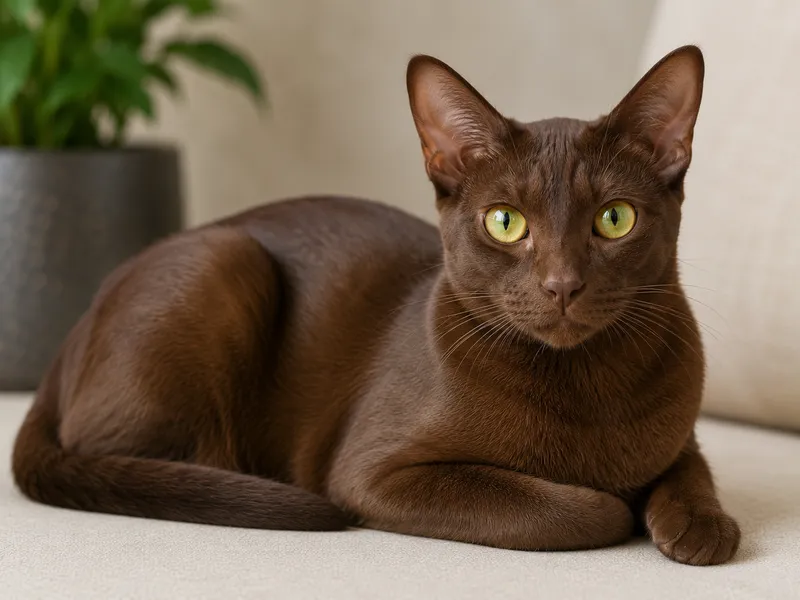
Havana Brown
The Havana Brown is a medium-sized, muscular yet graceful cat with a body that is more substantial than its outline first suggests. Its most distinctive features are brilliant green oval eyes, large forward-tilted ears,…
Recognized by: CFA · TICA
Size
Medium
Weight
2.7–4.5 kg
Life span
8–13 years
Breed Traits
Energy Level
High energy
Energy Level: 4 of 5
Low energyHigh energyChild / Family Compatibility
High compatibility
Child / Family Compatibility: 4 of 5
Low compatibilityHigh compatibilityGrooming Need
Low grooming need
Grooming Need: 1 of 5
Low maintenanceHigh maintenanceTrainability
Very easy to train
Trainability: 5 of 5
Hard to trainEasy to trainApartment / Home Suitability
Excellent apartment fit
Apartment / Home Suitability: 5 of 5
Needs space / yardExcellent for apartmentsAlone-Time Tolerance
Half-day is hard
Alone-Time Tolerance: 2 of 5
Needs frequent companyHandles long alone timeFirst-Time Owner Suitability
Suitable for many first-timers
First-Time Owner Suitability: 4 of 5
Needs experienced ownerGreat for first-time ownersCompatibility with Other Pets
Generally gets along well with other pets
Compatibility with Other Pets: 4 of 5
Single-pet homes are a better fitHighly compatible with other animals
The Havana Brown is a medium-sized, muscular yet graceful cat with a body that is more substantial than its outline first suggests. Its most distinctive features are brilliant green oval eyes, large forward-tilted ears, a pronounced stop in profile, and a rounded, almost square-ended muzzle formed by prominent whisker pads.
Under the CFA standard, the short, smooth coat occurs in a single even shade of rich, warm brown, with brown whiskers and matching brown-toned nose leather and paw pads. TICA uses the shorter breed name Havana and also accepts a lilac form, so colour eligibility depends on the registry.
The modern breed was developed in Britain during the early 1950s from planned matings involving Siamese and solid black shorthaired cats. Foundation cats were exported to North America, where breeders preserved the moderate body and distinctive muzzle. The North American Havana Brown should not be confused with the British use of Havana for the brown Oriental Shorthair variety.
Havana Browns are generally affectionate, intelligent, curious, playful, and strongly interested in people. Many follow household members between rooms, investigate new objects with their paws, greet visitors, and seek regular lap contact without necessarily being continuously demanding.
They commonly enjoy retrieving toys, puzzle feeders, climbing, interactive games, and short positive-reinforcement training sessions. Their curiosity and social confidence can make them entertaining companions, but insufficient enrichment may lead to persistent attention-seeking or unwanted exploration.
Well-socialized Havana Browns often live successfully with respectful children, compatible cats, and cat-friendly dogs. They value dependable companionship and are not well suited to frequent prolonged isolation, although individual tolerance for time alone varies.
The short, smooth coat is easy to maintain and normally needs only gentle weekly brushing or polishing with a soft cloth. Frequent bathing is unnecessary unless required for show preparation or an individual medical or hygiene need.
Daily life should include interactive play, scratching surfaces, secure climbing furniture, puzzle activities, and regular social contact. Havana Browns generally adapt well to apartment living when their need for companionship, exercise, and mental stimulation is consistently met.
Routine care should include dental hygiene, nail trimming, ear checks, body-condition monitoring, and regular veterinary examinations. Feeding should be adjusted to the individual cat's age and activity because a firm, muscular body can make gradual excess weight less obvious.
The Havana Brown is generally described as a relatively healthy breed, and no single inherited disorder is currently established as a defining population-wide condition. This does not mean that every cat or family line is free from genetic or acquired disease, and no commercial DNA panel can guarantee lifelong health.
Because the North American breeding population is rare and descends from a limited foundation, maintaining genetic diversity is an important breeding priority. Published genetic surveys have reported comparatively limited diversity in sampled Havana Browns, and CFA introduced a controlled outcross programme in 2019 using selected Oriental Shorthair, Siamese, and domestic shorthair cats. Responsible breeders should document pedigrees, outcross ancestry, and any testing selected for the specific family line.
Prospective owners should ask about family longevity, heart and kidney health, dental disease, known illnesses, causes of death, veterinary screening, and the breeder's approach to genetic diversity. Routine preventive care, weight management, and dental hygiene remain important throughout life. This information is for general educational purposes and is not a substitute for diagnosis or treatment by a veterinarian.
Recognizing organizations
Independent registries that list this breed. Tap a badge to learn more.
These statuses reflect each registry’s recording and show systems. They are not a health, quality, or superiority score.
Frequently asked questions
Are Havana Browns good family cats?
Havana Browns are often affectionate, playful, and people-oriented family companions. They commonly live well with respectful children who understand gentle handling and allow the cat to withdraw when it chooses.
Do Havana Browns get along with other pets?
Well-socialized Havana Browns generally have good potential to live successfully with compatible cats and cat-friendly dogs. Introductions should still be gradual because individual temperament, age, and previous experience affect every relationship.
Can a Havana Brown live in an apartment?
A Havana Brown can adapt very well to apartment living when provided with daily play, climbing opportunities, scratching areas, puzzle activities, and dependable companionship.
Can Havana Browns be left alone during the day?
Most adults can manage ordinary short absences, but the breed is not well suited to frequent prolonged isolation. A predictable routine, extensive enrichment, and a compatible human or animal companion can help meet its social needs.
How much grooming does a Havana Brown need?
The short, smooth coat normally needs only gentle weekly brushing or polishing with a soft cloth. Dental care, nail trimming, ear checks, and body-condition monitoring usually require more attention than coat maintenance.
Is a Havana Brown always brown?
Under the CFA standard, yes: the Havana Brown is shown only in an even shade of warm brown. TICA calls the breed Havana and additionally accepts lilac, so the answer depends on the registry system being used.
Is the Havana Brown the same as the British Havana or a brown Oriental Shorthair?
No. The North American Havana Brown has a moderate body, pronounced profile stop, and distinctive rounded muzzle. In GCCF usage, Havana refers to the brown self variety of the more slender, wedge-headed Oriental Shorthair.
What health information should a Havana Brown breeder provide?
A responsible breeder should discuss family longevity, known illnesses, heart and kidney health, dental disease, causes of death, veterinary screening, pedigree diversity, outcross ancestry, and any genetic tests selected for the specific line.
More about Havana Brown
Pet profiles are coming soon. For now, keep exploring trusted breed knowledge in the Breed Guide.
Back to Breed Guide