

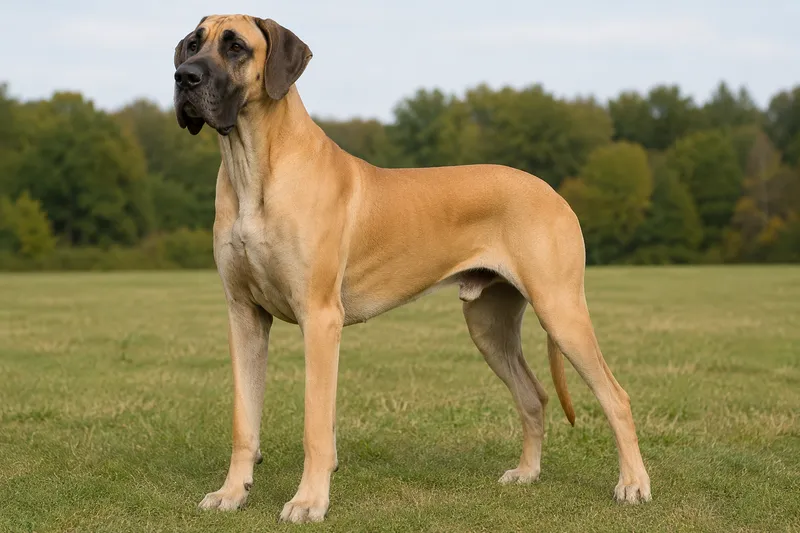
Great Dane
The Great Dane is a giant dog combining exceptional height and power with a relatively elegant, athletic outline. The rectangular head, deep chest, long limbs, and short coat create its distinctive silhouette; natural…
Recognized by: AKC · ANKC · +5
Size
Giant
Weight
49.9–79.4 kg
Life span
7–10 years
Breed Traits
Energy Level
Moderate energy
Energy Level: 3 of 5
Low energyHigh energyChild / Family Compatibility
High compatibility
Child / Family Compatibility: 4 of 5
Low compatibilityHigh compatibilityGrooming Need
Light grooming need
Grooming Need: 2 of 5
Low maintenanceHigh maintenanceTrainability
Easy to train
Trainability: 4 of 5
Hard to trainEasy to trainApartment / Home Suitability
Struggles in small spaces
Apartment / Home Suitability: 2 of 5
Needs space / yardExcellent for apartmentsAlone-Time Tolerance
Half-day is hard
Alone-Time Tolerance: 2 of 5
Needs frequent companyHandles long alone timeFirst-Time Owner Suitability
Challenging for beginners
First-Time Owner Suitability: 2 of 5
Needs experienced ownerGreat for first-time ownersCompatibility with Other Pets
Generally gets along well with other pets
Compatibility with Other Pets: 4 of 5
Single-pet homes are a better fitHighly compatible with other animals
The Great Dane is a giant dog combining exceptional height and power with a relatively elegant, athletic outline. The rectangular head, deep chest, long limbs, and short coat create its distinctive silhouette; natural ears are medium-sized and fold downward, while an upright appearance results from cropping.
Despite its English name, the breed was developed in Germany and is known there as the Deutsche Dogge. Its ancestors were used to hunt wild boar and guard estates before the modern Great Dane became established primarily as a companion and show dog.
Great Danes occur in several recognized colors and patterns, including fawn, brindle, black, blue, harlequin, and merle under major standards. Their imposing appearance must remain balanced and functional, without sacrificing sound movement, stable temperament, or overall welfare for extreme size.
Great Danes are commonly friendly, affectionate, dependable, and eager to remain close to their households. Many are calm indoors once their needs are met, but their size magnifies ordinary behaviors such as leaning, jumping, pulling, or sweeping objects with the tail.
Early socialization and reward-based training are essential while the dog is still physically manageable. Polite greetings, loose-leash walking, recall, settling, and comfortable handling should be practiced consistently because an untrained adult can be difficult to control without intending harm.
Many Great Danes live successfully with considerate children and compatible animals. Their sheer weight and long limbs require supervision around small children and delicate pets, and individual prey drive, confidence, and dog-to-dog tolerance should always guide introductions.
A healthy adult Great Dane needs daily exercise, but activity should emphasize controlled walks, play, and mental engagement rather than relentless endurance work. Growing puppies need age-appropriate movement and should avoid repeated high-impact exercise while their bones and joints are developing.
Giant size affects nearly every part of ownership, including housing, transport, bedding, fencing, food, medication, and veterinary costs. A Great Dane needs enough indoor room to turn and rest comfortably, secure outdoor access, and household arrangements that do not depend on lifting the dog in an emergency.
The short coat usually needs weekly brushing and occasional bathing, but nails, ears, teeth, and skin still require routine care. Feed a nutritionally complete diet appropriate to age and giant-breed growth, maintain a lean body condition, and coordinate feeding or growth concerns with a veterinarian rather than adding supplements independently.
Great Danes have important health risks including gastric dilatation-volvulus, commonly called bloat, dilated cardiomyopathy, hip and elbow dysplasia, thyroid disease, and eye disorders. Wobbler syndrome, inherited myopathy of Great Danes, and cancers such as osteosarcoma can also occur, although risk and presentation vary among individuals.
Recommended breeding evaluations include hip, cardiac, ophthalmologist, and thyroid examinations, with elbow assessment and the IMGD DNA test also recommended by some official programs. Cardiac and thyroid status can change over time, so a single early result should not be treated as a lifetime guarantee; buyers should request current, verifiable records for both parents.
Owners should learn the emergency signs of GDV, which can include a rapidly enlarging abdomen, repeated unproductive attempts to vomit, drooling, restlessness, weakness, or collapse. These signs require immediate veterinary attention, and feeding routines, exercise around meals, and individual preventive planning should be discussed with the dog's veterinarian.
This information is for general educational purposes and is not a substitute for diagnosis or treatment by a veterinarian.
Recognizing organizations
Independent registries that list this breed. Tap a badge to learn more.
These statuses reflect each registry’s recording and show systems. They are not a health, quality, or superiority score.
AKCFull recognitionhttps://www.akc.org/dog-breeds/great-dane/ ANKCFull recognitionhttps://dogsaustralia.org.au/members/breeds/breed-standards/Great-Dane CKCRecognized breedhttps://www.ckc.ca/en/Choosing-a-Dog/Choosing-a-Breed/Working-Dogs/Great-Dane FCIDefinitive recognitionhttps://www.fci.be/en/nomenclature/DEUTSCHE-DOGGE-235.html NZKCRecognised breedhttps://www.dogsnz.org.nz/breeds/info/great-dane/736 RKCBreed Registerhttps://www.royalkennelclub.com/search/breeds-a-to-z/breeds/working/great-dane/ UKCFull recognitionhttps://www.ukcdogs.com/great-dane
Frequently asked questions
Can a Great Dane live in an apartment?
A calm Great Dane can sometimes adapt to an apartment if daily exercise and indoor resting space are adequate. Stairs, narrow corridors, elevators, noise, transport, and the ability to manage an injured dog make the practical demands much greater than the breed's indoor energy level alone suggests.
How much exercise does a Great Dane need?
Healthy adults benefit from daily walks, controlled play, and mental enrichment without excessive repetitive impact. Puppies and adolescents need carefully paced activity because rapid growth places additional demands on developing bones and joints.
Are Great Danes good with children?
Many well-socialized Great Danes are gentle and affectionate with considerate children. Their enormous size can cause accidental falls or injuries, so adults should supervise interactions and teach calm greetings, respectful handling, and safe separation.
Can Great Danes live with other pets?
Many Great Danes live successfully with compatible dogs and cats after gradual introductions. Size differences can make even friendly play unsafe for very small animals, so compatibility and supervision should be assessed for each individual household.
Are Great Danes easy to train?
Great Danes are generally responsive learners when training is consistent, positive, and started early. Loose-leash walking, polite greetings, handling, recall, and settling are priorities because unwanted habits become far harder to manage in a giant adult.
What should a Great Dane puppy eat?
A Great Dane puppy should receive a complete diet formulated appropriately for controlled large- or giant-breed growth. Avoid overfeeding and unprescribed mineral supplements, monitor body condition and growth, and ask a veterinarian to address individual dietary concerns.
What health screening should a Great Dane breeder provide?
Ask for documented hip, cardiac, eye, and thyroid evaluations for both parents, together with relevant elbow and IMGD results. Check that records are current and independently verifiable, especially because cardiac and thyroid findings may change as a dog ages.
What are the warning signs of bloat in a Great Dane?
A swollen or tight abdomen, repeated unproductive retching, heavy drooling, restlessness, weakness, or collapse can indicate gastric dilatation-volvulus. GDV is a rapidly life-threatening emergency, so suspected signs require immediate veterinary attention rather than observation at home.
More about Great Dane
Pet profiles are coming soon. For now, keep exploring trusted breed knowledge in the Breed Guide.
Back to Breed Guide