

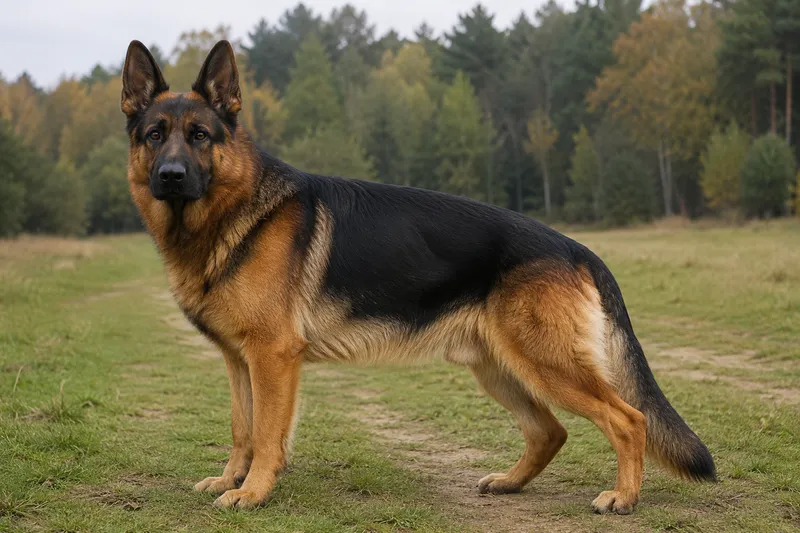
German Shepherd
The German Shepherd is a large, athletic working dog with an alert expression, erect ears, a strong but balanced frame, and efficient ground-covering movement. The breed has a weather-resistant double coat and is found…
Recognized by: AKC · ANKC · +5
Size
Large
Weight
22–40 kg
Life span
10–12 years
Breed Traits
Energy Level
Very energetic
Energy Level: 5 of 5
Low energyHigh energyChild / Family Compatibility
High compatibility
Child / Family Compatibility: 4 of 5
Low compatibilityHigh compatibilityGrooming Need
High grooming need
Grooming Need: 4 of 5
Low maintenanceHigh maintenanceTrainability
Very easy to train
Trainability: 5 of 5
Hard to trainEasy to trainApartment / Home Suitability
Struggles in small spaces
Apartment / Home Suitability: 2 of 5
Needs space / yardExcellent for apartmentsAlone-Time Tolerance
Half-day is hard
Alone-Time Tolerance: 2 of 5
Needs frequent companyHandles long alone timeFirst-Time Owner Suitability
Challenging for beginners
First-Time Owner Suitability: 2 of 5
Needs experienced ownerGreat for first-time ownersCompatibility with Other Pets
Can adapt with proper socialization
Compatibility with Other Pets: 3 of 5
Single-pet homes are a better fitHighly compatible with other animals
The German Shepherd is a large, athletic working dog with an alert expression, erect ears, a strong but balanced frame, and efficient ground-covering movement. The breed has a weather-resistant double coat and is found in both standard and long-coat varieties within major international standards.
The breed was developed in Germany around the turn of the twentieth century from regional herding dogs, with working ability, sound temperament, and versatility as central goals. German Shepherds later became widely used in herding, police and military work, search and rescue, assistance roles, tracking, obedience, and many dog sports.
This intelligence and versatility bring substantial ownership demands. German Shepherds need structured training, early socialization, vigorous daily activity, mental work, and close involvement with their household; without these outlets, boredom and poorly managed guarding or herding behavior can become difficult.
A well-bred German Shepherd should be confident, attentive, steady, and willing to work with its handler. Many are naturally watchful and may be reserved with unfamiliar people, but fearfulness, unstable nerves, and uncontrolled aggression are not desirable breed characteristics.
They are highly trainable, yet intelligence does not make them effortless dogs. Reward-based training should begin early and include calm handling, reliable recall, loose-leash walking, impulse control, and controlled exposure to people, animals, sounds, surfaces, and unfamiliar places.
German Shepherds can be devoted family companions and may live successfully with respectful children and compatible pets. Their size, strength, protective tendencies, and possible herding or chasing behavior make adult supervision and careful introductions essential, especially around young children or smaller animals.
German Shepherds need substantial daily exercise combined with purposeful mental activity. Long walks, training sessions, tracking, scent work, retrieving, hiking, and suitable dog sports can help meet their needs, while growing puppies should avoid repetitive high-impact exercise until their bodies mature.
The double coat sheds throughout the year and often heavily during seasonal coat changes. Thorough brushing several times a week, and more frequently during shedding periods, helps remove loose undercoat; routine care should also include nail trimming, dental hygiene, and ear checks.
Maintaining a lean body condition supports joint health and working fitness. These dogs usually do best when they share daily life with their household, and they may struggle when routinely left without companionship, training, or activity for long periods; alone-time skills should be introduced gradually.
Hip and elbow dysplasia are important orthopedic concerns in German Shepherds, so documented evaluations of both joints are central to responsible breeding. Prospective owners should also pay attention to functional movement and avoid breeders who normalize weak, unstable, or exaggerated structure.
Other health concerns reported in the breed include degenerative myelopathy, eye disease, gastric dilatation-volvulus, certain digestive disorders, and cardiac or thyroid conditions. A DNA result for degenerative myelopathy indicates genetic risk rather than providing a diagnosis or guaranteeing that an individual dog will or will not develop disease.
Prospective owners should request verifiable hip and elbow results and documented temperament assessment, then ask about degenerative myelopathy DNA status, eye examination, and any cardiac or thyroid screening recommended by the breeder's national program. This information is for general educational purposes and is not a substitute for diagnosis or treatment by a veterinarian.
Recognizing organizations
Independent registries that list this breed. Tap a badge to learn more.
These statuses reflect each registry’s recording and show systems. They are not a health, quality, or superiority score.
AKCFull recognitionhttps://www.akc.org/dog-breeds/german-shepherd-dog/ ANKCFull recognitionhttps://www.dogsaustralia.org.au/members/breeds/breed-standards/German-Shepherd-Dog CKCRecognized breedhttps://www.ckc.ca/en/Choosing-a-Dog/Choosing-a-Breed/Herding-Dogs/German-Shepherd-Dog FCIDefinitive recognitionhttps://www.fci.be/en/nomenclature/GERMAN-SHEPHERD-DOG-166.html NZKCRecognised breedhttps://www.dogsnz.org.nz/breeds/select-breed RKCBreed Registerhttps://www.royalkennelclub.com/search/breeds-a-to-z/breeds/pastoral/german-shepherd-dog/ UKCFull recognitionhttps://www.ukcdogs.com/breed-standards/german-shepherd-dog
Frequently asked questions
Are German Shepherds good family dogs?
A well-bred, well-socialized German Shepherd can be a devoted family companion. Because the breed is large, powerful, and often protective, interactions with children should be supervised and the dog should receive consistent training, exercise, and a secure place to rest.
How much exercise does a German Shepherd need?
Most healthy adult German Shepherds need substantial daily exercise together with training or other mental work. The exact amount should reflect age, health, conditioning, and weather, while puppies require controlled activity that does not repeatedly overload developing joints.
Can a German Shepherd live in an apartment?
Apartment living is possible for an individual whose exercise, training, toilet, and enrichment needs are reliably met, but it is not the easiest setting for this active large breed. Access to outdoor space does not replace daily walks, structured activity, calm indoor training, or appropriate socialization.
Can German Shepherds be left alone during the day?
Adult German Shepherds can learn to tolerate reasonable periods alone, but frequent prolonged isolation is a poor match for their social and working nature. Alone-time training should be gradual, with exercise, enrichment, and dependable interaction provided around absences.
Do German Shepherds shed a lot?
Yes. Their double coat sheds throughout the year and often releases much more undercoat seasonally, so thorough brushing several times a week is usually needed and daily brushing may help during heavy shedding periods.
Are German Shepherds easy to train?
German Shepherds are highly trainable and often enjoy learning, but their intelligence, strength, and sensitivity require consistent handling. Short reward-based sessions, early socialization, clear household rules, and continuing practice are more effective than harsh or confrontational methods.
Do German Shepherds get along with other pets?
Many German Shepherds live successfully with other dogs or cats when introduced carefully and socialized from an early age. Compatibility varies by individual, and herding, chasing, territorial, or guarding behavior means supervision may remain necessary around smaller animals or unfamiliar dogs.
What health screening should a German Shepherd breeder discuss?
A responsible breeder should provide verifiable hip and elbow evaluations and discuss temperament assessment. Buyers should also ask about degenerative myelopathy DNA status, eye examinations, cardiac or thyroid evaluations where recommended, and health information for close relatives.
More about German Shepherd
Pet profiles are coming soon. For now, keep exploring trusted breed knowledge in the Breed Guide.
Back to Breed Guide