

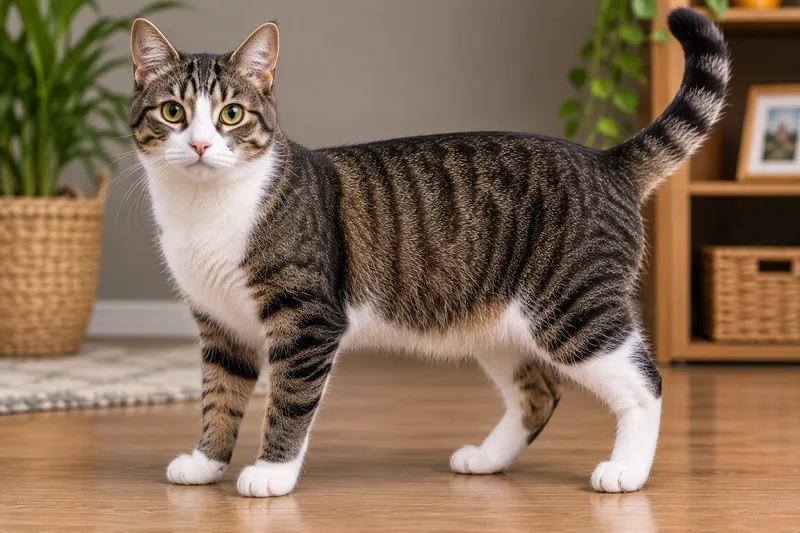
Domestic Shorthair
Domestic Shorthair describes non-pedigree or mixed-ancestry domestic cats with short coats. It is a practical shelter, veterinary, and registry category rather than a standardized breed, so these cats do not share one…
Recognized by: FIFe
Size
Medium
Weight
3–6.5 kg
Life span
12–18 years
Breed Traits
Energy Level
Moderate energy
Energy Level: 3 of 5
Low energyHigh energyChild / Family Compatibility
Moderate compatibility
Child / Family Compatibility: 3 of 5
Low compatibilityHigh compatibilityGrooming Need
Light grooming need
Grooming Need: 2 of 5
Low maintenanceHigh maintenanceTrainability
Moderately trainable
Trainability: 3 of 5
Hard to trainEasy to trainApartment / Home Suitability
Fits apartments well
Apartment / Home Suitability: 4 of 5
Needs space / yardExcellent for apartmentsAlone-Time Tolerance
Handles a typical workday
Alone-Time Tolerance: 3 of 5
Needs frequent companyHandles long alone timeFirst-Time Owner Suitability
Suitable for many first-timers
First-Time Owner Suitability: 4 of 5
Needs experienced ownerGreat for first-time ownersCompatibility with Other Pets
Can adapt with proper socialization
Compatibility with Other Pets: 3 of 5
Single-pet homes are a better fitHighly compatible with other animals
Domestic Shorthair describes non-pedigree or mixed-ancestry domestic cats with short coats. It is a practical shelter, veterinary, and registry category rather than a standardized breed, so these cats do not share one documented ancestry, body shape, colour, or predictable personality.
Individuals may be small or large, slender or substantial, and can have almost any feline colour, pattern, eye colour, and facial shape. Coat texture ranges from fine and close-lying to dense and plush, depending on ancestry, climate, age, and individual genetics.
A short coat and familiar tabby pattern do not make a cat an American Shorthair, British Shorthair, European, or another pedigree breed. Reliable pedigree records are needed to confirm a recognized breed; without them, Domestic Shorthair is usually the most accurate description.
There is no single Domestic Shorthair temperament. Individuals may be outgoing, cautious, highly playful, calm, independent, vocal, or strongly people-oriented, with behaviour shaped by genetics, early socialization, health, previous experiences, and the current environment.
Most benefit from daily interactive play, scratching surfaces, climbing and hiding areas, food puzzles, and predictable social contact. Activity levels vary widely, so care should be adjusted to the individual rather than based on coat length or appearance.
A well-socialized Domestic Shorthair may live successfully with respectful children, compatible cats, or cat-friendly dogs. Gradual introductions, sufficient resources, and attention to body language are more reliable than assumptions based on the category name.
The short coat is generally easy to maintain. Weekly brushing with a soft brush, comb, or grooming glove can remove loose hair and help owners notice parasites, wounds, lumps, dandruff, or changes in coat condition. Cats with dense undercoats or heavy seasonal shedding may benefit from more frequent grooming.
Daily care should include interactive play, scratching and climbing opportunities, clean litter facilities, nail care, dental hygiene, and measured portions of a complete life-stage-appropriate diet. Body condition should be assessed by touch because gradual weight gain can be overlooked even in short-coated cats.
A greasy, unkempt, thinning, or suddenly shedding coat may reflect pain, obesity, dental disease, skin disease, parasites, stress, or another health problem. Reduced self-grooming, persistent itching, bald areas, or skin lesions warrants veterinary assessment rather than simply increasing brushing.
Domestic Shorthairs are genetically diverse and do not have one breed-wide inherited disease profile. Health risks depend on individual ancestry, age, sex, reproductive status, body condition, lifestyle, infectious-disease exposure, and family history. Visual resemblance to a pedigree breed is not enough to assume that breed's disorders or select a DNA panel without supporting ancestry information.
Common feline health concerns remain relevant, including dental disease, excess weight, kidney disease, hyperthyroidism in older cats, diabetes, urinary disorders, parasites, and infectious disease. These are not unique to Domestic Shorthairs, and risk changes with age and lifestyle. Preventive care should therefore be individualized rather than based on the category label alone.
Regular veterinary examinations, risk-based vaccination and parasite control, oral-health assessment, and monitoring of weight, appetite, thirst, activity, breathing, and litter-box habits support early detection. Adopters should share any known medical records and discuss previous outdoor exposure, retrovirus testing, reproductive status, and age-appropriate screening with their veterinarian. This information is for general educational purposes and is not a substitute for diagnosis or treatment by a veterinarian.
Recognizing organizations
Independent registries that list this breed. Tap a badge to learn more.
These statuses reflect each registry’s recording and show systems. They are not a health, quality, or superiority score.
Frequently asked questions
Is a Domestic Shorthair a recognized cat breed?
Domestic Shorthair is generally a descriptive category for a non-pedigree or mixed-ancestry cat, not a single standardized breed. Some registries provide household-pet show classes, but that does not make every Domestic Shorthair a pedigree breed.
What is the difference between a Domestic Shorthair and an American Shorthair?
Domestic Shorthair describes cats without documented pedigree identity, while American Shorthair is a standardized pedigree breed with registered ancestry. Similar coat colour, body shape, or facial features cannot confirm American Shorthair ancestry.
Are Domestic Shorthairs good family cats?
Many are affectionate and adaptable family companions, but the category does not predict one temperament. Suitability depends on the individual cat's socialization, handling preferences, health, activity level, and ability to retreat from unwanted attention.
Do Domestic Shorthairs get along with children and other pets?
Some live very successfully with respectful children, compatible cats, or cat-friendly dogs, while others prefer a quieter or single-pet home. Slow introductions, supervision, separate resources, and attention to body language are essential.
Can a Domestic Shorthair live in an apartment?
Most can adapt to apartment living when the home provides daily play, vertical territory, scratching surfaces, hiding places, clean litter facilities, and secure windows or balconies. The individual cat's energy level and previous lifestyle should guide enrichment.
Can Domestic Shorthairs be left alone during the day?
Many adults can manage ordinary short absences when their routine and environment are stable. Frequent prolonged isolation may cause boredom or stress in social individuals, so dependable interaction and enrichment remain important.
How much grooming does a Domestic Shorthair need?
Weekly brushing is sufficient for many cats, although dense-coated or heavily shedding individuals may need more frequent care. Grooming should also be used to check the skin, coat, ears, nails, and body condition for changes.
What health screening does a Domestic Shorthair need?
There is no universal breed-specific DNA panel because ancestry varies widely. Screening should be based on physical examination, age, lifestyle, previous outdoor exposure, known family or pedigree information, and any clinical signs identified by a veterinarian.
More about Domestic Shorthair
Pet profiles are coming soon. For now, keep exploring trusted breed knowledge in the Breed Guide.
Back to Breed Guide