

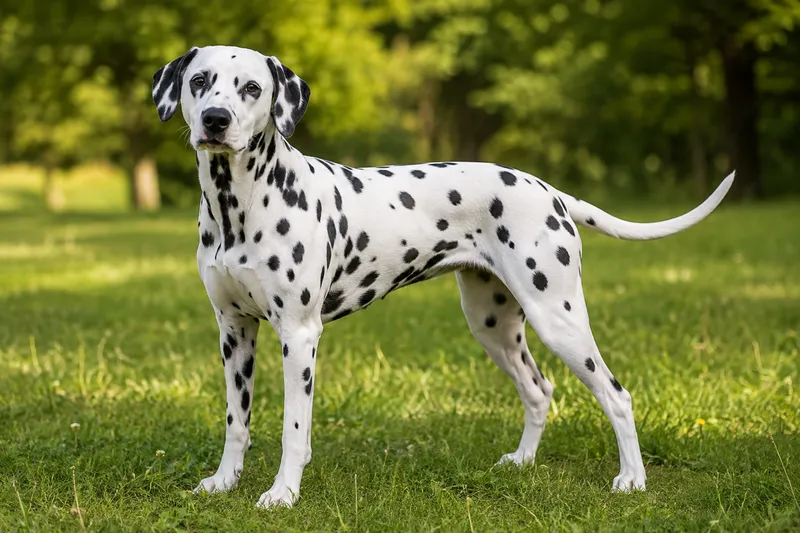
Dalmatian
The Dalmatian is a medium-sized, muscular, athletic dog with drop ears, a natural tapering tail, and a short white coat marked with clearly defined black or liver-colored spots. Puppies are born predominantly white,…
Recognized by: AKC · ANKC · +5
Size
Medium
Weight
20.4–31.8 kg
Life span
11–13 years
Breed Traits
Energy Level
Very energetic
Energy Level: 5 of 5
Low energyHigh energyChild / Family Compatibility
High compatibility
Child / Family Compatibility: 4 of 5
Low compatibilityHigh compatibilityGrooming Need
Light grooming need
Grooming Need: 2 of 5
Low maintenanceHigh maintenanceTrainability
Easy to train
Trainability: 4 of 5
Hard to trainEasy to trainApartment / Home Suitability
Struggles in small spaces
Apartment / Home Suitability: 2 of 5
Needs space / yardExcellent for apartmentsAlone-Time Tolerance
Half-day is hard
Alone-Time Tolerance: 2 of 5
Needs frequent companyHandles long alone timeFirst-Time Owner Suitability
Challenging for beginners
First-Time Owner Suitability: 2 of 5
Needs experienced ownerGreat for first-time ownersCompatibility with Other Pets
Generally gets along well with other pets
Compatibility with Other Pets: 4 of 5
Single-pet homes are a better fitHighly compatible with other animals
The Dalmatian is a medium-sized, muscular, athletic dog with drop ears, a natural tapering tail, and a short white coat marked with clearly defined black or liver-colored spots. Puppies are born predominantly white, with most spots becoming visible as they grow.
The breed is historically associated with Dalmatia in present-day Croatia and became renowned as a coach dog that ran beside horse-drawn vehicles while helping guard horses, passengers, and property. Its affinity with horses later contributed to its enduring association with horse-drawn fire engines and firehouses.
The FCI lists the breed under the Croatian title Dalmatinski Pas, and the Turkish name is Dalmaçyalı; these are language-specific names for the same breed. The Dalmatian's appearance should remain secondary to sound movement, endurance, stable temperament, and overall physical function.
Dalmatians are commonly intelligent, energetic, loyal, playful, and closely attached to their households. Some are naturally reserved with unfamiliar people, making early positive socialization important for producing confidence without fearfulness or inappropriate guarding.
Their stamina and quick mind require more than occasional short walks. Reward-based training should begin early and include loose-leash walking, recall, calm greetings, settling, handling, and impulse control, with varied sessions that keep the dog mentally engaged.
Many well-socialized Dalmatians live successfully with considerate children, compatible dogs, and other household animals. Their strength, exuberance, individual prey drive, and possible guarding tendencies mean interactions and introductions should still be supervised and managed.
A healthy adult Dalmatian needs substantial daily exercise and mental activity. Brisk walks, controlled running after physical maturity, hiking, training, scent work, and vigorous play can be appropriate, while secure fencing and reliable leash skills help prevent unsafe roaming or chasing.
The short coat is easy to brush but sheds throughout the year. Weekly brushing, occasional bathing, routine nail trimming, dental care, and regular ear and skin checks remain necessary; dogs with hearing impairment may also benefit from visual cues and carefully managed recall and road safety.
Because Dalmatians have a distinctive tendency toward elevated urinary uric acid, provide constant access to fresh water and regular opportunities to urinate. Diet changes, purine restriction, supplements, or medication should be based on the individual dog's veterinary assessment rather than applied without professional guidance.
Important health concerns in Dalmatians include congenital sensorineural deafness, hyperuricosuria and urate urinary stones, hip dysplasia, and elbow dysplasia. Allergic skin disease, thyroid disorders, epilepsy, and certain eye or cardiac conditions may also occur, although risk varies among individuals and family lines.
Recommended breeding and puppy evaluations include BAER hearing testing and hip assessment. HUU DNA testing, elbow evaluation, and the DD-PRKG2 test for disproportionate dwarfism are also recommended in some current official programs. BAER results should record each ear separately because a dog with hearing in only one ear may appear to hear normally in everyday situations.
Owners should monitor hearing, mobility, skin, thirst, and urinary habits. Straining to urinate, repeated attempts producing little or no urine, blood in the urine, abdominal pain, vomiting, marked restlessness, or collapse can indicate urinary obstruction and requires immediate veterinary attention.
This information is for general educational purposes and is not a substitute for diagnosis or treatment by a veterinarian.
Recognizing organizations
Independent registries that list this breed. Tap a badge to learn more.
These statuses reflect each registry’s recording and show systems. They are not a health, quality, or superiority score.
AKCFull recognitionhttps://www.akc.org/dog-breeds/dalmatian/ ANKCFull recognitionhttps://dogsaustralia.org.au/members/breeds/breed-standards/Dalmatian CKCRecognized breedhttps://www.ckc.ca/en/Choosing-a-Dog/Choosing-a-Breed/Non-Sporting-Dogs/Dalmatian FCIDefinitive recognitionhttps://www.fci.be/en/nomenclature/DALMATIAN-153.html NZKCRecognised breedhttps://www.dogsnz.org.nz/breeds/info/dalmatian/724 RKCBreed Registerhttps://www.royalkennelclub.com/search/breeds-a-to-z/breeds/utility/dalmatian/ UKCFull recognitionhttps://www.ukcdogs.com/dalmatian
Frequently asked questions
Can a Dalmatian live in an apartment?
Apartment living is possible only when the dog receives substantial daily exercise, training, and mental enrichment. Its size, stamina, shedding, and potential restlessness or vocal behavior make a home with more usable space easier for many owners.
How much exercise does a Dalmatian need?
A healthy adult generally needs vigorous daily activity divided among walks, training, play, and opportunities to run safely. Puppies should avoid excessive forced or repetitive impact while developing, and every exercise plan should reflect the dog's age, fitness, and health.
Are Dalmatians good with children?
Many well-socialized Dalmatians are affectionate and playful with considerate children. Their strength and exuberance can accidentally knock over a small child, so adults should supervise interactions and teach both dog and child calm, respectful behavior.
Can Dalmatians live with other pets?
Many Dalmatians live successfully with compatible dogs, cats, and even horses after careful introductions. Individual prey drive, guarding behavior, and play style vary, so compatibility should be evaluated and interactions with smaller animals supervised.
Are Dalmatians easy to train?
Dalmatians are intelligent and capable learners, but their energy, sensitivity, and independence require consistency. Short reward-based sessions, early socialization, impulse-control exercises, reliable recall practice, and sufficient daily activity usually produce the best results.
Do Dalmatians shed a lot?
Yes. Their short hairs shed throughout the year and can cling to clothing and furniture even though the coat looks low-maintenance. Weekly brushing and more frequent grooming when shedding increases help remove loose hair and support skin health.
Why is BAER hearing testing important for Dalmatians?
Dalmatians have an increased risk of congenital deafness in one or both ears. BAER testing objectively measures each ear, allowing unilateral hearing loss to be identified even when a puppy appears to respond normally to everyday sounds.
What health screening should a Dalmatian breeder provide?
Ask for individual BAER results for every puppy and independently verifiable hip results for both parents. Also request relevant HUU, elbow, and DD-PRKG2 results where applicable, and review family history rather than treating completion of screening as a health guarantee.
More about Dalmatian
Pet profiles are coming soon. For now, keep exploring trusted breed knowledge in the Breed Guide.
Back to Breed Guide