

Cornish Rex
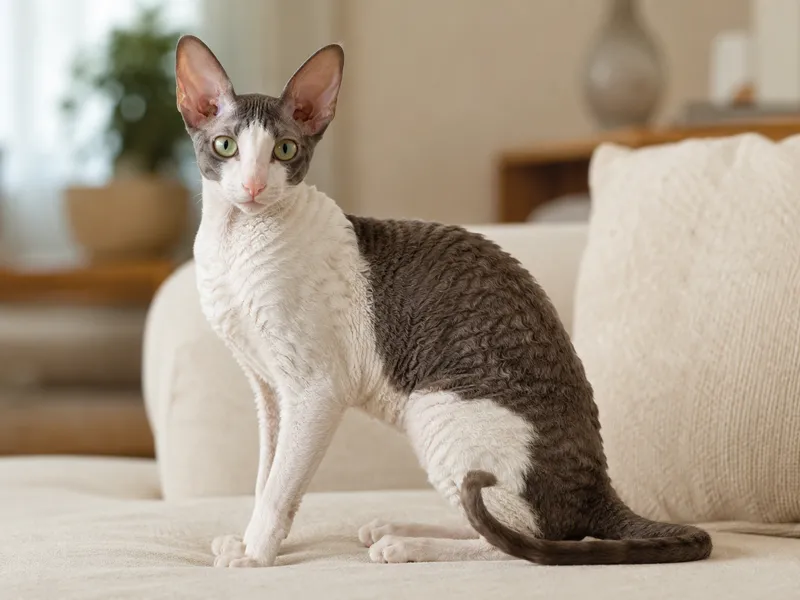
The Cornish Rex is a small, fine-boned but muscular cat with long legs, an arched back, a narrow waist, a tapering tail, large ears, and an egg-shaped head. Its defining feature is an exceptionally soft, short coat that…
Recognized by: CFA · FIFe · +2
Size
Small
Weight
2.3–4.5 kg
Life span
9–16 years
Breed Traits
Energy Level
Very energetic
Energy Level: 5 of 5
Low energyHigh energyChild / Family Compatibility
Very high compatibility
Child / Family Compatibility: 5 of 5
Low compatibilityHigh compatibilityGrooming Need
Light grooming need
Grooming Need: 2 of 5
Low maintenanceHigh maintenanceTrainability
Very easy to train
Trainability: 5 of 5
Hard to trainEasy to trainApartment / Home Suitability
Fits apartments well
Apartment / Home Suitability: 4 of 5
Needs space / yardExcellent for apartmentsAlone-Time Tolerance
Very short alone time (a few hours)
Alone-Time Tolerance: 1 of 5
Needs frequent companyHandles long alone timeFirst-Time Owner Suitability
Manageable with guidance
First-Time Owner Suitability: 3 of 5
Needs experienced ownerGreat for first-time ownersCompatibility with Other Pets
Shows very high compatibility
Compatibility with Other Pets: 5 of 5
Single-pet homes are a better fitHighly compatible with other animals
The Cornish Rex is a small, fine-boned but muscular cat with long legs, an arched back, a narrow waist, a tapering tail, large ears, and an egg-shaped head. Its defining feature is an exceptionally soft, short coat that lies close to the body in regular waves, with curled or shortened whiskers and no typical protective layer of guard hairs.
The breed began in Cornwall, England, in 1950, when a curly-coated male kitten named Kallibunker was born in a litter of otherwise straight-coated farm cats. Early breeding demonstrated that the coat was produced by a recessive mutation, and selected outcrosses were later used to broaden the breed's limited foundation.
Although elegant and delicate in appearance, the Cornish Rex is an athletic, warm-bodied, and energetic cat. It is best suited to an indoor home that provides frequent companionship, extensive play, climbing opportunities, and protection from uncomfortable cold or excessive sun.
Cornish Rex cats are generally affectionate, outgoing, curious, and strongly involved in household life. Many follow their owners between rooms, seek physical closeness, sleep under blankets, and attempt to participate in almost every activity.
They are highly intelligent and energetic, often enjoying retrieving toys, climbing, jumping, puzzle feeders, and short positive-reinforcement training sessions. Their playful behavior commonly continues well into adulthood, and insufficient stimulation may lead them to invent unwanted activities of their own.
Well-socialized Cornish Rex cats frequently live successfully with respectful children, compatible cats, and cat-friendly dogs. Their strong social needs make them poorly suited to frequent prolonged isolation, particularly in a home without another compatible companion.
The short wavy coat requires little conventional brushing and can be damaged by rough grooming. Gentle hand grooming or occasional use of a very soft cloth is usually sufficient, while bathing should be based on the individual cat's skin, oil buildup, and veterinary guidance rather than performed on an unnecessarily rigid schedule.
Ears, paws, and nail beds may accumulate oil and should be checked regularly and cleaned gently when needed. Because the coat offers limited insulation and sun protection, the cat should have warm indoor resting places and should be protected from cold drafts, unsafe heaters, and prolonged exposure to intense sunlight.
Daily life should include vigorous interactive play, tall and stable climbing furniture, scratching surfaces, puzzle activities, and opportunities to run safely. Routine care should also include dental hygiene, nail trimming, body-condition monitoring, and regular veterinary examinations.
Cornish Rex cats are generally considered a healthy breed, but hypertrophic cardiomyopathy has been reported in some individuals and family lines. Prospective owners should ask about family cardiac history, screening practices, longevity, and known causes of illness or death in related cats.
Patellar luxation, in which a kneecap moves out of its normal position, has also been reported in the breed. The thin coat may leave some cats more vulnerable to skin irritation, sunburn, cold discomfort, or oil accumulation around the ears, feet, and skin surface.
Cornish Rex cats may have blood type A or B, making documented blood-group compatibility relevant in responsible breeding programs. No genetic panel, pedigree, or health examination can guarantee lifelong health. This information is for general educational purposes and is not a substitute for diagnosis or treatment by a veterinarian.
Recognizing organizations
Independent registries that list this breed. Tap a badge to learn more.
These statuses reflect each registry’s recording and show systems. They are not a health, quality, or superiority score.
Frequently asked questions
Are Cornish Rex cats good family pets?
Cornish Rex cats are often affectionate, playful, and highly involved family companions. They commonly live well with respectful children, although their energetic play and delicate coat still require gentle, supervised handling.
Do Cornish Rex cats get along with other pets?
Well-socialized Cornish Rex cats generally have a high potential to live successfully with compatible cats and cat-friendly dogs. Gradual introductions remain important because individual temperament and previous experience influence every relationship.
Can a Cornish Rex live in an apartment?
A Cornish Rex can adapt well to apartment living when the home provides tall climbing areas, daily energetic play, scratching surfaces, and mental stimulation. A small but poorly enriched home may not meet the needs of this active breed.
Can Cornish Rex cats be left alone during the day?
They can manage ordinary short absences, but most Cornish Rex cats prefer frequent companionship and household involvement. Regular prolonged isolation is not ideal, and a compatible animal companion may help in homes where people work long hours.
How much grooming does a Cornish Rex need?
The coat needs very little brushing and should be handled gently because its hairs can be fragile. Owners should instead focus on checking the ears, paws, nails, and skin for excess oil or irritation.
Are Cornish Rex cats hypoallergenic?
No cat breed is guaranteed to be hypoallergenic, and Cornish Rex cats still produce common feline allergens. Their limited coat and reduced visible shedding do not reliably predict whether a particular person will experience an allergic reaction.
What is the difference between a Cornish Rex and a Devon Rex?
They are separate breeds with different curly-coat mutations and distinct physical standards. The Cornish Rex usually has a longer, more arched body, an egg-shaped head, and a close, regular wave, while the Devon Rex has a broader head and a looser, more variable coat.
What health information should a Cornish Rex breeder provide?
A responsible breeder should discuss family cardiac and mobility health, longevity, known illnesses, and relevant veterinary screening. Blood-group information is also important when planning matings, and buyers should be cautious of any guarantee that a kitten can never develop disease.
More about Cornish Rex
Pet profiles are coming soon. For now, keep exploring trusted breed knowledge in the Breed Guide.
Back to Breed Guide