

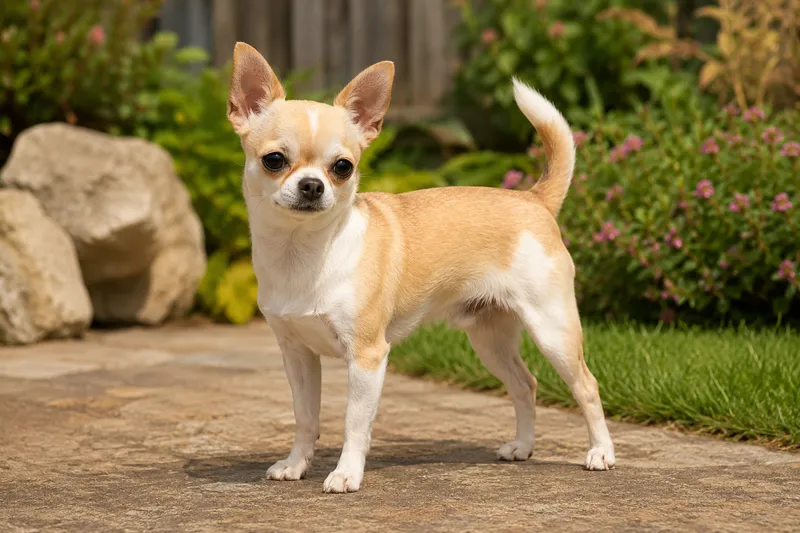
Chihuahua
The Chihuahua is a very small, compact companion dog with a rounded apple-shaped skull, large upright ears, expressive eyes, and a brisk gait. The breed occurs in smooth-coated and long-coated forms, with a broad range…
Recognized by: AKC · ANKC · +5
Size
Small
Weight
1.5–3 kg
Life span
14–16 years
Breed Traits
Energy Level
Moderate energy
Energy Level: 3 of 5
Low energyHigh energyChild / Family Compatibility
Limited compatibility
Child / Family Compatibility: 2 of 5
Low compatibilityHigh compatibilityGrooming Need
Light grooming need
Grooming Need: 2 of 5
Low maintenanceHigh maintenanceTrainability
Moderately trainable
Trainability: 3 of 5
Hard to trainEasy to trainApartment / Home Suitability
Excellent apartment fit
Apartment / Home Suitability: 5 of 5
Needs space / yardExcellent for apartmentsAlone-Time Tolerance
Half-day is hard
Alone-Time Tolerance: 2 of 5
Needs frequent companyHandles long alone timeFirst-Time Owner Suitability
Suitable for many first-timers
First-Time Owner Suitability: 4 of 5
Needs experienced ownerGreat for first-time ownersCompatibility with Other Pets
Can adapt with proper socialization
Compatibility with Other Pets: 3 of 5
Single-pet homes are a better fitHighly compatible with other animals
The Chihuahua is a very small, compact companion dog with a rounded apple-shaped skull, large upright ears, expressive eyes, and a brisk gait. The breed occurs in smooth-coated and long-coated forms, with a broad range of accepted colors under major standards.
Named for the Mexican state of Chihuahua, the breed is strongly associated with Mexico and belongs to the long history of small companion dogs in the Americas. Its precise ancestry is not fully documented, so claims about a single ancient ancestor or an unbroken pre-Columbian lineage should be treated cautiously.
Chihuahuas are full-sized dogs in behavior despite their tiny bodies and should be allowed to walk, explore, learn, and make appropriate choices. Terms such as teacup, micro, and miniature describe marketing or unusually small individuals, not separately recognized Chihuahua breeds, and deliberately extreme size can increase welfare concerns.
A typical Chihuahua is alert, lively, expressive, and strongly attached to one or more familiar people. Some are immediately sociable, while others are reserved or vocal around strangers; chronic fearfulness and uncontrolled snapping should not be dismissed as normal simply because the dog is small.
Early socialization should pair new people, friendly dogs, handling, household sounds, and varied environments with safe, positive experiences. Owners should avoid forcing contact or repeatedly carrying the dog away from every manageable situation, because confidence grows through protected but genuine interaction.
Chihuahuas can learn obedience, tricks, scent games, and useful household skills through short reward-based sessions. Consistent toilet routines, calm greetings, recall, cooperative handling, and quiet behavior around doors or windows deserve the same attention they would receive in a larger breed.
Chihuahuas need daily activity, but their short stride and small body mean exercise should be moderate and adjusted to age, fitness, and weather. Several short walks, indoor games, sniffing opportunities, and training sessions are usually more appropriate than prolonged strenuous outings.
Smooth coats generally need weekly brushing, while long coats benefit from brushing several times a week to prevent tangles around the ears, chest, legs, and tail. Both varieties need regular nail trimming, ear and skin checks, and especially consistent dental care because a small mouth can become crowded and retain plaque.
The breed loses body heat quickly and should live indoors, with protection during cold or wet weather and shade during heat. Harnesses can reduce pressure on the delicate neck, while stairs, furniture, rough play, and interactions with much larger animals should be managed to reduce accidental injury.
Chihuahuas often form intense bonds and may struggle with abrupt or prolonged isolation. Gradual alone-time practice, safe enrichment, predictable routines, and opportunities to rest without constant physical contact can help develop healthy independence.
Patellar luxation, in which the kneecap moves out of its normal position, is an important orthopedic concern in Chihuahuas. Responsible breeding guidance also recommends cardiac and specialist eye examinations, and prospective owners should ask for verifiable results for both parents rather than accepting a general statement that they are healthy.
Dental crowding and periodontal disease are practical lifelong concerns in such a small mouth, making home dental care and professional veterinary assessment important. Heart disease, eye problems, tracheal weakness, and other conditions can occur, while very small puppies may be more vulnerable to injury and problems maintaining stable energy reserves.
Owners should monitor changes in gait, exercise tolerance, breathing, vision, appetite, or behavior and seek veterinary assessment rather than assuming an abnormal sign is simply part of being a toy breed. A responsible breeder should prioritize functional structure, stable temperament, and documented screening over exaggeratedly tiny size or labels such as teacup.
This information is for general educational purposes and is not a substitute for diagnosis or treatment by a veterinarian.
Recognizing organizations
Independent registries that list this breed. Tap a badge to learn more.
These statuses reflect each registry’s recording and show systems. They are not a health, quality, or superiority score.
AKCFull recognitionhttps://www.akc.org/dog-breeds/chihuahua/ ANKCFull recognitionhttps://dogsaustralia.org.au/members/breeds/breed-standards/Chihuahua-%28Smooth-Coat%29 CKCRecognized breedhttps://www.ckc.ca/en/Choosing-a-Dog/Choosing-a-Breed/Toy-Dogs/Chihuahua-Short-Coat FCIDefinitive recognitionhttps://www.fci.be/en/nomenclature/CHIHUAHUENO-218.html NZKCRecognised breedhttps://www.dogsnz.org.nz/breeds/info/chihuahua-smooth-coat/116 RKCBreed Registerhttps://www.royalkennelclub.com/search/breeds-a-to-z/breeds/toy/chihuahua-smooth-coat/ UKCFull recognitionhttps://www.ukcdogs.com/chihuahua
Frequently asked questions
Is a Chihuahua a good family dog for a first-time owner?
A Chihuahua can be an affectionate companion for a prepared first-time owner who will provide training, socialization, dental care, and safe handling. The breed is not maintenance-free, and its small size makes injury prevention especially important.
Are Chihuahuas good with children?
They can form warm relationships with calm children who understand how to handle a tiny dog gently. Close adult supervision is essential because dropping, squeezing, chasing, or rough play can seriously injure a Chihuahua.
Do Chihuahuas get along with other pets?
Many live well with compatible dogs and cats when introductions are gradual and positive. A confident Chihuahua may challenge a much larger dog, and even friendly rough play can be dangerous because of the size difference.
Can a Chihuahua live comfortably in an apartment?
Chihuahuas are highly adaptable to apartments because they need little indoor space and only moderate exercise. They still require daily walks, enrichment, toilet opportunities, and training to prevent persistent alert barking.
How much exercise does a Chihuahua need?
Most healthy adults benefit from several short walks and play or training sessions each day rather than one demanding workout. Exercise should be adjusted for weather, age, and health, and the dog should not be expected to keep pace with much larger companions over long distances.
Are Chihuahuas difficult to train?
They are intelligent and can learn quickly when rewards, clear routines, and short sessions are used consistently. Toilet training and excessive barking can take patience, but excusing unwanted behavior because the dog is small usually makes progress harder.
What is the difference between smooth-coated and long-coated Chihuahuas?
The primary difference is coat type: one has a close, smooth coat and the other has a soft longer coat with feathering. Both are Chihuahuas with the same basic body type and behavioral needs, although the long coat requires more frequent brushing.
What health tests should a Chihuahua breeder perform?
Ask for documented patella, cardiac, and specialist eye evaluations for both parents, as recommended by the national breed club associated with the AKC. Responsible breeders should also discuss dental health, family medical history, and puppy size honestly rather than promoting teacup or micro labels.
More about Chihuahua
Pet profiles are coming soon. For now, keep exploring trusted breed knowledge in the Breed Guide.
Back to Breed Guide