

Chartreux
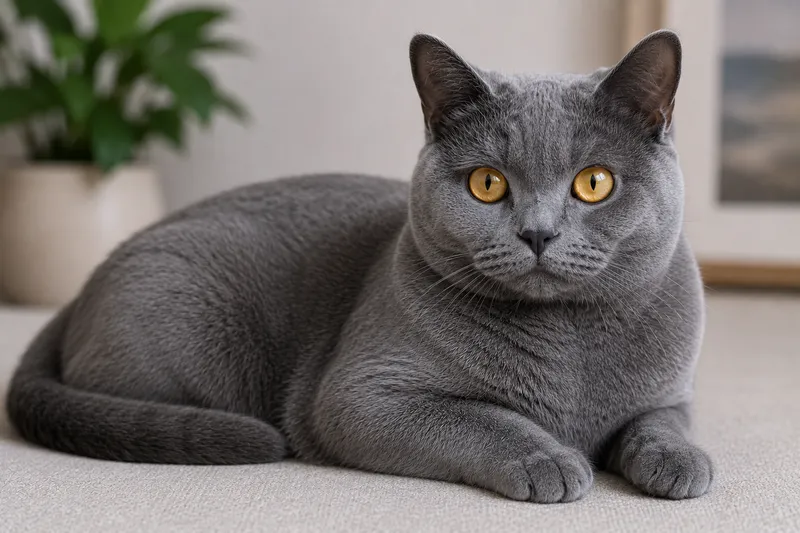
The Chartreux is a medium-to-large, powerfully built cat with broad shoulders, a deep chest, dense musculature, comparatively fine legs, and a tapered muzzle that creates its characteristic smiling expression. Its…
Recognized by: CFA · FIFe · +2
Size
Large
Weight
3.6–8.2 kg
Life span
12–15 years
Breed Traits
Energy Level
Moderate energy
Energy Level: 3 of 5
Low energyHigh energyChild / Family Compatibility
High compatibility
Child / Family Compatibility: 4 of 5
Low compatibilityHigh compatibilityGrooming Need
Moderate grooming need
Grooming Need: 3 of 5
Low maintenanceHigh maintenanceTrainability
Easy to train
Trainability: 4 of 5
Hard to trainEasy to trainApartment / Home Suitability
Excellent apartment fit
Apartment / Home Suitability: 5 of 5
Needs space / yardExcellent for apartmentsAlone-Time Tolerance
Handles long alone stretches well
Alone-Time Tolerance: 4 of 5
Needs frequent companyHandles long alone timeFirst-Time Owner Suitability
Suitable for many first-timers
First-Time Owner Suitability: 4 of 5
Needs experienced ownerGreat for first-time ownersCompatibility with Other Pets
Generally gets along well with other pets
Compatibility with Other Pets: 4 of 5
Single-pet homes are a better fitHighly compatible with other animals
The Chartreux is a medium-to-large, powerfully built cat with broad shoulders, a deep chest, dense musculature, comparatively fine legs, and a tapered muzzle that creates its characteristic smiling expression. Its short, slightly woolly double coat occurs only in even shades of blue-grey, while the rounded eyes range from gold to deep copper.
References to blue cats associated with France appear in European literature from several centuries ago, but stories linking the breed directly to Carthusian monasteries are not supported by clear historical records. The breed's name may instead be connected with a wool called pile de Chartreux, although its exact origin remains uncertain.
Organized preservation began in France during the early twentieth century using naturally occurring blue cats of consistent type. After periods of population decline and temporary crossing with other blue breeds, dedicated breeders re-established the Chartreux as a distinct pedigree breed with its own standard.
Chartreux cats are generally calm, observant, affectionate, and quietly devoted to familiar people. Many follow their owners between rooms, enjoy sitting nearby, and communicate through soft chirps, murmurs, expressive eyes, or gentle paw touches rather than frequent loud vocalization.
They are intelligent and playful in short, focused bursts and may enjoy retrieving toys, puzzle feeders, climbing, hunting-style games, and simple positive-reinforcement training. Their calm appearance should not be mistaken for inactivity, as they retain fast reflexes and a strong natural hunting instinct.
Well-socialized Chartreux cats commonly live successfully with respectful children, compatible cats, and cat-friendly dogs. They usually adapt well to predictable routines and can tolerate ordinary periods alone better than highly dependent breeds, although they still need dependable daily companionship and interaction.
The dense woolly double coat benefits from regular combing rather than aggressive brushing. Weekly grooming is usually sufficient during much of the year, but more frequent combing may be necessary during seasonal shedding when the thick undercoat is released.
Daily life should include moderate interactive play, sturdy scratching surfaces, puzzle activities, comfortable observation points, and secure climbing furniture. Chartreux cats generally adapt well to apartment living when they have enough enrichment and opportunities to maintain muscle and mobility.
Routine care should include dental hygiene, nail trimming, ear checks, body-condition monitoring, and regular veterinary examinations. Their naturally substantial build and dense coat can make gradual weight gain difficult to detect, so owners should assess body condition rather than judging health by body weight alone.
The Chartreux is generally regarded as a healthy natural breed, and no single major inherited disorder is consistently considered characteristic of the entire population. This does not mean that every cat or family line is free from genetic or acquired illness, and no pedigree or commercial DNA panel can guarantee lifelong health.
Patellar luxation, in which the kneecap moves out of its normal position, has been reported in some Chartreux lines. Breeding cats may be assessed by a veterinarian for knee stability, while prospective owners should ask about family mobility history and any known joint problems in related cats.
Weight gain can become a concern in mature or neutered cats, particularly when activity decreases. Buyers should ask about family longevity, mobility, known illnesses, causes of death, and veterinary records, while maintaining appropriate feeding and regular exercise throughout life. This information is for general educational purposes and is not a substitute for diagnosis or treatment by a veterinarian.
Recognizing organizations
Independent registries that list this breed. Tap a badge to learn more.
These statuses reflect each registry’s recording and show systems. They are not a health, quality, or superiority score.
Frequently asked questions
Are Chartreux cats good family pets?
Chartreux cats are often calm, affectionate, and adaptable family companions. They commonly live well with respectful children when handling remains gentle and the cat has access to quiet resting places.
Do Chartreux cats get along with other pets?
Well-socialized Chartreux cats generally live successfully with compatible cats and cat-friendly dogs. Introductions should still be gradual because individual temperament, age, and previous experience affect every relationship.
Can a Chartreux live in an apartment?
Chartreux cats usually adapt very well to apartment and indoor living. They still need daily play, scratching areas, climbing opportunities, observation points, and enough movement to maintain a healthy body condition.
Can Chartreux cats be left alone during the day?
Many adult Chartreux tolerate ordinary working-day absences reasonably well when they have a secure environment and predictable routine. They still require daily companionship, enrichment, and health observation and should not be regularly isolated for prolonged periods.
How much grooming does a Chartreux need?
The dense double coat usually benefits from weekly combing. Grooming should become more frequent during seasonal shedding, when loose undercoat can accumulate and form tangles.
Are Chartreux cats quiet?
Many Chartreux use their voices infrequently and communicate through soft chirps, murmurs, body language, and physical contact. Individual cats vary, but the breed is generally quieter than many highly vocal companion breeds.
What is the difference between a Chartreux, Russian Blue, and blue British Shorthair?
They are separate breeds with different standards, histories, body types, head shapes, coat textures, and eye colors. The Chartreux has a robust body, woolly blue coat, tapered smiling muzzle, and gold-to-copper eyes rather than the green eyes expected in a Russian Blue.
What health information should a Chartreux breeder provide?
A responsible breeder should discuss family mobility, knee health, longevity, known illnesses, causes of death, and veterinary records. Buyers may also ask whether breeding cats have been assessed for patellar luxation and should be cautious of guarantees that a cat can never develop disease.
More about Chartreux
Pet profiles are coming soon. For now, keep exploring trusted breed knowledge in the Breed Guide.
Back to Breed Guide