

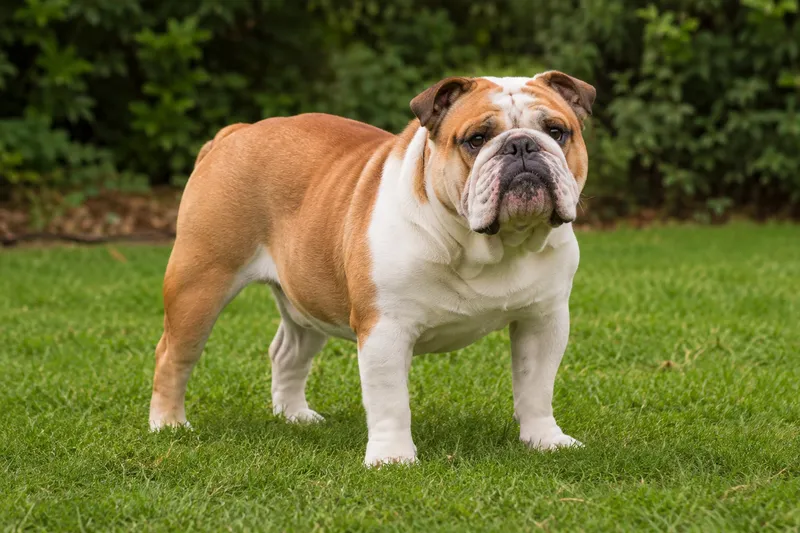
Bulldog
The Bulldog, also widely called the English Bulldog, is a medium-sized, heavy-set dog with a broad head, short coat, sturdy limbs, and a characteristically shortened muzzle. Its small folded ears and low-carried tail…
Recognized by: AKC · ANKC · +5
Size
Medium
Weight
18.1–22.7 kg
Life span
8–10 years
Breed Traits
Energy Level
Low energy
Energy Level: 2 of 5
Low energyHigh energyChild / Family Compatibility
High compatibility
Child / Family Compatibility: 4 of 5
Low compatibilityHigh compatibilityGrooming Need
Moderate grooming need
Grooming Need: 3 of 5
Low maintenanceHigh maintenanceTrainability
Moderately trainable
Trainability: 3 of 5
Hard to trainEasy to trainApartment / Home Suitability
Fits apartments well
Apartment / Home Suitability: 4 of 5
Needs space / yardExcellent for apartmentsAlone-Time Tolerance
Handles a typical workday
Alone-Time Tolerance: 3 of 5
Needs frequent companyHandles long alone timeFirst-Time Owner Suitability
Manageable with guidance
First-Time Owner Suitability: 3 of 5
Needs experienced ownerGreat for first-time ownersCompatibility with Other Pets
Can adapt with proper socialization
Compatibility with Other Pets: 3 of 5
Single-pet homes are a better fitHighly compatible with other animals
The Bulldog, also widely called the English Bulldog, is a medium-sized, heavy-set dog with a broad head, short coat, sturdy limbs, and a characteristically shortened muzzle. Its small folded ears and low-carried tail are natural features, while sound movement and unrestricted breathing should always take priority over exaggeration.
The breed developed in Britain from mastiff-type dogs historically used for bull baiting. After that activity was outlawed in 1835, selective breeding redirected the Bulldog toward a calmer companion temperament while retaining its distinctive appearance.
Modern Bulldogs occur in several established colors and patterns, including brindle, fawn, red, and white combinations. Extremely flat faces, pinched nostrils, excessive skin, impaired movement, or any structure that interferes with normal daily function should not be treated as desirable breed characteristics.
Bulldogs are commonly affectionate, steady, courageous, and closely attached to their households. Many enjoy relaxed companionship and have a humorous, expressive manner, although individual activity levels and sociability vary.
They can learn household skills reliably, but some are deliberate rather than immediately responsive. Short reward-based sessions, patient repetition, early socialization, and clear routines are more effective than force or prolonged drills.
Many Bulldogs can live well with considerate children and compatible pets. Their strength, food motivation, and occasional dog selectivity still call for adult supervision, gradual introductions, and respect for each dog's signals and personal space.
Bulldogs need regular but carefully paced activity to maintain muscle and a healthy body condition. Short walks and gentle play are usually more appropriate than prolonged running, and exercise should be adjusted to the dog's breathing, mobility, age, and the weather.
Heat and humidity can be dangerous because the shortened muzzle may limit cooling. Exercise during cooler hours, provide water and shade, stop at the first sign of respiratory distress or unusual fatigue, and never assume persistent noisy breathing is harmless simply because the dog is a Bulldog.
The short coat benefits from weekly brushing, while facial folds, the tail area, ears, nails, and teeth need routine attention. Skin folds should be kept clean and dry without harsh products, and the breed's dense body and limited swimming ability mean water access requires close supervision.
Bulldogs have meaningful risks associated with brachycephalic obstructive airway syndrome, heat intolerance, skin-fold disease, eye disorders, hip and elbow dysplasia, patellar luxation, cardiac disease, and tracheal hypoplasia. Some individuals may also experience spinal, dental, reproductive, or urinary problems, and excess body weight can worsen breathing and mobility.
Responsible breeding assessment should include a recognized respiratory function evaluation, patella and cardiac examinations, tracheal imaging, and eye screening. Hip and elbow evaluations and relevant DNA testing, including hyperuricosuria where recommended, provide additional information; buyers should request verifiable results rather than relying on claims that a dog's breathing is normal for the breed.
Owners should arrange regular veterinary reviews and seek assessment for labored or persistently noisy breathing, poor exercise recovery, fainting, blue or pale gums, recurrent skin irritation, eye pain, or mobility changes. Maintaining a lean body condition, avoiding overheating, and choosing dogs with open nostrils and functional proportions are central welfare considerations.
This information is for general educational purposes and is not a substitute for diagnosis or treatment by a veterinarian.
Recognizing organizations
Independent registries that list this breed. Tap a badge to learn more.
These statuses reflect each registry’s recording and show systems. They are not a health, quality, or superiority score.
AKCFull recognitionhttps://www.akc.org/dog-breeds/bulldog/ ANKCFull recognitionhttps://dogsaustralia.org.au/members/breeds/breed-standards/British-Bulldog CKCRecognized breedhttps://www.ckc.ca/en/Choosing-a-Dog/Choosing-a-Breed/Non-Sporting-Dogs/Bulldog FCIDefinitive recognitionhttps://www.fci.be/en/nomenclature/bulldog-149.html NZKCRecognised breedhttps://www.dogsnz.org.nz/breeds/info/bulldog/712 RKCBreed Registerhttps://www.royalkennelclub.com/search/breeds-a-to-z/breeds/utility/bulldog/ UKCFull recognitionhttps://www.ukcdogs.com/english-bulldog
Frequently asked questions
Is a Bulldog suitable for apartment living?
A Bulldog's moderate exercise needs and generally settled indoor manner can suit apartment life. Owners must still provide daily walks, mental engagement, temperature control, and access to veterinary care for breed-related health concerns.
How much exercise does a Bulldog need?
Most Bulldogs benefit from short daily walks and gentle play rather than strenuous endurance exercise. Duration should be tailored to the individual dog's breathing, joints, fitness, and weather conditions, with activity stopped if recovery becomes slow or noisy.
Are Bulldogs good with children?
Many well-socialized Bulldogs are affectionate and patient with considerate children. Their weight and strength can still cause accidental knocks, so adults should supervise interactions and ensure the dog always has a quiet place to rest.
Can Bulldogs live with other pets?
Many Bulldogs can share a home with compatible dogs or cats when introductions are gradual and positive. Individual dog tolerance varies, so feeding, high-value items, and early interactions should be managed instead of assuming automatic compatibility.
Are Bulldogs easy to train?
Bulldogs can learn well but may respond slowly when training is repetitive or unrewarding. Brief reward-based sessions, consistent rules, early socialization, and careful weight management when using food rewards are usually effective.
How should a Bulldog's skin folds be cared for?
Check facial and tail-area folds regularly and keep them gently cleaned and thoroughly dry. Redness, odor, discharge, itching, or soreness can indicate a problem that needs veterinary assessment rather than repeated home treatment.
What health screening should a Bulldog breeder provide?
Ask for documented respiratory function, patella, cardiac, tracheal, and eye assessments appropriate to the breeding dogs. Hip and elbow results and relevant DNA tests such as hyperuricosuria can add useful information, and all claims should be supported by verifiable records.
Can Bulldogs tolerate hot weather or swim safely?
Bulldogs are vulnerable to overheating and should exercise only cautiously in warm or humid conditions. Their heavy front end and short muzzle can also make swimming difficult, so they need direct supervision near water and a properly fitted canine flotation aid when appropriate.
More about Bulldog
Pet profiles are coming soon. For now, keep exploring trusted breed knowledge in the Breed Guide.
Back to Breed Guide