

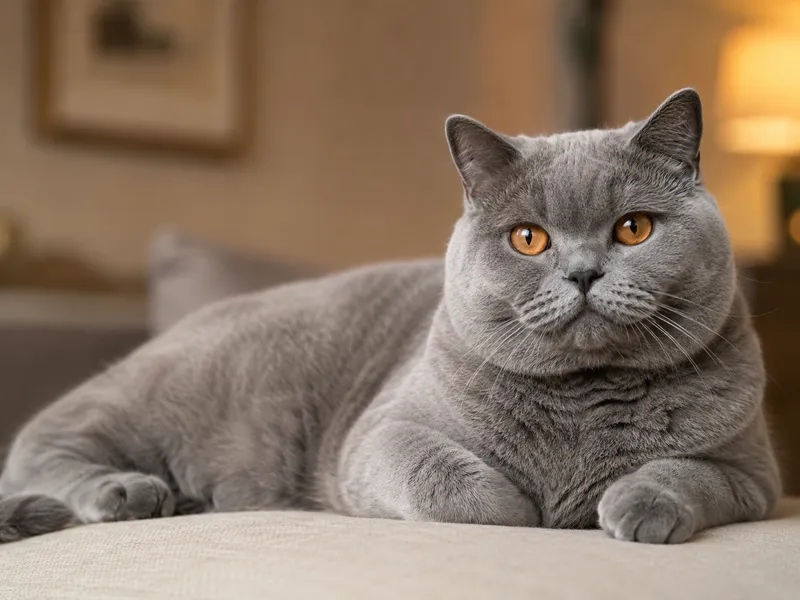
British Shorthair
The British Shorthair is a medium-to-large cat with a compact, powerful body, broad chest, strong legs, rounded paws, and a thick tail with a rounded tip. Its defining features include a broad round head, full cheeks,…
Recognized by: CFA · FIFe · +2
Size
Large
Weight
3.2–7.7 kg
Life span
12–20 years
Breed Traits
Energy Level
Low energy
Energy Level: 2 of 5
Low energyHigh energyChild / Family Compatibility
High compatibility
Child / Family Compatibility: 4 of 5
Low compatibilityHigh compatibilityGrooming Need
Light grooming need
Grooming Need: 2 of 5
Low maintenanceHigh maintenanceTrainability
Moderately trainable
Trainability: 3 of 5
Hard to trainEasy to trainApartment / Home Suitability
Excellent apartment fit
Apartment / Home Suitability: 5 of 5
Needs space / yardExcellent for apartmentsAlone-Time Tolerance
Handles long alone stretches well
Alone-Time Tolerance: 4 of 5
Needs frequent companyHandles long alone timeFirst-Time Owner Suitability
Suitable for many first-timers
First-Time Owner Suitability: 4 of 5
Needs experienced ownerGreat for first-time ownersCompatibility with Other Pets
Can adapt with proper socialization
Compatibility with Other Pets: 3 of 5
Single-pet homes are a better fitHighly compatible with other animals
The British Shorthair is a medium-to-large cat with a compact, powerful body, broad chest, strong legs, rounded paws, and a thick tail with a rounded tip. Its defining features include a broad round head, full cheeks, widely set eyes, and an exceptionally dense short coat with a crisp, plush texture.
Blue-grey is the breed's best-known color, but British Shorthairs occur in many solid colors, tabby patterns, bicolors, colorpoints, shaded coats, and other recognized varieties. Eye color varies with the coat and may include copper, gold, green, or blue in appropriate color classes.
The breed was developed from Britain's longstanding domestic shorthair population and became prominent during the early organized cat shows of the nineteenth century. Later outcrossing helped rebuild the population after the world wars, so claims of a simple, uninterrupted line directly from Roman-era cats should be treated as traditional history rather than fully documented ancestry.
British Shorthairs are generally calm, observant, independent, and quietly affectionate. Many form strong bonds with their household while preferring to sit beside people rather than remain on a lap or be carried for extended periods.
They are usually less demanding and less acrobatic than highly active breeds, but they still benefit from short play sessions, puzzle feeders, gentle training, and opportunities to investigate their surroundings. Their mature temperament is often steady, while kittens and young adults may be considerably more energetic.
Well-socialized British Shorthairs can live successfully with respectful children, compatible cats, and calm, cat-friendly dogs. They tend to value predictable routines and may withdraw from loud activity, so every cat should have access to quiet resting areas and control over social interaction.
The dense short coat is relatively easy to maintain and usually benefits from weekly combing to remove loose hair. More frequent grooming may be useful during seasonal shedding, while older, overweight, or less mobile cats may need additional help keeping the coat clean.
Daily care should include moderate interactive play, scratching surfaces, puzzle feeders, and stable furniture suited to the breed's solid build. British Shorthairs may be less inclined to climb dramatically than some breeds, but regular movement remains important for preserving muscle condition and preventing excess weight.
Routine care should include dental hygiene, nail trimming, ear checks, body-condition monitoring, and regular veterinary examinations. Portions should be adjusted to the individual cat's age, activity, health, and body condition because a naturally substantial frame should not be confused with obesity.
Hypertrophic cardiomyopathy is an important health concern in British Shorthairs. There is no validated breed-specific DNA test that can exclude HCM in this breed, so responsible breeding programs may use repeated echocardiographic examinations and documented family cardiac history.
Polycystic kidney disease can occur in lines with Persian ancestry, and a PKD1 DNA test is available. A rare autosomal recessive condition called feline autoimmune lymphoproliferative syndrome, or ALPS, has also been documented in British Shorthairs; genetic testing can identify clear cats, carriers, and cats with two copies of the associated FASLG variant.
Prospective owners should ask breeders about PKD1 and ALPS results, cardiac screening, family longevity, and relevant veterinary records. This information is for general educational purposes and is not a substitute for diagnosis or treatment by a veterinarian.
Recognizing organizations
Independent registries that list this breed. Tap a badge to learn more.
These statuses reflect each registry’s recording and show systems. They are not a health, quality, or superiority score.
CFAChampionshiphttps://cfa.org/breed/british-shorthair/ FIFeFully recognisedhttps://fifeweb.org/cats/breeds/ FIFePreliminary recognisedAdditional golden varieties — Preliminary recognisedhttps://fifeweb.org/cats/breeds/ GCCFChampionship statushttps://www.gccfcats.org/getting-a-cat/choosing/cat-breeds/british/ TICAChampionshiphttps://tica.org/breed/british-shorthair/
Frequently asked questions
Are British Shorthairs affectionate cats?
British Shorthairs are usually affectionate in a calm, undemanding way. Many prefer sitting beside their owners, following familiar routines, or resting nearby rather than seeking constant lap time.
Do British Shorthairs like being picked up?
Many British Shorthairs prefer to keep all four paws on a stable surface and may not enjoy being carried for long. When lifting is necessary, the chest and hindquarters should be fully supported and the cat's signals respected.
Can a British Shorthair live in an apartment?
British Shorthairs generally adapt very well to apartment and indoor living. They still need daily play, scratching areas, comfortable resting places, and enough room to move without becoming sedentary.
Can British Shorthairs be left alone during the day?
Many adults tolerate ordinary working-day absences better than highly dependent breeds when they have a secure environment and predictable routine. They still require daily companionship, enrichment, and observation and should not be subjected to frequent prolonged isolation.
How often should a British Shorthair be groomed?
Weekly combing is usually sufficient to remove loose hair from the dense coat. Additional grooming may be needed during seasonal shedding or when age, illness, obesity, or reduced mobility makes self-grooming more difficult.
Are all British Shorthairs blue-grey?
No. Blue is the best-known color, but British Shorthairs occur in numerous solid colors, tabby patterns, bicolors, shaded coats, and colorpoint varieties. Eye color also varies according to the coat color and pattern.
Do British Shorthairs gain weight easily?
They can gain excess weight when calorie intake exceeds their relatively moderate activity level. Measured portions, regular play, body-condition monitoring, and veterinary guidance help distinguish a healthy muscular build from excess fat.
What health screening should a British Shorthair breeder discuss?
A responsible breeder should discuss PKD1 and ALPS DNA testing, family health history, and veterinary cardiac screening for HCM. Buyers should be cautious of claims that a single DNA panel can rule out every possible inherited or acquired condition.
More about British Shorthair
Pet profiles are coming soon. For now, keep exploring trusted breed knowledge in the Breed Guide.
Back to Breed Guide