

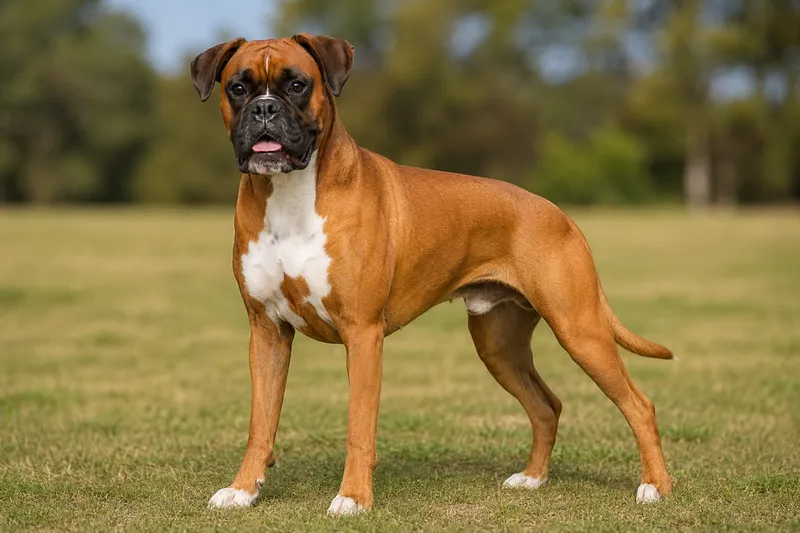
Boxer
The Boxer is a muscular, athletic dog with a square outline, a short close-fitting coat, a broad head, and a characteristically shortened muzzle. Natural ears fold forward and an undocked tail is long; altered ears or…
Recognized by: AKC · ANKC · +5
Size
Large
Weight
22.7–36.3 kg
Life span
10–12 years
Breed Traits
Energy Level
Very energetic
Energy Level: 5 of 5
Low energyHigh energyChild / Family Compatibility
High compatibility
Child / Family Compatibility: 4 of 5
Low compatibilityHigh compatibilityGrooming Need
Light grooming need
Grooming Need: 2 of 5
Low maintenanceHigh maintenanceTrainability
Easy to train
Trainability: 4 of 5
Hard to trainEasy to trainApartment / Home Suitability
Struggles in small spaces
Apartment / Home Suitability: 2 of 5
Needs space / yardExcellent for apartmentsAlone-Time Tolerance
Half-day is hard
Alone-Time Tolerance: 2 of 5
Needs frequent companyHandles long alone timeFirst-Time Owner Suitability
Manageable with guidance
First-Time Owner Suitability: 3 of 5
Needs experienced ownerGreat for first-time ownersCompatibility with Other Pets
Can adapt with proper socialization
Compatibility with Other Pets: 3 of 5
Single-pet homes are a better fitHighly compatible with other animals
The Boxer is a muscular, athletic dog with a square outline, a short close-fitting coat, a broad head, and a characteristically shortened muzzle. Natural ears fold forward and an undocked tail is long; altered ears or tails are not the breed's natural anatomy.
The modern breed was developed in Germany during the late nineteenth century, with the Bullenbeisser and Bulldog among its documented foundations. Boxers were shaped as versatile working dogs and have served in guarding, military, police, tracking, and companion roles.
Fawn and brindle are the principal coat colors, often accompanied by white markings and a dark facial mask. Sound breeding should preserve an active, functional dog and avoid exaggerated features such as extremely short muzzles or pinched nostrils.
Boxers are commonly affectionate, playful, alert, and strongly attached to their households. Many retain an exuberant, puppy-like manner well into adulthood and communicate through animated facial expressions, body movement, and close physical contact.
Their intelligence and energy respond best to early socialization and short, varied, reward-based training sessions. Consistent boundaries are important because an untrained adult Boxer can be powerful, bouncy, and difficult to manage despite friendly intentions.
Many Boxers are devoted family companions and can be patient with considerate children, but their size and enthusiasm require supervision. Compatibility with dogs, cats, and smaller animals varies, so calm introductions and continued management are more reliable than assumptions based on breed alone.
A Boxer needs substantial daily physical activity together with mental work. Brisk walks, controlled running after physical maturity, scent games, training, and interactive play can meet these needs, while secure fencing and reliable leash skills help manage the breed's speed and curiosity.
Because the Boxer has a shortened muzzle and little protection from temperature extremes, strenuous exercise should be reduced in hot or humid weather. Provide shade, water, and cooling breaks, watch for abnormal breathing or fatigue, and use a coat when cold conditions warrant it.
The short coat is relatively easy to maintain with weekly brushing and occasional bathing. Regular nail trimming, ear checks, dental care, and attention to facial cleanliness remain necessary, and meals should be managed calmly rather than immediately before or after intense exercise.
Important health concerns in Boxers include aortic or subaortic stenosis, arrhythmogenic right ventricular cardiomyopathy, hip and elbow dysplasia, autoimmune thyroid disease, degenerative myelopathy, and certain cancers. Some individuals may also experience gastric dilatation-volvulus, eye disease, or breathing and heat-tolerance problems associated with an excessively shortened muzzle.
Responsible breeding programs use hip and elbow evaluations, thyroid testing, and appropriate cardiac screening, including echocardiographic assessment and repeated Holter monitoring where advised. DNA tests for relevant ARVC variants and degenerative myelopathy can add information, but they do not replace clinical examinations or guarantee an individual dog's future health.
Owners should maintain a lean body condition, avoid overheating, learn the urgent warning signs of bloat, and arrange regular veterinary examinations. Collapse, fainting, unusual fatigue, persistent coughing, breathing difficulty, abdominal swelling, or unproductive retching warrants prompt veterinary attention.
This information is for general educational purposes and is not a substitute for diagnosis or treatment by a veterinarian.
Recognizing organizations
Independent registries that list this breed. Tap a badge to learn more.
These statuses reflect each registry’s recording and show systems. They are not a health, quality, or superiority score.
AKCFull recognitionhttps://www.akc.org/dog-breeds/boxer/ ANKCFull recognitionhttps://dogsaustralia.org.au/members/breeds/breed-standards/Boxer CKCRecognized breedhttps://www.ckc.ca/en/Choosing-a-Dog/Choosing-a-Breed/Working-Dogs/Boxer FCIDefinitive recognitionhttps://www.fci.be/en/nomenclature/DEUTSCHER-BOXER-144.html NZKCRecognised breedhttps://www.dogsnz.org.nz/breeds/info/boxer/608 RKCBreed Registerhttps://www.royalkennelclub.com/search/breeds-a-to-z/breeds/working/boxer/ UKCFull recognitionhttps://www.ukcdogs.com/boxer
Frequently asked questions
Is a Boxer suitable for apartment living?
A Boxer can live in an apartment only when its substantial exercise, training, and companionship needs are met every day. Its size, exuberance, and tendency to become restless without activity make a home with more usable space easier for many owners.
How much exercise does a Boxer need?
A healthy adult Boxer generally needs vigorous daily activity divided among walks, play, training, and other mentally engaging tasks. Exercise should match the dog's age and health, and strenuous activity must be reduced in hot or humid weather.
Are Boxers good with children?
Many well-socialized Boxers are affectionate and playful with children. Their strength and bouncy behavior can accidentally knock over a small child, so adults should supervise interactions and teach both dog and child calm, respectful behavior.
Can Boxers live with other pets?
Some Boxers live successfully with compatible dogs and cats, especially when introduced carefully from a young age. Individual prey drive and dog-to-dog tolerance vary, so introductions should be gradual and interactions with small animals should be managed.
Are Boxers easy to train?
Boxers are intelligent and capable learners, but repetition can lose their attention and adolescent enthusiasm may challenge consistency. Short reward-based sessions, clear boundaries, early socialization, and practice around distractions usually produce the best results.
Do Boxers shed or require professional grooming?
Boxers shed from their short coat, although grooming demands are modest. Weekly brushing, occasional bathing, nail trimming, dental care, and routine ear and skin checks are usually sufficient unless an individual dog has a medical or skin-care need.
What health screening should a Boxer breeder provide?
Ask for documented hip, elbow, thyroid, and cardiac screening appropriate to the parents' ages, including information about echocardiography and Holter monitoring. Relevant ARVC and degenerative myelopathy DNA results can be useful, but they must be interpreted alongside clinical testing and pedigree health history.
Do Boxers tolerate hot weather well?
Boxers can overheat more readily than longer-muzzled breeds, particularly when exercising in heat or humidity. Schedule activity for cooler hours, provide water and shade, stop when breathing or recovery appears abnormal, and never leave a dog in a parked vehicle.
More about Boxer
Pet profiles are coming soon. For now, keep exploring trusted breed knowledge in the Breed Guide.
Back to Breed Guide