

Birman
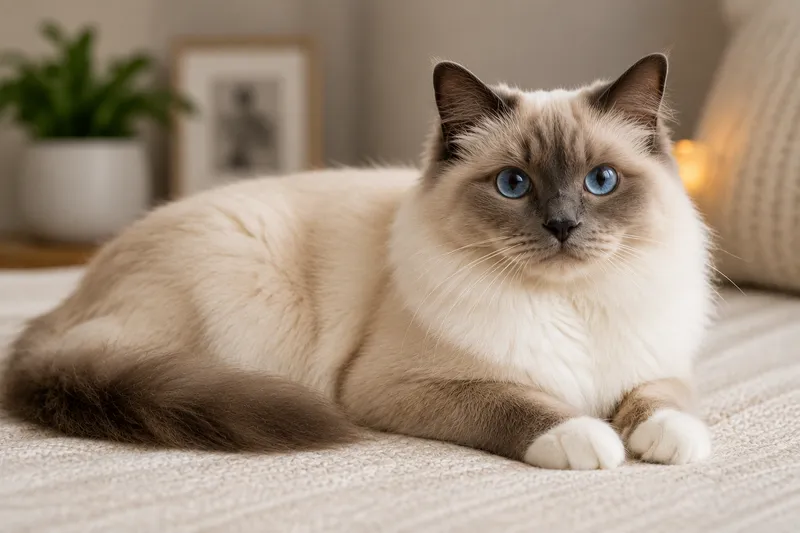
The Birman is a medium-to-large, strongly built cat with a long substantial body, rounded head, vivid blue eyes, and a silky semi-long coat. Its most distinctive features are the darker colorpoint markings on the face,…
Recognized by: CFA · FIFe · +2
Size
Medium
Weight
2.7–6.8 kg
Life span
12–16 years
Breed Traits
Energy Level
Moderate energy
Energy Level: 3 of 5
Low energyHigh energyChild / Family Compatibility
Very high compatibility
Child / Family Compatibility: 5 of 5
Low compatibilityHigh compatibilityGrooming Need
Moderate grooming need
Grooming Need: 3 of 5
Low maintenanceHigh maintenanceTrainability
Easy to train
Trainability: 4 of 5
Hard to trainEasy to trainApartment / Home Suitability
Excellent apartment fit
Apartment / Home Suitability: 5 of 5
Needs space / yardExcellent for apartmentsAlone-Time Tolerance
Half-day is hard
Alone-Time Tolerance: 2 of 5
Needs frequent companyHandles long alone timeFirst-Time Owner Suitability
Suitable for many first-timers
First-Time Owner Suitability: 4 of 5
Needs experienced ownerGreat for first-time ownersCompatibility with Other Pets
Shows very high compatibility
Compatibility with Other Pets: 5 of 5
Single-pet homes are a better fitHighly compatible with other animals
The Birman is a medium-to-large, strongly built cat with a long substantial body, rounded head, vivid blue eyes, and a silky semi-long coat. Its most distinctive features are the darker colorpoint markings on the face, ears, legs, and tail, combined with clearly defined white gloves on all four paws and white laces rising behind the hind legs.
The modern pedigree breed was developed in France during the early twentieth century, although its exact ancestry remains uncertain. Stories connecting the Birman with temple cats of Burma form an important part of breed tradition but should be treated as legend rather than documented history.
Birmans mature gradually and may take several years to develop their full body, coat, and point color. They are primarily indoor companion cats and generally suit households that can provide regular social contact, moderate play, and a calm, predictable environment.
Birmans are generally gentle, affectionate, patient, and strongly interested in household life. Many follow familiar people between rooms, rest nearby, seek lap time, and communicate with a relatively soft voice.
They are playful and intelligent without usually being excessively demanding or hyperactive. Interactive toys, retrieving games, puzzle feeders, climbing furniture, and short reward-based training sessions can provide suitable mental and physical stimulation.
Well-socialized Birmans commonly live successfully with respectful children, compatible cats, and calm, cat-friendly dogs. Their social nature means they may struggle with frequent prolonged isolation, particularly when no person or compatible animal companion is present.
The silky semi-long coat has relatively little undercoat and is generally less prone to matting than many other long coats. Weekly combing is usually sufficient, although grooming may need to increase during seasonal shedding or around areas where loose hair can collect.
Daily life should include moderate interactive play, scratching surfaces, comfortable climbing options, puzzle activities, and quiet resting areas. Birmans commonly adapt well to apartment living when their environment offers enough companionship, enrichment, and safe opportunities to move.
Routine care should include dental hygiene, nail trimming, ear checks, body-condition monitoring, and regular veterinary examinations. Owners should also watch for gradual weight gain because the substantial body and full coat can make changes in body condition less obvious.
Hypertrophic cardiomyopathy has been reported in Birman cats and is an important topic for responsible breeding and family health review. Prospective owners should ask about cardiac screening practices, known heart disease in related cats, longevity, and documented veterinary history.
Mucopolysaccharidosis VI is an inherited lysosomal storage disorder for which DNA testing is available in Birmans. Affected cats may show impaired growth, reduced joint flexibility, altered facial development, or progressive skeletal and mobility problems, while the presence of a test does not mean the condition is common in every breeding population.
No genetic test or pedigree can guarantee lifelong health. Buyers should request relevant documented results, ask about illnesses and causes of death in related cats, and maintain regular veterinary care throughout the cat's life. This information is for general educational purposes and is not a substitute for diagnosis or treatment by a veterinarian.
Recognizing organizations
Independent registries that list this breed. Tap a badge to learn more.
These statuses reflect each registry’s recording and show systems. They are not a health, quality, or superiority score.
Frequently asked questions
Are Birmans good family cats?
Birmans are often patient, affectionate, and well suited to family life. They commonly live successfully with respectful children when handling remains gentle and the cat has access to quiet resting areas.
Do Birmans get along with other pets?
Well-socialized Birmans generally have a high potential to live peacefully with compatible cats and cat-friendly dogs. Introductions should still be gradual because individual temperament and previous experience influence the outcome.
Can a Birman live in an apartment?
Birmans usually adapt very well to apartment and indoor living. They still need daily interaction, scratching areas, climbing opportunities, play, and mental stimulation.
Can Birmans be left alone during the day?
Many adult Birmans can manage ordinary short absences, but they are strongly social cats. Frequent prolonged isolation may lead to boredom or distress, especially when the cat has no compatible companion.
How much grooming does a Birman need?
The silky coat usually benefits from thorough combing about once a week. Additional grooming may be needed during seasonal shedding or when loose hair begins collecting around the chest, legs, or tail.
Are Birman kittens born with their point colors?
Birman kittens are born very pale because colorpoint pigmentation develops after birth. Their facial mask, ears, legs, tail, and overall contrast become more noticeable as they mature.
What is the difference between a Birman and a Ragdoll?
They are separate breeds with different standards, histories, body proportions, head shapes, and white-marking patterns. The Birman's defining white gloves and hind-leg laces differ from the broader white patterns found in many Ragdolls.
What health information should a Birman breeder provide?
A responsible breeder should discuss family heart health, longevity, known illnesses, veterinary records, and any genetic testing relevant to the pedigree. Buyers may also ask whether MPS VI testing and cardiac screening have been used in the breeding program.
More about Birman
Pet profiles are coming soon. For now, keep exploring trusted breed knowledge in the Breed Guide.
Back to Breed Guide