

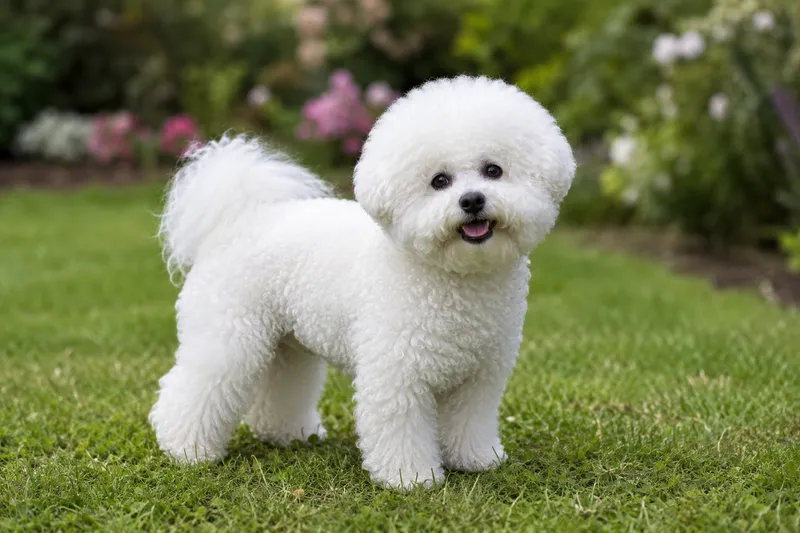
Bichon Frise
The Bichon Frise is a small, sturdy companion dog with a soft white double coat, dark expressive eyes, hanging ears, and a plumed tail carried over the back. Bichon Frisé and Bichon à Poil Frisé are alternative forms of…
Recognized by: AKC · ANKC · +5
Size
Small
Weight
5.4–8.2 kg
Life span
14–15 years
Breed Traits
Energy Level
High energy
Energy Level: 4 of 5
Low energyHigh energyChild / Family Compatibility
High compatibility
Child / Family Compatibility: 4 of 5
Low compatibilityHigh compatibilityGrooming Need
Intensive grooming need
Grooming Need: 5 of 5
Low maintenanceHigh maintenanceTrainability
Easy to train
Trainability: 4 of 5
Hard to trainEasy to trainApartment / Home Suitability
Excellent apartment fit
Apartment / Home Suitability: 5 of 5
Needs space / yardExcellent for apartmentsAlone-Time Tolerance
Half-day is hard
Alone-Time Tolerance: 2 of 5
Needs frequent companyHandles long alone timeFirst-Time Owner Suitability
Suitable for many first-timers
First-Time Owner Suitability: 4 of 5
Needs experienced ownerGreat for first-time ownersCompatibility with Other Pets
Generally gets along well with other pets
Compatibility with Other Pets: 4 of 5
Single-pet homes are a better fitHighly compatible with other animals
The Bichon Frise is a small, sturdy companion dog with a soft white double coat, dark expressive eyes, hanging ears, and a plumed tail carried over the back. Bichon Frisé and Bichon à Poil Frisé are alternative forms of the same breed name, not separate breeds.
The breed belongs to the Mediterranean bichon family and was historically known as the Bichon Teneriffe. Dogs of this type became popular in European courts and later earned attention as adaptable street and circus performers before organized breeding established the modern Bichon Frise.
A sound Bichon should be balanced, lively, and able to move freely. The rounded show-ring outline is produced partly through grooming; beneath the coat, the dog should remain moderate and functional rather than exaggerated.
Bichon Frises are commonly cheerful, affectionate, playful, and outgoing. They usually enjoy meeting people and participating in household activities, although early positive socialization is still important for developing confidence around unfamiliar sights, sounds, and handling.
The breed is intelligent and often learns quickly with short, reward-based sessions. House-training may require patience and a consistent schedule, while excessive barking, attention-seeking, or indoor restlessness is best addressed through training, enrichment, and adequate activity rather than punishment.
Many Bichons live successfully with considerate children and compatible pets. Because they are small, interactions with young children and much larger dogs should be supervised to prevent accidental injury, and individual temperament should guide every introduction.
A Bichon Frise needs daily walks, play, training, and opportunities to explore, but its exercise requirements are usually manageable in a small home. Mental activity is important, and the breed should not be expected to remain alone for long periods without gradual preparation and an appropriate routine.
The coat sheds relatively little but traps loose hair and mats easily. Frequent brushing and combing to the skin, regular bathing, and professional trimming approximately every four to six weeks are common requirements; eyes, ears, nails, teeth, and the hair around the face and sanitary areas also need routine attention.
Low shedding does not mean allergen-free, because people may react to proteins in dander, saliva, or urine. Prospective owners with allergies should spend time with individual dogs and consult a medical professional rather than relying on the label hypoallergenic.
Important health concerns in Bichon Frises include patellar luxation, hip dysplasia, cataracts and other eye disorders, allergic skin disease, dental disease, and urinary or bladder stones. Some individuals may also develop Legg-Calvé-Perthes disease, diabetes, liver disease, or cardiac problems, although risk varies among dogs and family lines.
The national breed club recommends patella, hip, and ophthalmologist evaluations for breeding dogs. Buyers should ask to see independently verifiable results for both parents and understand that completion of screening improves breeding decisions but cannot guarantee that a puppy will remain free of disease.
Routine dental care, weight control, skin and ear monitoring, and regular veterinary examinations support long-term health. Straining to urinate, frequent attempts to urinate, blood in the urine, sudden eye pain, persistent limping, or a marked change in thirst or appetite warrants prompt veterinary assessment.
This information is for general educational purposes and is not a substitute for diagnosis or treatment by a veterinarian.
Recognizing organizations
Independent registries that list this breed. Tap a badge to learn more.
These statuses reflect each registry’s recording and show systems. They are not a health, quality, or superiority score.
AKCFull recognitionhttps://www.akc.org/dog-breeds/bichon-frise/ ANKCFull recognitionhttps://dogsaustralia.org.au/members/breeds/breed-standards/Bichon-Frise CKCRecognized breedhttps://www.ckc.ca/en/Choosing-a-Dog/Choosing-a-Breed/Non-Sporting-Dogs/Bichon-Frise FCIDefinitive recognitionhttps://www.fci.be/en/nomenclature/BICHON-FRISE-215.html NZKCRecognised breedhttps://www.dogsnz.org.nz/breeds/info/bichon-frise/106 RKCBreed Registerhttps://www.royalkennelclub.com/search/breeds-a-to-z/breeds/toy/bichon-frise/ UKCFull recognitionhttps://www.ukcdogs.com/bichon-frise
Frequently asked questions
Is a Bichon Frise suitable for apartment living?
Yes. Its small size and manageable exercise needs can suit apartment life when it receives daily walks, play, training, and mental enrichment. Owners should also teach calm behavior and address barking early because shared walls make noise management important.
How much exercise does a Bichon Frise need?
Most healthy adults benefit from daily walks combined with play and short training sessions. They are lively rather than endurance-oriented, so activity can usually be divided into several manageable periods and adjusted for the dog's age, fitness, and health.
Are Bichon Frises good with children?
Many well-socialized Bichons are affectionate and playful with considerate children. Because the breed is small, adults should supervise interactions, prevent rough handling, and ensure the dog has a quiet place to retreat.
Can Bichon Frises live with other pets?
Many can live comfortably with compatible dogs and cats after gradual introductions. Individual history and temperament still matter, and play with much larger dogs should be supervised because accidental injury is possible even when both animals are friendly.
Are Bichon Frises easy to train?
They are intelligent, socially motivated, and generally responsive to reward-based training. Consistent routines are especially useful for house-training, while brief varied sessions help maintain attention and build reliable behavior.
How much grooming does a Bichon Frise require?
The coat needs frequent thorough brushing and combing because shed hair remains trapped and can form mats. Regular bathing and professional trimming, often about every four to six weeks, are common, together with nail, ear, eye-area, and dental care.
Is a Bichon Frise hypoallergenic?
No dog is guaranteed to be hypoallergenic. Bichons shed relatively little, but they still produce allergenic proteins in dander, saliva, and urine, so a person with allergies should spend time with individual dogs and seek medical guidance before committing.
What health screening should a Bichon Frise breeder provide?
Ask for independently verifiable patella, hip, and ophthalmologist evaluation results for both parents. Review the actual findings and relevant family health history rather than treating a registry number or a general claim of healthy lines as a guarantee.
More about Bichon Frise
Pet profiles are coming soon. For now, keep exploring trusted breed knowledge in the Breed Guide.
Back to Breed Guide