

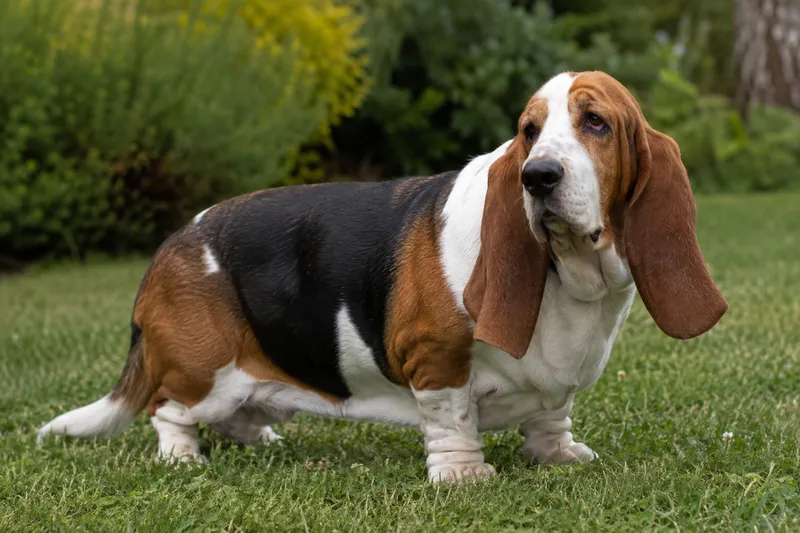
Basset Hound
The Basset Hound is a substantial, long-bodied scent hound carried on short, powerful legs. Its natural ears are exceptionally long and low set, the tail is long and carried upward when moving, and the short…
Recognized by: AKC · ANKC · +5
Size
Medium
Weight
18.1–31.8 kg
Life span
10–12 years
Breed Traits
Energy Level
Moderate energy
Energy Level: 3 of 5
Low energyHigh energyChild / Family Compatibility
High compatibility
Child / Family Compatibility: 4 of 5
Low compatibilityHigh compatibilityGrooming Need
Moderate grooming need
Grooming Need: 3 of 5
Low maintenanceHigh maintenanceTrainability
Challenging to train
Trainability: 2 of 5
Hard to trainEasy to trainApartment / Home Suitability
Moderate — depends on setup
Apartment / Home Suitability: 3 of 5
Needs space / yardExcellent for apartmentsAlone-Time Tolerance
Half-day is hard
Alone-Time Tolerance: 2 of 5
Needs frequent companyHandles long alone timeFirst-Time Owner Suitability
Manageable with guidance
First-Time Owner Suitability: 3 of 5
Needs experienced ownerGreat for first-time ownersCompatibility with Other Pets
Generally gets along well with other pets
Compatibility with Other Pets: 4 of 5
Single-pet homes are a better fitHighly compatible with other animals
The Basset Hound is a substantial, long-bodied scent hound carried on short, powerful legs. Its natural ears are exceptionally long and low set, the tail is long and carried upward when moving, and the short weather-resistant coat occurs in established hound colors.
The breed was developed in Britain during the nineteenth century from French basset-type hounds selected to follow hare and other game at a pace hunters could manage on foot. Its low frame, strong nose, endurance, and pack instinct remain central to the modern breed.
A sound Basset should retain adequate ground clearance, free movement, and the ability to work without discomfort. Excessive skin, severely restricted movement, obesity, or anatomy that causes the eyelids and feet to function poorly should not be romanticized as desirable breed character.
Basset Hounds are commonly affectionate, steady, sociable, and mild-mannered with their households. Many enjoy people and compatible dogs, reflecting their history of working cooperatively in packs.
They are intelligent but often deliberate and strongly influenced by scent. Patient reward-based training, short sessions, secure boundaries, and highly motivating rewards are generally more effective than force or expectations of instant obedience.
Many Bassets can live well with considerate children and other compatible pets, but their heavy body requires supervision around small children. Individual prey drive, food guarding, confidence, and previous experience should guide introductions rather than assumptions based only on breed.
A healthy Basset Hound needs controlled daily activity to maintain muscle, mobility, and a lean body condition. Regular walks and scent games are useful, but unrestricted running, repeated jumping, and excessive stair use can place unnecessary strain on the long back and heavy front assembly, especially during growth.
The breed can adapt to city or apartment living when exercise, companionship, and toileting needs are met, although its deep voice, substantial weight, and difficulty with stairs require planning. Outdoors, a leash or secure fence is important because an interesting scent can lead the dog away from its handler.
The short coat benefits from weekly brushing, while the long ears, eyes, skin folds, nails, and teeth need routine attention. Keep ears clean and dry as advised by a veterinarian, wipe only necessary folds gently, and use non-slip surfaces or ramps where they reduce avoidable strain.
Important health concerns in Basset Hounds include glaucoma and other eye disease, elbow dysplasia, intervertebral disc disease, ear and skin-fold disorders, and gastric dilatation-volvulus, commonly called bloat. Inherited conditions relevant to the breed include Basset Hound thrombopathia, mucopolysaccharidosis I, Lafora disease, and primary open-angle glaucoma.
Responsible breeding assessment should include an examination by a veterinary ophthalmologist, with gonioscopy where advised, and relevant DNA results for primary open-angle glaucoma, Lafora disease, mucopolysaccharidosis I, and thrombopathia. Elbow evaluation provides additional information, while DNA results should be interpreted with clinical findings, pedigree history, and genetic diversity rather than treated as a complete health guarantee.
Owners should seek prompt veterinary assessment for eye pain, redness, cloudiness, unusual bleeding or bruising, recurring lameness, back pain, weakness, seizures, or loss of balance. A swollen abdomen, repeated unproductive retching, marked restlessness, drooling, weakness, or collapse can indicate GDV and requires immediate emergency veterinary care.
This information is for general educational purposes and is not a substitute for diagnosis or treatment by a veterinarian.
Recognizing organizations
Independent registries that list this breed. Tap a badge to learn more.
These statuses reflect each registry’s recording and show systems. They are not a health, quality, or superiority score.
AKCFull recognitionhttps://www.akc.org/dog-breeds/basset-hound/ ANKCFull recognitionhttps://dogsaustralia.org.au/members/breeds/breed-standards/Basset-Hound CKCRecognized breedhttps://www.ckc.ca/en/Choosing-a-Dog/Choosing-a-Breed/Hounds/Basset-Hound FCIDefinitive recognitionhttps://www.fci.be/en/nomenclature/BASSET-HOUND-163.html NZKCRecognised breedhttps://www.dogsnz.org.nz/breeds/info/basset-hound/412 RKCBreed Registerhttps://www.royalkennelclub.com/search/breeds-a-to-z/breeds/hound/basset-hound/ UKCFull recognitionhttps://www.ukcdogs.com/breed-standards/basset-hound
Frequently asked questions
Can a Basset Hound live in an apartment?
A Basset Hound can adapt to an apartment when daily walks, mental enrichment, companionship, and reliable toileting access are provided. Its deep voice, heavy body, and difficulty with repeated stairs can be challenging, so the building layout matters as much as floor space.
How much exercise does a Basset Hound need?
Most healthy adults benefit from moderate daily walks and scent-based activities that maintain fitness without excessive impact. The breed may appear slow indoors but has working endurance, and insufficient activity can contribute to weight gain and loss of muscle.
Are Basset Hounds good with children?
Many well-socialized Basset Hounds are gentle and patient with considerate children. Adults should supervise interactions because the dog's substantial weight can cause accidental knocks and children should never pull the long ears, climb on the dog, or disturb it while resting.
Can Basset Hounds live with other pets?
Their pack-hound background means many Bassets live successfully with compatible dogs and may accept cats after careful introductions. Individual prey drive and resource guarding still vary, so interactions with unfamiliar animals and small pets require supervision.
Are Basset Hounds easy to train?
Basset Hounds can learn household skills reliably, but scent and independent decision-making may compete with a handler's requests. Brief reward-based sessions, patient repetition, secure management, and realistic recall expectations generally produce better results than harsh correction.
How should a Basset Hound's ears and coat be cared for?
The short coat usually needs weekly brushing, but the long ears require frequent inspection because limited airflow can contribute to irritation or infection. Keep the ears clean and dry according to veterinary guidance, and seek assessment for odor, redness, discharge, pain, or persistent head shaking.
Should Basset Hounds avoid stairs and jumping?
Occasional controlled movement is different from repeated stair climbing or jumping from furniture, which can add strain to a heavy, long-backed dog. Puppies, overweight dogs, and individuals with mobility problems need particular care, and ramps or non-slip surfaces may make the home safer.
What health screening should a Basset Hound breeder provide?
Ask for documented ophthalmologist results, including gonioscopy where recommended, and relevant POAG, Lafora disease, MPS I, and thrombopathia DNA results for both parents. Elbow evaluations and a clear account of eye, neurologic, bleeding, mobility, and GDV history in close relatives provide additional context.
More about Basset Hound
Pet profiles are coming soon. For now, keep exploring trusted breed knowledge in the Breed Guide.
Back to Breed Guide