

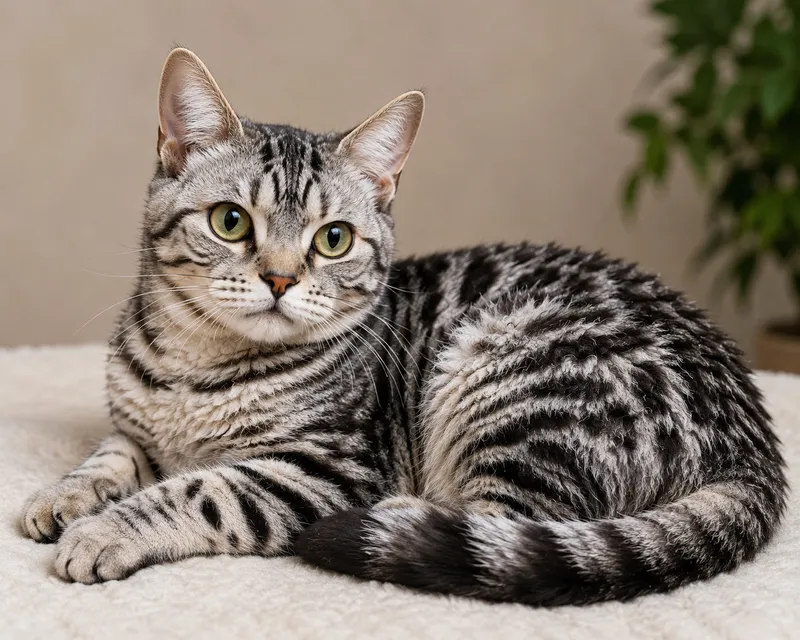
American Wirehair
The American Wirehair is a medium-sized to moderately large cat with a firmly muscled, well-balanced body, rounded contours, a broad chest, substantial legs, and a well-developed muzzle. Its large rounded eyes,…
Recognized by: CFA · TICA
Size
Medium
Weight
2.7–5.4 kg
Life span
13–18 years
Breed Traits
Energy Level
Moderate energy
Energy Level: 3 of 5
Low energyHigh energyChild / Family Compatibility
Very high compatibility
Child / Family Compatibility: 5 of 5
Low compatibilityHigh compatibilityGrooming Need
Low grooming need
Grooming Need: 1 of 5
Low maintenanceHigh maintenanceTrainability
Easy to train
Trainability: 4 of 5
Hard to trainEasy to trainApartment / Home Suitability
Excellent apartment fit
Apartment / Home Suitability: 5 of 5
Needs space / yardExcellent for apartmentsAlone-Time Tolerance
Handles long alone stretches well
Alone-Time Tolerance: 4 of 5
Needs frequent companyHandles long alone timeFirst-Time Owner Suitability
Excellent for first-time owners
First-Time Owner Suitability: 5 of 5
Needs experienced ownerGreat for first-time ownersCompatibility with Other Pets
Shows very high compatibility
Compatibility with Other Pets: 5 of 5
Single-pet homes are a better fitHighly compatible with other animals
The American Wirehair is a medium-sized to moderately large cat with a firmly muscled, well-balanced body, rounded contours, a broad chest, substantial legs, and a well-developed muzzle. Its large rounded eyes, prominent cheekbones, and open expression give it a friendly and alert appearance.
The breed's defining feature is its dense, resilient coat. Individual hairs may be crimped, hooked, bent, or curled, including the whiskers and hairs inside the ears. Coat texture varies considerably between individuals, ranging from relatively soft and woolly to coarse and springy. The breed occurs in many traditional colors and patterns.
The mutation first appeared in 1966 in a litter of farm kittens born near Verona in upstate New York. The only surviving wire-coated male, Council Rock Farms Adam of Hi-Fi, became the foundation cat of the breed. American Shorthairs were subsequently used to establish and maintain the population, which is why the two breeds remain very similar apart from coat texture.
American Wirehairs are generally gentle, calm, intelligent, observant, and affectionate without being excessively demanding. Many enjoy remaining near their family, supervising household activities, and receiving regular attention while still being comfortable entertaining themselves.
They commonly retain a playful hunting instinct and may enthusiastically chase insects, retrieve toys, watch birds, or participate in interactive games. Puzzle feeders, short training sessions, scratching furniture, and opportunities to observe the home provide useful mental and physical enrichment.
Well-socialized American Wirehairs usually live successfully with respectful children, compatible cats, and cat-friendly dogs. Their balanced combination of friendliness and independence makes them suitable for many household types, including homes where people are absent for ordinary working-day periods.
The unusual coat should be handled gently because excessive brushing or combing can damage or break the crimped hairs. Many American Wirehairs need little routine coat grooming beyond light hand grooming or the careful removal of loose hair during seasonal shedding.
Some individuals develop oily coats or sensitive skin and may benefit from occasional bathing with a veterinarian-approved cat shampoo. The coat should be towel-dried gently rather than aggressively brushed or exposed to excessive heat. The ears should be checked regularly because curled hairs can make visible wax accumulation more noticeable.
Daily care should also include interactive play, scratching surfaces, comfortable observation points, dental hygiene, nail trimming, body-condition monitoring, and regular veterinary examinations. American Wirehairs adapt very well to apartment living when they receive appropriate exercise, enrichment, and social contact.
No single inherited disorder is currently established as a defining health problem across the American Wirehair population. CFA and TICA both describe the breed as generally healthy, although the rarity of the population means that detailed family records and responsible breeding decisions remain important.
Some American Wirehairs may have sensitive, oily, or easily irritated skin. Owners should watch for persistent itching, redness, hair breakage, excessive grease, or recurrent ear problems and seek veterinary advice rather than increasing bathing or applying human skin products without guidance.
Because American Shorthairs are permitted in the breed's development, responsible breeders may discuss hypertrophic cardiomyopathy screening and family cardiac history. No American Wirehair-specific DNA test can exclude every form of HCM. Prospective owners should ask about family longevity, heart health, skin condition, known illnesses, causes of death, and veterinary screening practices. This information is for general educational purposes and is not a substitute for diagnosis or treatment by a veterinarian.
Recognizing organizations
Independent registries that list this breed. Tap a badge to learn more.
These statuses reflect each registry’s recording and show systems. They are not a health, quality, or superiority score.
Frequently asked questions
Are American Wirehairs good family cats?
American Wirehairs are generally gentle, tolerant, and adaptable family companions. Well-socialized individuals commonly live successfully with respectful children who understand appropriate handling and allow the cat to rest undisturbed.
Do American Wirehairs get along with other pets?
Well-socialized American Wirehairs usually have a high potential to live successfully with compatible cats and cat-friendly dogs. Introductions should still be gradual because age, confidence, and previous experience affect every relationship.
Can an American Wirehair live in an apartment?
An American Wirehair can adapt very well to apartment living when provided with daily play, scratching surfaces, observation points, puzzle activities, and regular companionship. The breed is moderately active rather than continuously energetic.
Can American Wirehairs be left alone during the day?
Many adult American Wirehairs tolerate ordinary working-day absences reasonably well because they combine affection with independence. They still require daily interaction, enrichment, health observation, and should not be routinely isolated for prolonged periods.
How should an American Wirehair be groomed?
The coat should be handled gently and should not be brushed or combed excessively because the crimped hairs can break. Light hand grooming and careful removal of loose seasonal hair are usually sufficient, while occasional bathing may help individuals with oily coats.
What is the difference between an American Wirehair and an American Shorthair?
The two breeds share a very similar muscular body, balanced proportions, and easygoing temperament. The primary distinction is the coat: the American Wirehair has crimped, bent, springy hairs and often curled whiskers, while the American Shorthair has a conventional dense, straight coat.
Is the American Wirehair related to the Cornish Rex or Devon Rex?
No. The American Wirehair mutation developed independently and produces a different coat structure. Early examination of the foundation cat's hair determined that the mutation was not the same as the mutations responsible for the Cornish Rex or Devon Rex coats.
What health information should an American Wirehair breeder provide?
A responsible breeder should discuss family longevity, heart health, skin and coat condition, known illnesses, causes of death, veterinary records, and any cardiac or genetic screening used in the breeding programme.
More about American Wirehair
Pet profiles are coming soon. For now, keep exploring trusted breed knowledge in the Breed Guide.
Back to Breed Guide