

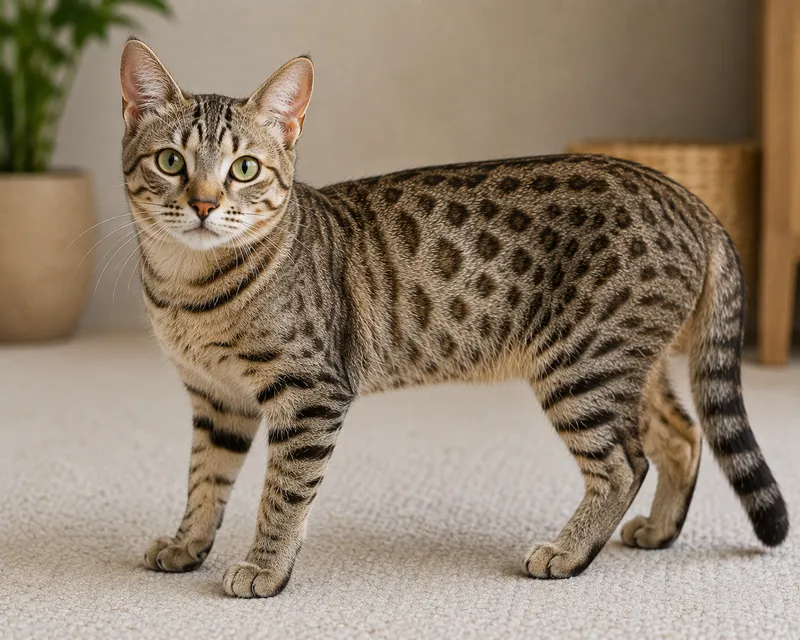
Aegean
The Aegean is a naturally developed cat population associated with Greece, particularly the islands of the Aegean Sea. Cats of this regional type lived alongside island communities long before organized breeding began,…
Size
Medium
Weight
3–5 kg
Life span
10–15 years
Breed Traits
Energy Level
High energy
Energy Level: 4 of 5
Low energyHigh energyChild / Family Compatibility
High compatibility
Child / Family Compatibility: 4 of 5
Low compatibilityHigh compatibilityGrooming Need
Light grooming need
Grooming Need: 2 of 5
Low maintenanceHigh maintenanceTrainability
Easy to train
Trainability: 4 of 5
Hard to trainEasy to trainApartment / Home Suitability
Moderate — depends on setup
Apartment / Home Suitability: 3 of 5
Needs space / yardExcellent for apartmentsAlone-Time Tolerance
Half-day is hard
Alone-Time Tolerance: 2 of 5
Needs frequent companyHandles long alone timeFirst-Time Owner Suitability
Suitable for many first-timers
First-Time Owner Suitability: 4 of 5
Needs experienced ownerGreat for first-time ownersCompatibility with Other Pets
Can adapt with proper socialization
Compatibility with Other Pets: 3 of 5
Single-pet homes are a better fitHighly compatible with other animals
The Aegean is a naturally developed cat population associated with Greece, particularly the islands of the Aegean Sea. Cats of this regional type lived alongside island communities long before organized breeding began, while the modern effort to describe and selectively breed the Aegean emerged in Greece during the 1990s. Claims of an exact uninterrupted pedigree extending into antiquity are not firmly documented.
A typical Aegean is medium-sized, athletic, and muscular without appearing heavy. The body is balanced and agile, with sturdy legs, rounded paws, a proportionate tail, expressive eyes, and medium-sized ears. The coat is usually short to medium in length and may become fuller during colder months.
White commonly forms a substantial part of the coat, combined with black, blue, red, cream, or tabby-patterned areas. Bicolor and tricolor cats are especially associated with the breed. Not every free-roaming or island-born cat in Greece is an Aegean, and physical resemblance alone cannot confirm documented breed ancestry.
Aegeans are generally described as confident, social, intelligent, and highly aware of their surroundings. Many form close relationships with people, follow household activity, communicate readily, and enjoy being involved in daily routines without necessarily remaining on a person's lap for long periods.
They are active and capable hunters that often enjoy climbing, chasing moving toys, exploring elevated spaces, and solving food puzzles. Their island background is frequently associated with curiosity around water and fishing activity, although comfort with water varies between individuals and should not be treated as a guaranteed breed trait.
Well-socialized Aegeans may live successfully with respectful children, compatible cats, and calm cat-friendly dogs. Their prey drive can make unsupervised access to birds, rodents, fish, or other small animals unsafe. Gradual introductions and individual temperament remain more important than breed reputation alone.
The Aegean's short-to-medium coat is usually straightforward to maintain. Gentle weekly brushing can remove loose hair and distribute natural skin oils, while more frequent grooming may be useful during periods of seasonal shedding. The coat should also be checked for tangles, debris, parasites, or skin changes.
Daily interactive play, secure climbing furniture, scratching areas, puzzle feeders, and opportunities to observe household activity help meet this cat's physical and mental needs. Windows, balconies, and outdoor areas should be secured, especially because an alert and athletic Aegean may be motivated to pursue birds or other small animals.
Routine care should include nail trimming, ear checks, dental hygiene, clean litter facilities, measured portions of a complete life-stage-appropriate diet, and regular body-condition monitoring. Indoor living or securely enclosed outdoor access provides protection from traffic, infectious disease, poisoning, predation, and conflict with other animals.
Published health research focused specifically on the Aegean remains limited. No single inherited disorder is firmly established as a defining breed-wide condition, but limited data do not guarantee that every individual or family line will be free from genetic or acquired disease.
Routine preventive veterinary care should include physical examinations, vaccination and parasite control appropriate to the cat's lifestyle and location, dental assessment, weight monitoring, and investigation of persistent changes in appetite, thirst, mobility, breathing, elimination, or behaviour. Dental disease and excess body weight can affect cats of any ancestry and may develop before owners notice obvious signs.
Prospective owners should request available veterinary records and ask about family longevity, heart and kidney health, mobility, known illnesses, and causes of death among related cats. Breeding decisions should be guided by physical examination, pedigree information, family history, genetic diversity, and veterinarian-recommended testing rather than by appearance or a single DNA result alone.
This information is for general educational purposes and is not a substitute for diagnosis or treatment by a veterinarian.
Frequently asked questions
Are Aegean cats good family pets?
Aegeans can be affectionate and involved family companions when their need for activity and respectful interaction is met. Well-socialized individuals often live successfully with considerate children, but all contact should be supervised until both the cat and child behave comfortably together.
Do Aegean cats get along with other pets?
Many Aegeans can live with compatible cats or calm, cat-friendly dogs after gradual introductions. Their hunting instincts may make birds, rodents, aquarium fish, and other small animals unsuitable housemates unless secure separation is maintained.
Can an Aegean cat live in an apartment?
An Aegean can adapt to apartment living when provided with climbing structures, daily interactive play, scratching areas, puzzle activities, and secure windows or balconies. A small environment without exercise or mental stimulation may lead to boredom and frustration.
Can Aegean cats be left alone during the day?
Many adult Aegeans can manage ordinary short absences, but frequent prolonged isolation may be difficult for this social and active cat. A predictable routine and varied enrichment can help, although they do not replace regular human contact.
How much grooming does an Aegean cat need?
Weekly brushing is usually sufficient for the short-to-medium coat. Additional brushing may be helpful during seasonal shedding, while nail care, ear checks, and dental hygiene should remain part of the regular routine.
Do Aegean cats like water?
Some Aegeans show curiosity around running water, sinks, fountains, or aquariums, and the population is often associated with Greek coastal life. This behaviour varies considerably, so an individual cat should never be forced into water or assumed to be a confident swimmer.
Is every cat from the Greek islands an Aegean?
No. Aegean refers to a defined regional breed concept rather than every domestic or free-roaming cat found in Greece. Similar colouring or island origin alone does not confirm documented Aegean ancestry.
What health screening is recommended for an Aegean cat?
There is no firmly established Aegean-specific screening panel that guarantees overall health. Prospective owners should ask for veterinary records and family history, while breeders should use veterinarian-guided examinations and testing based on ancestry and problems reported within their lines.
More about Aegean
Pet profiles are coming soon. For now, keep exploring trusted breed knowledge in the Breed Guide.
Back to Breed Guide