

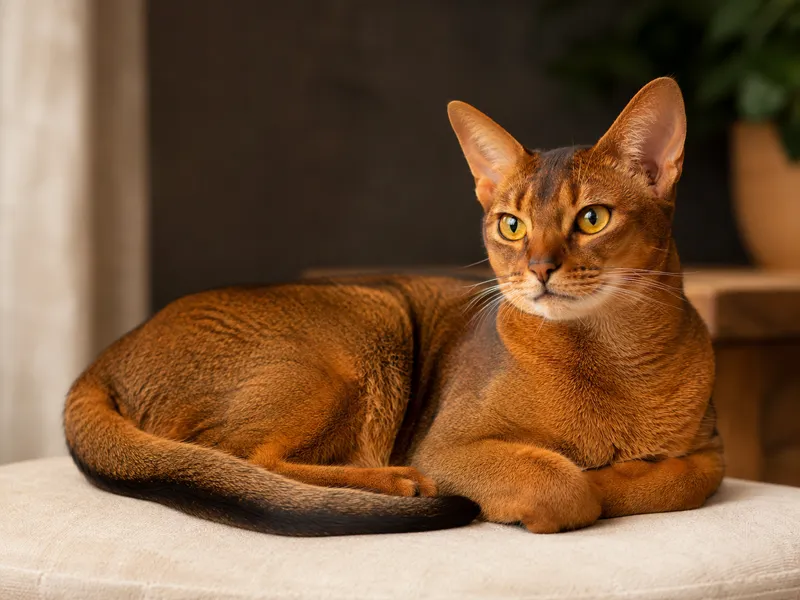
Abyssinian
The Abyssinian is a medium-sized, lithe, and muscular cat with long legs, a balanced wedge-shaped head, large alert ears, and expressive almond-shaped eyes. Its defining feature is a short, resilient coat in which…
Recognized by: CFA · FIFe · +2
Size
Medium
Weight
2.7–5.4 kg
Life span
14–17 years
Breed Traits
Energy Level
Very energetic
Energy Level: 5 of 5
Low energyHigh energyChild / Family Compatibility
High compatibility
Child / Family Compatibility: 4 of 5
Low compatibilityHigh compatibilityGrooming Need
Low grooming need
Grooming Need: 1 of 5
Low maintenanceHigh maintenanceTrainability
Easy to train
Trainability: 4 of 5
Hard to trainEasy to trainApartment / Home Suitability
Moderate — depends on setup
Apartment / Home Suitability: 3 of 5
Needs space / yardExcellent for apartmentsAlone-Time Tolerance
Half-day is hard
Alone-Time Tolerance: 2 of 5
Needs frequent companyHandles long alone timeFirst-Time Owner Suitability
Manageable with guidance
First-Time Owner Suitability: 3 of 5
Needs experienced ownerGreat for first-time ownersCompatibility with Other Pets
Generally gets along well with other pets
Compatibility with Other Pets: 4 of 5
Single-pet homes are a better fitHighly compatible with other animals
The Abyssinian is a medium-sized, lithe, and muscular cat with long legs, a balanced wedge-shaped head, large alert ears, and expressive almond-shaped eyes. Its defining feature is a short, resilient coat in which individual hairs carry alternating bands of color, creating the warm, shimmering effect known as ticking.
Although the breed's name refers to Abyssinia, now Ethiopia, its exact ancestry remains uncertain. Evidence suggests connections to cats from regions around the Indian Ocean, while the modern pedigree breed was developed primarily in Britain and later established internationally.
Abyssinians are valued less for a passive ornamental presence than for their athleticism, intelligence, and constant interest in their surroundings. They are best suited to homes that welcome an active cat and can provide regular companionship, vertical space, and varied opportunities to explore.
Abyssinians are typically energetic, inquisitive, intelligent, and strongly engaged with their household. Many follow familiar people between rooms, investigate new objects, seek high observation points, and remain playful well into adulthood.
They are often affectionate without being conventional lap cats. An individual may prefer sitting beside a person, joining household routines, retrieving toys, or initiating interactive play rather than remaining still for extended cuddling.
Well-socialized Abyssinians can live successfully with respectful children, compatible cats, and cat-friendly dogs. Individual temperament varies, and their high activity and social needs mean they may be less comfortable in homes where they receive little interaction or stimulation.
The short, close-lying coat is easy to maintain and usually needs only gentle weekly brushing to remove loose hair and preserve its smooth appearance. More frequent grooming may be useful during seasonal shedding, although the coat is not normally prone to tangling or matting.
Daily life should include interactive play, stable climbing structures, scratching areas, puzzle feeders, and safe elevated resting places. Rotating toys and introducing short reward-based training sessions can help challenge this agile, problem-solving breed.
Routine care should include dental hygiene, nail trimming, ear checks, body-condition monitoring, and regular veterinary examinations. Food portions should be based on the individual cat's age, activity, health, and body condition rather than relying on breed stereotypes or unrestricted feeding.
Abyssinians can be affected by erythrocyte pyruvate kinase deficiency, an inherited condition associated with hemolytic anemia. A DNA test is available, allowing breeding programs to identify clear cats, carriers, and cats genetically at risk.
Inherited progressive retinal atrophy has also been documented in the breed, including the late-onset rdAc form and a rare early-onset Rdy form. Prospective owners should ask for documented genetic results, family eye history, veterinary records, and information about longevity in related cats rather than relying on general assurances of healthy lines.
This information is for general educational purposes and is not a substitute for diagnosis or treatment by a veterinarian.
Recognizing organizations
Independent registries that list this breed. Tap a badge to learn more.
These statuses reflect each registry’s recording and show systems. They are not a health, quality, or superiority score.
Frequently asked questions
Are Abyssinian cats good family pets?
Abyssinians can be excellent family companions in active homes that provide regular play and attention. They often live well with respectful children, but interactions should remain gentle and supervised so the cat can move away when it wants space.
Are Abyssinians affectionate lap cats?
Abyssinians are usually affectionate and people-oriented, but many prefer active companionship to sitting still for long periods. They may follow their owners, rest nearby, or join daily activities rather than remain on a lap.
Can an Abyssinian live in an apartment?
An Abyssinian can adapt to apartment living when the home provides sufficient vertical territory, enrichment, and daily interactive play. Tall cat trees, secure shelves, scratching posts, and puzzle feeders are particularly useful.
Can Abyssinian cats be left alone during the day?
Most adults can manage ordinary short absences, but the breed is not especially tolerant of frequent prolonged isolation or an unstimulating environment. Owners with long workdays should provide varied enrichment and dependable social interaction before and after absences.
How much grooming does an Abyssinian need?
The short coat is low maintenance and usually needs only gentle weekly brushing. Dental hygiene, nail trimming, ear checks, and routine veterinary care remain important even though coat care is simple.
How much exercise does an Abyssinian need?
Abyssinians have very high activity needs and benefit from several short play sessions throughout the day. Chasing toys, climbing, puzzle feeding, retrieving games, and voluntary training help exercise both body and mind.
Are Abyssinian cats easy to train?
Many Abyssinians learn quickly when sessions are brief, positive, and rewarding. They may learn carrier routines, recall cues, retrieving games, simple tricks, or harness skills, although participation should always remain voluntary.
What health testing should an Abyssinian breeder discuss?
A responsible breeder should discuss DNA screening for pyruvate kinase deficiency and relevant forms of progressive retinal atrophy. Buyers should request documented results and ask about family eye health, longevity, and veterinary records because no single test guarantees lifelong health.
More about Abyssinian
Pet profiles are coming soon. For now, keep exploring trusted breed knowledge in the Breed Guide.
Back to Breed Guide