

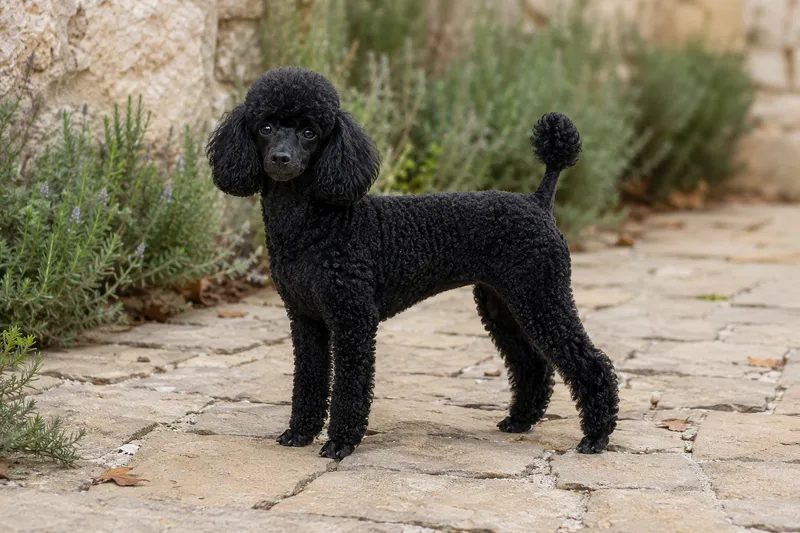
Toy Poodle
The Toy Poodle is the smallest officially recognized Poodle variety, retaining the square outline, refined head, long drop ears, springy movement, and dense curly or corded coat associated with its larger relatives.…
Tanıyan kuruluşlar: AKC · ANKC · +5
Boyut
Küçük
Ağırlık
1.8–2.7 kg
Yaşam süresi
10–18 yıl
Irk Özellikleri
Enerji Seviyesi
Yüksek enerji
Enerji Seviyesi: 4 / 5
Düşük enerjiYüksek enerjiÇocuk / Aile Uyumu
Orta uyum
Çocuk / Aile Uyumu: 3 / 5
Düşük uyumYüksek uyumTüy Bakımı
Yoğun bakım ihtiyacı
Tüy Bakımı: 5 / 5
Az bakımYoğun bakımEğitilebilirlik
Çok kolay eğitilir
Eğitilebilirlik: 5 / 5
Zor eğitilirKolay eğitilirApartman / Ev Yaşamına Uygunluk
Apartmana çok uygun
Apartman / Ev Yaşamına Uygunluk: 5 / 5
Geniş alan / bahçe gerekirApartmana çok uygunYalnız Kalma Toleransı
Yarım gün zorlanır
Yalnız Kalma Toleransı: 2 / 5
Sürekli eşlik isterUzun yalnızlığa dayanırİlk Kez Sahiplenecekler İçin Uygunluk
Birçok ilk sahip için uygun
İlk Kez Sahiplenecekler İçin Uygunluk: 4 / 5
Deneyimli sahip gerekirİlk kez sahiplenmeye çok uygunDiğer Evcil Hayvanlarla Uyum
Genellikle diğer evcil hayvanlarla iyi anlaşır
Diğer Evcil Hayvanlarla Uyum: 4 / 5
Tek evcil hayvanlı ev daha uygunDiğer hayvanlarla çok uyumlu
The Toy Poodle is the smallest officially recognized Poodle variety, retaining the square outline, refined head, long drop ears, springy movement, and dense curly or corded coat associated with its larger relatives. Size definitions differ among registries: AKC and UKC standards set a maximum height of 10 inches (25.4 centimetres), while standards used in Britain, Australia, and New Zealand place the variety below 28 centimetres.
Developed by selecting progressively smaller Poodles, the Toy became primarily a close companion rather than a working water retriever. Its compact dimensions do not erase the family's athletic ability or quick mind, and a sound Toy Poodle should appear balanced and active rather than weak, coarse, or distorted by extreme miniaturization.
This variety fits readily into urban homes and can participate in trick training, obedience, rally, scent games, and appropriately scaled agility. Success as a companion depends less on floor space than on daily interaction, thoughtful handling, coat care, training, and protection from accidental injury caused by falls, rough play, or much larger animals.
Toy Poodles are commonly bright, affectionate, animated, and intensely attentive to their people. They often learn household routines with remarkable speed and may become effective alert barkers, so calm reinforcement of quiet behavior is more useful than allowing every sound or movement to trigger prolonged vocalizing.
Their intelligence responds well to short, varied, reward-based sessions that teach practical manners as well as entertaining skills. Early socialization should include friendly adults, gentle children, suitable dogs, grooming procedures, travel, household noises, different surfaces, and brief periods of independence without overwhelming the puppy.
A confident Toy Poodle can be sociable and playful, but its tiny body requires careful supervision around very young children and powerful pets. Sensitivity, fearfulness, guarding, or excessive dependence should not be encouraged as inevitable small-dog behavior; predictable routines and respectful handling help the dog develop resilience without losing its naturally close bond with the family.
Toy Poodles need daily movement and mental engagement even though their short legs make the total exercise requirement manageable. Several brief walks, indoor retrieving, puzzle feeding, training games, and safe off-leash play in a secure area can be combined, while jumping from furniture, repeated stair use by puppies, and rough collisions with larger dogs should be limited.
The continuously growing coat demands far more work than the dog's size might suggest. A short pet trim still requires thorough brushing and combing to the skin, regular bathing and careful drying, plus clipping on a consistent schedule; neglected curls can form tight mats around the ears, legs, armpits, collar area, and other high-friction points.
Dental care is especially important in a small mouth and should include regular home brushing and veterinary assessment, alongside nail trimming and checks of the eyes and ears. Toy Poodles belong indoors with their people, and gradual alone-time practice is needed because an under-stimulated or highly dependent individual may bark, become distressed, or develop unwanted habits during long absences.
Patellar luxation and inherited eye disease are leading screening priorities in Toy Poodles. Progressive retinal atrophy caused by the prcd mutation is a documented concern, but a clear DNA result does not exclude every eye disorder, which is why specialist ophthalmic examinations remain important.
Other concerns reported in the variety include Legg-Calve-Perthes disease, cataracts, dental and periodontal disease, and occasional seizure or skin disorders. Because of the dog's small frame, owners should also prevent unsafe falls, monitor puppies carefully for illness or poor food intake, and seek veterinary attention promptly for limping, vision changes, persistent coughing, seizures, pain, or sudden behavioral change.
Responsible breeders should provide verifiable patella and ophthalmologist evaluations together with prcd-PRA DNA results, and should discuss the health and longevity of close relatives rather than presenting a single genetic test as complete protection. Buyers should avoid marketing based on unofficial labels such as teacup, micro, or unusually tiny size when these claims take priority over sound structure, stable temperament, and documented health screening. This information is for general educational purposes and is not a substitute for diagnosis or treatment by a veterinarian.
Tanıyan kuruluşlar
Bu ırkı listelerinde tutan bağımsız kayıt kuruluşları. Ayrıntı için rozete dokunun.
Bu statüler kuruluşların kayıt ve yarışma sistemlerindeki konumu gösterir; sağlık, kalite veya üstünlük puanı değildir.
AKCTam tanınma (Full recognition)https://www.akc.org/dog-breeds/poodle-toy/ ANKCTam tanınma (Full recognition)https://dogsaustralia.org.au/members/breeds/breed-standards/Poodle-%28Toy%29 CKCTanınan ırk (Recognized breed)https://www.ckc.ca/en/Choosing-a-Dog/Choosing-a-Breed/Toy-Dogs/Poodle-Toy.aspx FCIKesin tanıma (Definitive recognition)https://www.fci.be/en/nomenclature/POODLE-172.html NZKCTanınan ırk (Recognised breed)https://www.dogsnz.org.nz/breeds/info/poodle-toy/764 RKCIrk kaydı (Breed Register)https://www.royalkennelclub.com/search/breeds-a-to-z/breeds/utility/poodle-toy/ UKCTam tanınma (Full recognition)https://www.ukcdogs.com/poodle
Sık sorulan sorular
How is a Toy Poodle different from a Miniature or Standard Poodle?
The principal formal difference is height, with the Toy being the smallest recognized Poodle variety while retaining the same essential outline, coat, and intelligence. Exact limits vary by registry, ranging from no more than 10 inches under AKC and UKC rules to under 28 centimetres in several other national standards.
Is a teacup Poodle an officially recognized variety?
Teacup, micro, and similar labels are not separate Poodle varieties recognized by the major registries represented here. Prospective owners should prioritize sound proportions, temperament, and documented health screening instead of selecting for the smallest advertised adult size.
Are Toy Poodles suitable for families with children?
They can be affectionate family dogs when children understand gentle handling and adults supervise every interaction. The variety's very small body is vulnerable to falls, squeezing, chasing, and accidental injury, making a calmer household with respectful older children the easier match.
How much exercise does a Toy Poodle need?
Most healthy adults benefit from daily walks, play, and training, but these activities can be divided into several manageable sessions. Mental work matters as much as distance, so retrieving games, scent puzzles, and new skills can provide useful stimulation without excessive impact on a tiny frame.
Can a Toy Poodle live comfortably in an apartment?
Its compact size makes the Toy Poodle highly adaptable to apartment living when exercise, toilet access, grooming, and companionship are reliably provided. Alert barking can disturb neighbors, so quiet cues, appropriate enrichment, and calm exposure to hallway and street sounds should begin early.
Can Toy Poodles be left alone during the day?
They can learn to remain settled for reasonable periods, but long routine isolation is poorly suited to this social and people-focused variety. Owners should build independence gradually and arrange exercise, enrichment, toilet breaks, and dependable human contact around longer absences.
Do Toy Poodles shed, and are they hypoallergenic?
Toy Poodles generally release little loose hair because shed strands tend to remain caught within the curly coat, where they can contribute to matting. No dog is guaranteed to be hypoallergenic, so anyone with allergies should seek medical advice and spend time with the individual dog before making a commitment.
What health screening should a Toy Poodle breeder provide?
Current parent-club recommendations include a patella evaluation, an examination by a veterinary ophthalmologist, and a DNA test for prcd-PRA. Buyers should verify the actual results, ask about other health problems and longevity in close relatives, and remember that completing recommended tests cannot guarantee lifelong health.
Toy Poodle hakkında daha fazla
Pet profilleri yakında. Şimdilik güvenilir ırk bilgisine Irk Rehberi’nde devam edebilirsiniz.
Irk Rehberine Dön