

Tennessee Rex
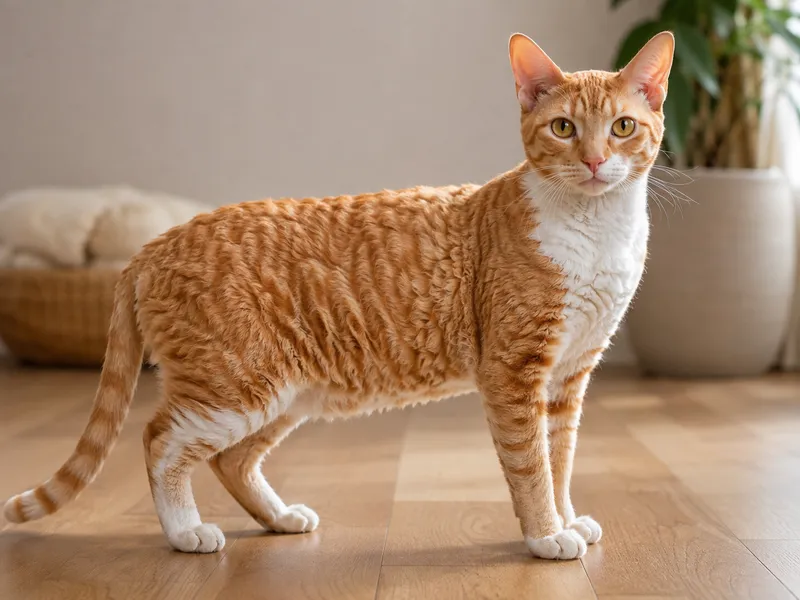
The Tennessee Rex is a rare natural-mutation breed that traces its development to cats discovered in Tennessee in 2004. The foundation cats attracted attention because some kittens combined an unusual curly coat with a…
Tanıyan kuruluşlar: TICA
Boyut
Orta
Ağırlık
3.6–6.8 kg
Yaşam süresi
12–16 yıl
Irk Özellikleri
Enerji Seviyesi
Orta enerji
Enerji Seviyesi: 3 / 5
Düşük enerjiYüksek enerjiÇocuk / Aile Uyumu
Yüksek uyum
Çocuk / Aile Uyumu: 4 / 5
Düşük uyumYüksek uyumTüy Bakımı
Orta bakım ihtiyacı
Tüy Bakımı: 3 / 5
Az bakımYoğun bakımEğitilebilirlik
Orta eğitilebilirlik
Eğitilebilirlik: 3 / 5
Zor eğitilirKolay eğitilirApartman / Ev Yaşamına Uygunluk
Apartmanda iyi uyum
Apartman / Ev Yaşamına Uygunluk: 4 / 5
Geniş alan / bahçe gerekirApartmana çok uygunYalnız Kalma Toleransı
Yarım gün zorlanır
Yalnız Kalma Toleransı: 2 / 5
Sürekli eşlik isterUzun yalnızlığa dayanırİlk Kez Sahiplenecekler İçin Uygunluk
Rehberlikle yönetilebilir
İlk Kez Sahiplenecekler İçin Uygunluk: 3 / 5
Deneyimli sahip gerekirİlk kez sahiplenmeye çok uygunDiğer Evcil Hayvanlarla Uyum
Genellikle diğer evcil hayvanlarla iyi anlaşır
Diğer Evcil Hayvanlarla Uyum: 4 / 5
Tek evcil hayvanlı ev daha uygunDiğer hayvanlarla çok uyumlu
The Tennessee Rex is a rare natural-mutation breed that traces its development to cats discovered in Tennessee in 2004. The foundation cats attracted attention because some kittens combined an unusual curly coat with a distinctive reflective sheen. A breeding programme was subsequently established to preserve and study these characteristics, and the breed entered TICA's new-breed development system.
Two coat characteristics define the Tennessee Rex in the TICA standard. The first is a recessively inherited wavy-to-curly rex coat. The second is the presence of shining hairs known as satin, which can give the coat a sparkling or metallic appearance when light strikes it. The satin effect is a defining feature of the breed rather than simply ordinary coat gloss.
The Tennessee Rex is a medium to large, balanced and muscular cat rather than an extremely fine-boned rex breed. TICA describes a modified-wedge head with rounded contours, prominent cheekbones, medium-to-large ears, expressive eyes and a substantial body. Both longhaired and shorthaired Tennessee Rex cats occur within the breed group, and all coat colours and divisions are accepted under the TICA standard.
Tennessee Rex cats are generally described by breed sources as affectionate, gentle, social and people-oriented. Many enjoy staying close to familiar people and combine periods of relaxed companionship with ordinary playful domestic-cat behaviour.
Because the breed remains rare and its population is comparatively small, temperament should not be treated as rigidly predictable. Early socialization, individual genetics, household experience and the quality of handling during kittenhood can substantially influence confidence and sociability.
Interactive toys, food puzzles, scratching surfaces, climbing opportunities and short reward-based training sessions provide useful enrichment. Well-socialized individuals may live successfully with respectful children, compatible cats and cat-friendly dogs when introductions are gradual and each animal has adequate space and resources.
The Tennessee Rex coat is soft and structurally unusual, so grooming should emphasize gentle handling rather than aggressive brushing. Loose hair can usually be managed with careful combing or hand grooming according to the individual's coat length and density. Longhaired individuals may require more frequent attention than shorthairs, particularly where longer waves or curls can tangle.
Avoid repeatedly brushing or manipulating the coat solely to maximize the satin appearance. Curly whiskers and rexed hairs can be more irregular or fragile than conventional straight hair, and grooming should preserve healthy skin and coat rather than force the curls into a particular shape. Persistent hair loss, scaling, redness, itching or coat breakage deserves veterinary assessment.
Routine care should also include dental hygiene, nail trimming, clean litter facilities, body-condition monitoring and a complete life-stage-appropriate diet. Daily interactive play, sturdy scratching surfaces, climbing furniture and comfortable resting areas help provide the physical and mental stimulation expected by an active domestic companion cat.
Published veterinary and genetic health data specific to the Tennessee Rex remain limited, and no particular inherited disorder is currently established as a breed-wide disease on the basis of strong clinical evidence. The breed is also comparatively young and rare, so absence of a well-documented disease prevalence should not be interpreted as proof that every family line is free from inherited health concerns.
The rex and satin coat characteristics define the breed, but a distinctive coat mutation should not automatically be treated as a disease. Owners should nevertheless monitor skin and coat health individually and seek veterinary assessment for persistent hair loss, inflammation, excessive fragility, recurrent skin disease or other abnormalities rather than assuming they are normal consequences of being a rex cat.
For such a small developing population, responsible breeding should place particular emphasis on genetic diversity, general health, reproductive history and detailed family records. Prospective owners should ask about veterinary screening, longevity, causes of death in close relatives, reproductive outcomes and any recurring medical problems within the breeder's lines. DNA testing should be selected for documented risks rather than assuming that a broad commercial panel provides complete Tennessee Rex health clearance. This information is for general educational purposes and is not a substitute for diagnosis or treatment by a veterinarian.
Tanıyan kuruluşlar
Bu ırkı listelerinde tutan bağımsız kayıt kuruluşları. Ayrıntı için rozete dokunun.
Bu statüler kuruluşların kayıt ve yarışma sistemlerindeki konumu gösterir; sağlık, kalite veya üstünlük puanı değildir.
Sık sorulan sorular
What makes the Tennessee Rex different from other Rex cats?
The Tennessee Rex is distinguished by the combination of a wavy or curly rex coat and reflective satin hairs that can create a sparkling appearance. Its mutation arose independently from established rex breeds such as the Cornish Rex, Devon Rex and Selkirk Rex.
Why does the Tennessee Rex coat look shiny or sparkling?
The breed standard describes a mixture of shining hairs known as satin. These hairs reflect light in a way that can make the coat appear unusually lustrous or sparkling, with the effect varying according to the individual cat, coat and lighting.
Are Tennessee Rex cats good family pets?
Breed sources generally describe them as affectionate, gentle and social companions. Because the population is small, individual temperament and early socialization should carry more weight than assuming every Tennessee Rex will behave identically.
Do Tennessee Rex cats get along with children and other pets?
Well-socialized individuals may live successfully with respectful children, compatible cats and cat-friendly dogs. Introductions should be gradual, and each animal should have separate resting, feeding and litter resources when appropriate.
Can a Tennessee Rex live in an apartment?
Yes. A Tennessee Rex can adapt to apartment living when provided with daily interactive play, scratching surfaces, climbing opportunities, comfortable resting areas and regular companionship.
How much grooming does a Tennessee Rex need?
Grooming should be gentle because the unusual rexed coat should not be repeatedly pulled or aggressively brushed. The amount of grooming depends partly on coat length, with longhaired individuals generally requiring more attention to tangles and loose hair.
Does the Tennessee Rex come in both longhair and shorthair?
Yes. TICA's Tennessee Rex standard covers both longhaired and shorthaired forms, with separate registry abbreviations for the two coat lengths. Both share the characteristic rex and satin coat traits.
What health screening should a Tennessee Rex breeder provide?
There is currently no single Tennessee Rex-specific disease panel supported by strong evidence as a complete health screen. Ask for veterinary records and family information covering general health, skin and coat problems, reproductive outcomes, longevity and causes of death, together with an explanation of any targeted genetic or clinical tests used in the breeder's lines.
Tennessee Rex hakkında daha fazla
Pet profilleri yakında. Şimdilik güvenilir ırk bilgisine Irk Rehberi’nde devam edebilirsiniz.
Irk Rehberine Dön