

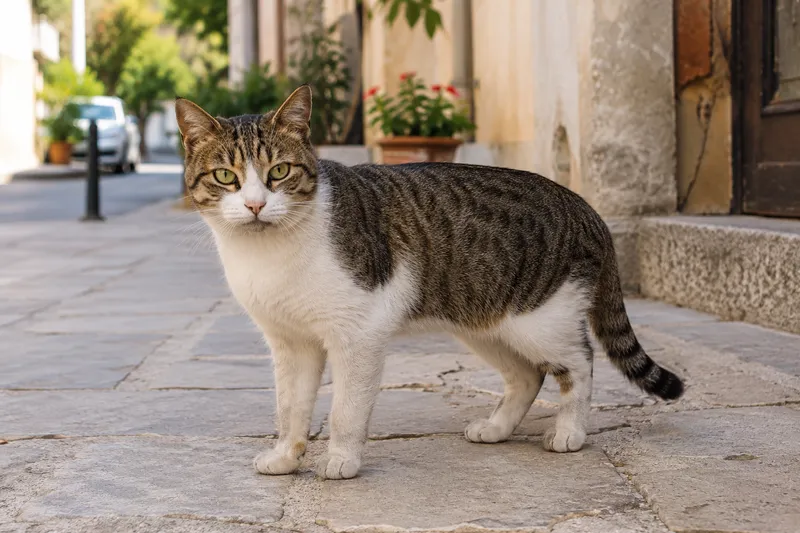
Street Cat
Street Cat is a practical category for domestic cats that live, or previously lived, primarily outdoors without a conventional owned home. It is not a pedigree breed and does not describe one ancestry, body type, coat,…
Boyut
Orta
Ağırlık
2.5–7 kg
Yaşam süresi
12–18 yıl
Irk Özellikleri
Enerji Seviyesi
Orta enerji
Enerji Seviyesi: 3 / 5
Düşük enerjiYüksek enerjiÇocuk / Aile Uyumu
Orta uyum
Çocuk / Aile Uyumu: 3 / 5
Düşük uyumYüksek uyumTüy Bakımı
Orta bakım ihtiyacı
Tüy Bakımı: 3 / 5
Az bakımYoğun bakımEğitilebilirlik
Orta eğitilebilirlik
Eğitilebilirlik: 3 / 5
Zor eğitilirKolay eğitilirApartman / Ev Yaşamına Uygunluk
Apartmanda iyi uyum
Apartman / Ev Yaşamına Uygunluk: 4 / 5
Geniş alan / bahçe gerekirApartmana çok uygunYalnız Kalma Toleransı
Tipik iş günü idare eder
Yalnız Kalma Toleransı: 3 / 5
Sürekli eşlik isterUzun yalnızlığa dayanırİlk Kez Sahiplenecekler İçin Uygunluk
Rehberlikle yönetilebilir
İlk Kez Sahiplenecekler İçin Uygunluk: 3 / 5
Deneyimli sahip gerekirİlk kez sahiplenmeye çok uygunDiğer Evcil Hayvanlarla Uyum
Doğru sosyalleştirmeyle uyum sağlayabilir
Diğer Evcil Hayvanlarla Uyum: 3 / 5
Tek evcil hayvanlı ev daha uygunDiğer hayvanlarla çok uyumlu
Street Cat is a practical category for domestic cats that live, or previously lived, primarily outdoors without a conventional owned home. It is not a pedigree breed and does not describe one ancestry, body type, coat, colour, or inherited temperament. International animal-welfare organisations often use related terms such as stray cat, community cat, free-roaming cat, and unowned cat, although the exact definitions vary between regions and organisations.
A street cat may have been born outdoors, may have become separated from a previous home, may have been abandoned, or may live around people without having a legal owner. Some are highly social and readily approach people, while others are cautious or unsocialized. A cat's street origin therefore does not determine whether it can live successfully as a companion animal.
Street cats can have almost any domestic-cat appearance. They may be shorthaired, medium-haired, or longhaired; small or large; solid, tabby, bicolour, tortoiseshell, pointed, or almost any other colour and pattern. Visual resemblance to a pedigree breed does not establish pedigree ancestry. Once adopted, an individual street cat is still biologically the same domestic cat, Felis catus, and its future care should be based on its individual health, behaviour, and history rather than its former living location.
There is no single Street Cat temperament. A friendly stray may already be accustomed to people, handling, household sounds, and indoor life, while another cat born outdoors may be cautious and require considerably more time to feel secure. Some free-roaming cats are feral or minimally socialized and may not be appropriate candidates for conventional indoor adoption.
A newly rescued street cat should be allowed to set the pace of social interaction. A quiet room, hiding places, predictable feeding, gentle play, and voluntary contact can help a socialized or partly socialized cat adjust to a home. Forced handling, chasing, or repeatedly removing the cat from hiding can increase fear rather than accelerate trust.
Many socialized street cats become affectionate, playful family companions and may live successfully with respectful children or compatible pets after careful introductions. Previous street experience does not make a cat inherently aggressive or unsuitable for adoption, but behaviour should always be assessed individually.
A newly adopted street cat should receive a veterinary examination as soon as practical. Any known rescue history, injuries, reproductive status, previous treatments, and duration of outdoor exposure should be shared with the veterinarian. Microchip scanning may also be appropriate because a friendly outdoor cat can be a lost pet rather than an unowned cat.
Coat care depends on the individual. Shorthaired cats may need little more than occasional brushing, while longer or matted coats can require substantially more grooming. Severe matting, wounds, abscesses, parasites, painful claws, dental disease, dehydration, or poor body condition should be addressed medically rather than treated only through routine grooming or feeding.
Once indoors, provide a gradual transition with clean litter facilities, separate food and water, scratching surfaces, hiding places, comfortable resting areas, and daily interactive play. Secure windows, doors, and balconies carefully during the adjustment period because recently rescued cats may attempt to return to familiar outdoor territory. A complete life-stage-appropriate diet and measured feeding can help restore or maintain healthy body condition.
Street Cat is not a genetic breed, so there is no single inherited disease profile. Health risks depend on the individual cat's ancestry, age, reproductive status, nutrition, previous injuries, infectious-disease exposure, parasite exposure, and length and conditions of outdoor life.
Veterinary evaluation after rescue may include physical examination, parasite assessment, vaccination planning, and consideration of feline leukaemia virus and feline immunodeficiency virus testing according to the cat's age, history, exposure risk, and local veterinary guidance. Cats with ongoing outdoor exposure or contact with cats of unknown status can have different preventive-care needs from cats that will remain strictly indoors.
Outdoor cats may also arrive with wounds, bite abscesses, dental disease, ear or skin problems, gastrointestinal parasites, respiratory disease, reproductive issues, or nutritional deficits, but none of these should be assumed to affect every street cat. Owners should monitor appetite, thirst, weight, breathing, movement, urination, defecation, coat condition, and behaviour during the transition to a home and seek veterinary assessment for persistent abnormalities. This information is for general educational purposes and is not a substitute for diagnosis or treatment by a veterinarian.
Sık sorulan sorular
Is a Street Cat a recognized cat breed?
No. Street Cat describes a domestic cat's living background or circumstances rather than a standardized pedigree breed. Street cats can have many different ancestries, coat types, body shapes, colours, and temperaments.
What is the difference between a street cat, a stray cat, and a feral cat?
Street Cat is a broad practical label for cats living or previously living outdoors without a conventional home. A stray cat is commonly a socialized cat that has become lost, abandoned, or separated from a home, while a feral cat is generally not socialized to close human contact. Terminology varies between organisations and countries.
Can a Street Cat be adopted and live indoors?
Yes, many socialized or partly socialized street cats adapt very successfully to indoor homes. Friendly strays are often suitable for adoption, while truly feral adults may be more comfortable in managed outdoor environments. Each cat should be assessed individually.
How long does a rescued Street Cat take to adjust to a home?
Adjustment varies from a few days to many weeks or longer. A quiet starting room, hiding places, predictable meals, gentle play, and allowing the cat to initiate contact can make the transition easier. A cautious cat should not be forced to interact before it feels safe.
Are Street Cats good family pets?
Many rescued street cats become affectionate and adaptable family companions. Suitability depends on the individual cat's socialization, confidence, handling tolerance, health, and previous experience rather than on its street origin.
Can a Street Cat live with other cats or dogs?
Many can, but introductions should be gradual and only after appropriate veterinary assessment. Separate food, water, litter, hiding, and resting resources help reduce stress while the animals become familiar with one another.
What veterinary checks should a newly adopted Street Cat receive?
A veterinarian can assess general health, injuries, body condition, teeth, skin, ears, parasites, reproductive status, and vaccination needs and can advise whether FeLV, FIV, or other testing is appropriate based on the cat's age, history, location, and exposure risk.
Should every Street Cat be taken indoors for adoption?
No. Friendly strays and suitably socialized cats may be excellent adoption candidates, but genuinely feral adults may experience significant stress in a conventional home. Their welfare should be assessed individually, and managed community-cat approaches may be more appropriate in some circumstances.
Street Cat hakkında daha fazla
Pet profilleri yakında. Şimdilik güvenilir ırk bilgisine Irk Rehberi’nde devam edebilirsiniz.
Irk Rehberine Dön