

Peterbald
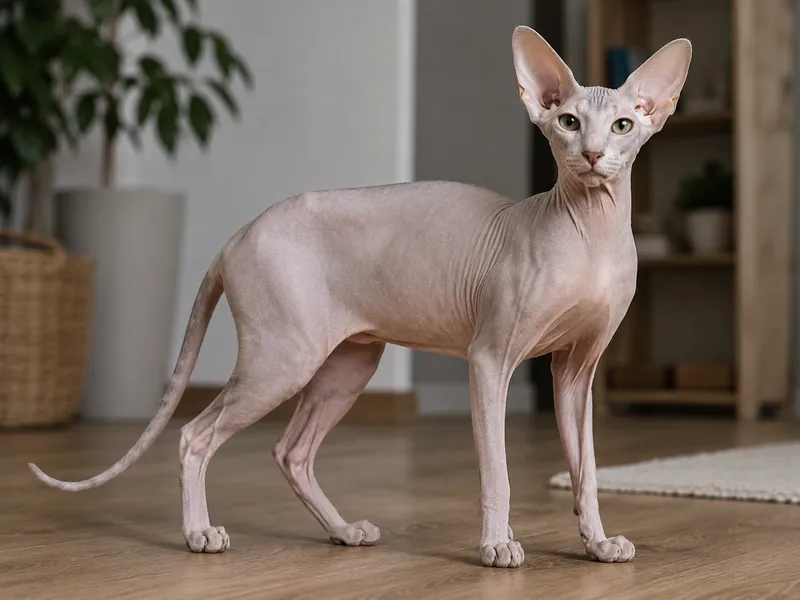
The Peterbald is a modern Russian breed created in St. Petersburg in 1994. Olga Mironova crossed a Donskoy male with an Oriental Shorthair female, and kittens from the first litters became the foundation of the new…
Tanıyan kuruluşlar: FIFe · TICA
Boyut
Orta
Ağırlık
2.3–4.5 kg
Yaşam süresi
12–15 yıl
Irk Özellikleri
Enerji Seviyesi
Çok enerjik
Enerji Seviyesi: 5 / 5
Düşük enerjiYüksek enerjiÇocuk / Aile Uyumu
Yüksek uyum
Çocuk / Aile Uyumu: 4 / 5
Düşük uyumYüksek uyumTüy Bakımı
Orta bakım ihtiyacı
Tüy Bakımı: 3 / 5
Az bakımYoğun bakımEğitilebilirlik
Çok kolay eğitilir
Eğitilebilirlik: 5 / 5
Zor eğitilirKolay eğitilirApartman / Ev Yaşamına Uygunluk
Apartmanda iyi uyum
Apartman / Ev Yaşamına Uygunluk: 4 / 5
Geniş alan / bahçe gerekirApartmana çok uygunYalnız Kalma Toleransı
Yarım gün zorlanır
Yalnız Kalma Toleransı: 2 / 5
Sürekli eşlik isterUzun yalnızlığa dayanırİlk Kez Sahiplenecekler İçin Uygunluk
Rehberlikle yönetilebilir
İlk Kez Sahiplenecekler İçin Uygunluk: 3 / 5
Deneyimli sahip gerekirİlk kez sahiplenmeye çok uygunDiğer Evcil Hayvanlarla Uyum
Genellikle diğer evcil hayvanlarla iyi anlaşır
Diğer Evcil Hayvanlarla Uyum: 4 / 5
Tek evcil hayvanlı ev daha uygunDiğer hayvanlarla çok uyumlu
The Peterbald is a modern Russian breed created in St. Petersburg in 1994. Olga Mironova crossed a Donskoy male with an Oriental Shorthair female, and kittens from the first litters became the foundation of the new breed. The name combines Peter, referring to the city's association with Peter the Great, with bald, although not every Peterbald is hairless.
This is a medium-sized, elegant, and firmly muscled cat with long tapering lines. The head is a narrow wedge with a straight profile, very large ears, almond-shaped eyes, a long neck, slender legs, oval feet with long flexible toes, and a long whip-like tail. The body should appear refined and athletic rather than fragile.
Peterbald coats range from completely bald or nearly bald to flock, velour, brush, and ordinary straight coat. Coat terminology and show eligibility vary between registries, and a kitten's coat may become thinner, fuller, or different in texture during its first two years. All colours and patterns may occur, including pointed patterns.
Peterbalds are generally affectionate, intelligent, energetic, vocal, and intensely interested in people. Many follow family members through the home, greet visitors, investigate daily activities, and seek frequent physical closeness or conversation.
They are agile cats that often enjoy retrieving, climbing, food puzzles, clicker or target training, and interactive games. Their long toes can be unusually dexterous, and some individuals learn to manipulate toys, doors, or small objects. Daily mental and physical activity is important even in a compact home.
Well-socialized Peterbalds may live successfully with respectful children, compatible cats, and cat-friendly dogs. Their strong social drive means that repeated prolonged isolation is usually a poor match. Individual confidence still varies, so introductions should be gradual and the cat should always have a warm, quiet retreat.
Care must be matched to the individual coat. Hairless and very sparsely coated Peterbalds may accumulate skin oil and debris and can need gentle wiping or occasional bathing, while brush and straight-coated cats usually benefit from light weekly combing. Overwashing can dry or irritate the skin, so frequency should be based on actual skin condition rather than a rigid schedule.
Sparse coats provide less protection from cold, strong sunlight, rough surfaces, and scratches. Keep the cat indoors, provide warm bedding without overheating, limit intense direct sun, and ask a veterinarian before applying any topical sun-protection product. Check the skin, ears, nail folds, and between the long toes for redness, odour, discharge, sores, or excess oil.
Daily care should also include energetic play, stable climbing and scratching furniture, dental hygiene, nail trimming, clean litter facilities, and measured portions of a complete life-stage-appropriate diet. Sudden coat loss outside the expected developmental pattern, persistent itching, scaling, greasy skin, wounds, or sensitivity warrants veterinary assessment.
Published Peterbald-specific health data remain limited, and no single inherited disorder is established as affecting the breed as a whole. The molecular basis of the characteristic coat is not fully resolved. A large feline genetic survey found that the Sphynx-associated KRT71 hairlessness variant was absent from the Peterbalds tested, while an exome study proposed an LPAR6 candidate variant in one Peterbald; neither finding provides a validated breed-wide coat test.
The exposed or sparsely coated skin requires regular observation. A small dermatology case series of Eastern European hairless breeds included one Peterbald with chronic figurate erythema, but this isolated inclusion does not establish a common Peterbald disorder. Persistent redness, scaling, plaques, recurrent infection, odour, pain, or changes in coat and skin condition should be investigated rather than assumed to be normal hairlessness.
Because Oriental and Siamese cats contributed to Peterbald development, ancestry-appropriate screening may be relevant for some lines, but foundation ancestry alone does not prove that every associated variant is present. Prospective owners should request a documented pedigree, veterinary records, family longevity and disease history, and the reasons for any DNA, eye, cardiac, or other clinical screening used by the breeder. This information is for general educational purposes and is not a substitute for diagnosis or treatment by a veterinarian.
Tanıyan kuruluşlar
Bu ırkı listelerinde tutan bağımsız kayıt kuruluşları. Ayrıntı için rozete dokunun.
Bu statüler kuruluşların kayıt ve yarışma sistemlerindeki konumu gösterir; sağlık, kalite veya üstünlük puanı değildir.
Sık sorulan sorular
Are Peterbalds good family cats and good with children?
Peterbalds are generally affectionate, playful, and strongly involved in family life. Well-socialized individuals may live successfully with respectful children, but adults should supervise handling because sparsely coated skin is less protected from scratches and rough contact.
Do Peterbalds get along with other pets?
Many Peterbalds live successfully with compatible cats and cat-friendly dogs after gradual introductions. Their sociable nature can make appropriate animal companionship valuable, although personality, age, and previous experience remain more important than breed alone.
Can a Peterbald live in an apartment and be left alone during the day?
A Peterbald can thrive in an apartment with tall climbing furniture, vigorous daily play, training, puzzle activities, and warm resting places. Ordinary short absences are manageable for many adults, but frequent prolonged isolation is usually unsuitable for this highly social breed.
How much grooming and skin care does a Peterbald need?
Care varies with coat type. Hairless or sparsely coated cats may need gentle cleaning when oil accumulates, while brush or straight-coated cats usually need light weekly combing; ears, nail folds, toes, and exposed skin should be inspected regularly.
Are all Peterbald cats completely hairless?
No. Peterbalds may be bald, flocked, velour-coated, brush-coated, or normally straight-coated, and some coats change during the first two years. Registry rules differ on which coat types may compete for titles, but coat type does not change the cat's pedigree identity.
Are Peterbald cats hypoallergenic?
No cat can guarantee a hypoallergenic response. A Peterbald may shed less visible hair, but allergens are also produced in saliva and skin secretions, so an allergic person should spend substantial time with the individual cat before making a commitment.
What is the difference between a Peterbald, a Donskoy, and a Sphynx?
The Peterbald was created from Donskoy and Oriental Shorthair ancestry and has the long wedge-shaped body and head associated with the Oriental family. The Donskoy is a separate Russian breed with a different standard, while the Sphynx arose from a different foundation and its best-established hairlessness variant is in KRT71.
What health screening should a Peterbald breeder provide?
There is no single validated Peterbald-specific DNA panel that guarantees overall health. Ask for a documented pedigree, veterinary records, family longevity and disease history, skin and dental information, and an explanation of any ancestry-appropriate DNA, eye, or cardiac screening used in that breeding line.
Peterbald hakkında daha fazla
Pet profilleri yakında. Şimdilik güvenilir ırk bilgisine Irk Rehberi’nde devam edebilirsiniz.
Irk Rehberine Dön