

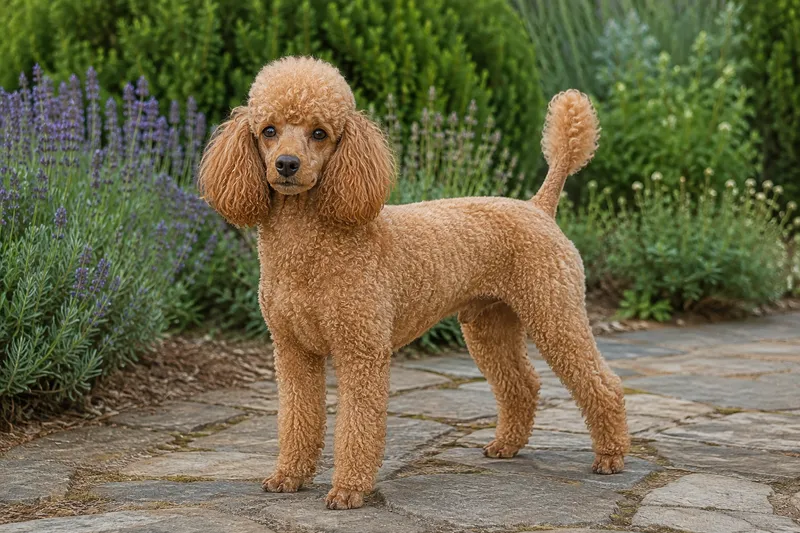
Miniature Poodle
The Miniature Poodle is a compact, squarely built, elegant dog with a long refined head, drop ears, an athletic frame, and a dense curly or corded coat. It should retain the proportions and sound movement of the larger…
Tanıyan kuruluşlar: AKC · ANKC · +5
Boyut
Küçük
Ağırlık
4.5–7 kg
Yaşam süresi
13–15 yıl
Irk Özellikleri
Enerji Seviyesi
Yüksek enerji
Enerji Seviyesi: 4 / 5
Düşük enerjiYüksek enerjiÇocuk / Aile Uyumu
Yüksek uyum
Çocuk / Aile Uyumu: 4 / 5
Düşük uyumYüksek uyumTüy Bakımı
Yoğun bakım ihtiyacı
Tüy Bakımı: 5 / 5
Az bakımYoğun bakımEğitilebilirlik
Çok kolay eğitilir
Eğitilebilirlik: 5 / 5
Zor eğitilirKolay eğitilirApartman / Ev Yaşamına Uygunluk
Apartmana çok uygun
Apartman / Ev Yaşamına Uygunluk: 5 / 5
Geniş alan / bahçe gerekirApartmana çok uygunYalnız Kalma Toleransı
Yarım gün zorlanır
Yalnız Kalma Toleransı: 2 / 5
Sürekli eşlik isterUzun yalnızlığa dayanırİlk Kez Sahiplenecekler İçin Uygunluk
Birçok ilk sahip için uygun
İlk Kez Sahiplenecekler İçin Uygunluk: 4 / 5
Deneyimli sahip gerekirİlk kez sahiplenmeye çok uygunDiğer Evcil Hayvanlarla Uyum
Genellikle diğer evcil hayvanlarla iyi anlaşır
Diğer Evcil Hayvanlarla Uyum: 4 / 5
Tek evcil hayvanlı ev daha uygunDiğer hayvanlarla çok uyumlu
The Miniature Poodle is a compact, squarely built, elegant dog with a long refined head, drop ears, an athletic frame, and a dense curly or corded coat. It should retain the proportions and sound movement of the larger Poodle rather than appear fragile or exaggerated; major standards generally place the variety between approximately 28 and 38 centimetres at the shoulder.
The variety was developed by selectively reducing the size of larger Poodles while preserving their intelligence, trainability, and water-dog heritage. Although now widely kept as a companion, the Miniature Poodle remains an energetic and capable dog that can retrieve, swim, learn complex behaviors, and work closely with a handler.
Its combination of portable size and substantial athletic ability distinguishes it from both the smaller Toy Poodle and the larger Standard Poodle. Miniature Poodles can excel in obedience, agility, scent work, tracking, assistance tasks, and many other activities, but they require far more mental engagement and coat care than their decorative appearance may suggest.
Miniature Poodles are commonly alert, lively, affectionate, and highly responsive to training. They tend to notice changes in their surroundings quickly and can be effective watchdogs, although unmanaged alertness may develop into frequent barking.
They usually learn household routines and new behaviors rapidly, but this intelligence can also make repetition boring. Short reward-based sessions, varied challenges, early recall work, and calm exposure to people, animals, sounds, surfaces, grooming, and unfamiliar places help produce a confident and adaptable adult.
A well-socialized Miniature Poodle can be an engaging family companion and may live successfully with respectful children and compatible pets. Individual sensitivity varies, so children should be supervised, introductions should be controlled, and the dog should have a quiet place where handling and attention are not forced.
Healthy adult Miniature Poodles need daily walks together with play, retrieving, training, or scent-based activities that exercise the mind. Their smaller size suits many urban homes, but indoor space does not replace regular outdoor activity, social contact, or structured opportunities to learn and explore.
The low-shedding coat grows continuously and mats when trapped hair is not removed. Even a short pet clip requires thorough brushing and combing to the skin plus clipping at regular intervals by a professional or capable owner; longer coats need more frequent bathing, drying, brushing, shaping, and inspection.
Routine care should also include dental hygiene, nail trimming, and ear checks, with hair around the eyes, feet, and sanitary areas kept clean and manageable. Miniature Poodles are strongly people-oriented, so alone-time skills should be introduced gradually and supported with exercise and enrichment rather than expecting the dog to tolerate frequent prolonged isolation.
Inherited eye disease and orthopedic problems are important considerations in Miniature Poodles. Progressive retinal atrophy can cause progressive vision loss, while patellar luxation, hip dysplasia, and Legg-Calve-Perthes disease can affect comfort and movement; limping, stiffness, pain, or reluctance to exercise warrants veterinary assessment.
Osteochondrodysplasia is a severe inherited disorder of cartilage and bone development for which an official DNA testing scheme is recognized in some countries. Other concerns reported in the variety can include epilepsy, dental disease, and ear or skin problems, while responsible selection should also consider longevity, temperament, and the health of close relatives.
Breeding dogs should have a current specialist eye examination, prcd-PRA DNA status, patella evaluation, and documented hip assessment. Prospective owners should also ask whether osteochondrodysplasia testing is relevant under the breeder's national program and should request verifiable results for both parents rather than accepting a general claim that testing was completed. This information is for general educational purposes and is not a substitute for diagnosis or treatment by a veterinarian.
Tanıyan kuruluşlar
Bu ırkı listelerinde tutan bağımsız kayıt kuruluşları. Ayrıntı için rozete dokunun.
Bu statüler kuruluşların kayıt ve yarışma sistemlerindeki konumu gösterir; sağlık, kalite veya üstünlük puanı değildir.
AKCTam tanınma (Full recognition)https://www.akc.org/dog-breeds/poodle-standard/ ANKCTam tanınma (Full recognition)https://www.dogsaustralia.org.au/members/breeds/breed-standards/Poodle-%28Miniature%29 CKCTanınan ırk (Recognized breed)https://www.ckc.ca/en/Choosing-a-Dog/Choosing-a-Breed/Non-Sporting-Dogs/Poodle-Miniature FCIKesin tanıma (Definitive recognition)https://www.fci.be/en/nomenclature/POODLE-172.html NZKCTanınan ırk (Recognised breed)https://www.dogsnz.org.nz/breeds/info/poodle-miniature/760 RKCIrk kaydı (Breed Register)https://www.royalkennelclub.com/search/breeds-a-to-z/breeds/utility/poodle-miniature/ UKCTam tanınma (Full recognition)https://www.ukcdogs.com/poodle
Sık sorulan sorular
How is a Miniature Poodle different from a Toy or Standard Poodle?
The principal distinction is size, with major standards generally placing Miniature Poodles between approximately 28 and 38 centimetres at the shoulder. They should retain the same balanced outline and athletic Poodle character while standing between the smaller Toy and larger Standard varieties.
Are Miniature Poodles good family dogs?
A well-socialized Miniature Poodle can be an affectionate, playful, and highly trainable family companion. Children should handle the dog respectfully and interactions should be supervised because individual dogs differ in sensitivity and tolerance.
How much exercise does a Miniature Poodle need?
Most healthy adults need daily walks plus active play, retrieving, training, scent games, or another mentally engaging activity. The exact amount should reflect age, health, conditioning, and individual drive rather than relying only on the dog's small size.
Can a Miniature Poodle live in an apartment?
Yes, the variety can adapt very well to apartment living when exercise, toilet access, training, enrichment, and companionship are reliable. Owners should also teach calm indoor behavior and manage alert barking before it becomes an established habit.
Can Miniature Poodles be left alone during the day?
Miniature Poodles can learn to tolerate reasonable periods alone, but frequent prolonged isolation is poorly suited to their social and intelligent nature. Alone-time training should progress gradually, with exercise, enrichment, and dependable interaction arranged around absences.
Do Miniature Poodles shed, and are they hypoallergenic?
They usually release relatively little loose hair because shed hairs tend to remain caught within the curly coat. No dog is guaranteed to be hypoallergenic, so anyone with allergies should spend time with the individual dog and seek medical guidance before committing.
How much grooming does a Miniature Poodle need?
A short pet trim still requires regular brushing and combing to the skin plus clipping at consistent intervals by a professional or capable owner. Longer coats mat rapidly and require substantially more bathing, drying, brushing, shaping, and inspection.
What health screening should a Miniature Poodle breeder discuss?
A responsible breeder should provide verifiable specialist eye, patella, and hip evaluations together with prcd-PRA DNA status for both parents. Buyers should also ask whether osteochondrodysplasia DNA testing is recommended by the breeder's national program and request relevant family health information.
Miniature Poodle hakkında daha fazla
Pet profilleri yakında. Şimdilik güvenilir ırk bilgisine Irk Rehberi’nde devam edebilirsiniz.
Irk Rehberine Dön