

LaPerm
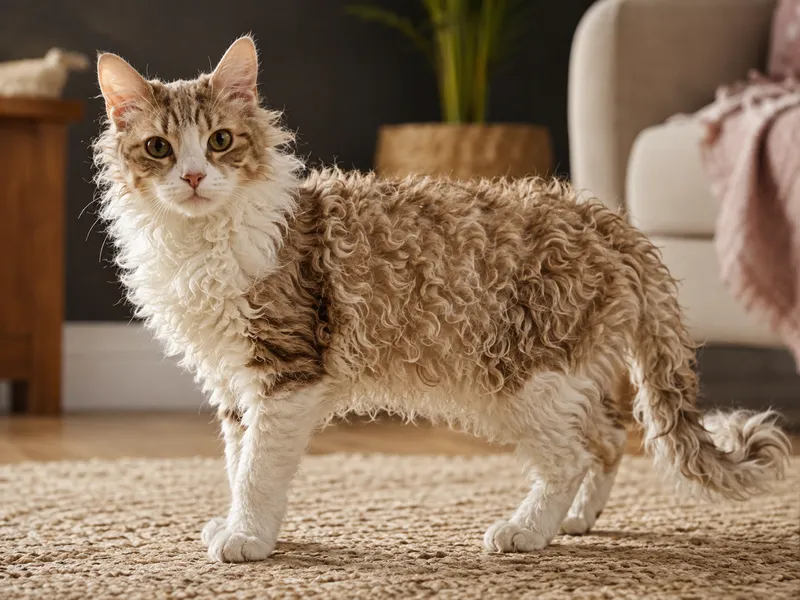
The LaPerm is a naturally occurring curly-coated breed that originated on a farm near The Dalles, Oregon, in 1982. A barn cat named Speedy produced a nearly hairless female kitten that later developed a soft curly coat.…
Tanıyan kuruluşlar: CFA · FIFe · +2
Boyut
Orta
Ağırlık
2.7–5.4 kg
Yaşam süresi
12–15 yıl
Irk Özellikleri
Enerji Seviyesi
Yüksek enerji
Enerji Seviyesi: 4 / 5
Düşük enerjiYüksek enerjiÇocuk / Aile Uyumu
Yüksek uyum
Çocuk / Aile Uyumu: 4 / 5
Düşük uyumYüksek uyumTüy Bakımı
Orta bakım ihtiyacı
Tüy Bakımı: 3 / 5
Az bakımYoğun bakımEğitilebilirlik
Kolay eğitilebilir
Eğitilebilirlik: 4 / 5
Zor eğitilirKolay eğitilirApartman / Ev Yaşamına Uygunluk
Apartmana çok uygun
Apartman / Ev Yaşamına Uygunluk: 5 / 5
Geniş alan / bahçe gerekirApartmana çok uygunYalnız Kalma Toleransı
Yarım gün zorlanır
Yalnız Kalma Toleransı: 2 / 5
Sürekli eşlik isterUzun yalnızlığa dayanırİlk Kez Sahiplenecekler İçin Uygunluk
Birçok ilk sahip için uygun
İlk Kez Sahiplenecekler İçin Uygunluk: 4 / 5
Deneyimli sahip gerekirİlk kez sahiplenmeye çok uygunDiğer Evcil Hayvanlarla Uyum
Genellikle diğer evcil hayvanlarla iyi anlaşır
Diğer Evcil Hayvanlarla Uyum: 4 / 5
Tek evcil hayvanlı ev daha uygunDiğer hayvanlarla çok uyumlu
The LaPerm is a naturally occurring curly-coated breed that originated on a farm near The Dalles, Oregon, in 1982. A barn cat named Speedy produced a nearly hairless female kitten that later developed a soft curly coat. Named Curly, she became the foundation of a population of curly-coated cats and eventually an organized breeding programme developed by Linda Koehl.
This is a medium-sized, moderately built and muscular cat with a semi-foreign body, medium boning, relatively long legs, and a modified wedge-shaped head with gently rounded contours. The expressive eyes are almond-shaped at rest and appear rounder when alert, while the medium-to-large ears may carry curly furnishings.
The LaPerm represented on this Atlas page has the longer coat form, with a light, airy, springy semi-long coat that stands away from the body and forms loose waves, curls, or ringlets rather than a dense woolly covering. Mature cats may develop a curly neck ruff and a plumed tail. BondPals maintains LaPerm Shorthair as a separate registry entry and Atlas page.
LaPerms are generally affectionate, intelligent, curious, active, and strongly interested in people. Many follow family members through the home, seek physical contact, sit on laps or shoulders, and use their paws to attract attention while remaining less continuously vocal than some highly talkative breeds.
Their farm-cat background is reflected in an alert and playful temperament. Retrieving games, wand toys, climbing furniture, food puzzles, and reward-based training provide useful outlets for curiosity and activity. Many remain playful throughout adulthood while also readily settling down for close contact with familiar people.
Well-socialized LaPerms commonly live successfully with respectful children, compatible cats, and cat-friendly dogs. They generally value companionship and involvement in household life, so repeated prolonged isolation is less suitable than a home offering dependable social contact.
The semi-long LaPerm coat looks elaborate but is usually relatively easy to maintain because it is light and airy rather than heavily undercoated. Gentle combing once or twice a week is sufficient for many cats, with additional grooming when seasonal shedding or individual coat density makes it necessary.
Use a wide-toothed or other gentle comb and avoid repeatedly pulling the curls straight. Small tangles should be separated carefully before they tighten. If bathing is necessary, gentle towel drying or natural drying helps preserve the characteristic curl better than aggressive brushing or high-heat blow drying.
Routine care should also include dental hygiene, nail trimming, clean litter facilities, daily interactive play, climbing and scratching opportunities, and measured portions of a complete life-stage-appropriate diet. Because coat density can fluctuate, persistent hair loss, redness, itching, or other skin changes should receive veterinary assessment.
Published LaPerm-specific clinical health research remains limited, and no single inherited disorder is firmly established as a defining breed-wide condition. The breed developed from a spontaneous curly-coat mutation within a domestic cat population, and the absence of a well-established breed-specific disease should not be interpreted as a guarantee that every individual or family line will be free from inherited or acquired illness.
The molecular cause of the characteristic LaPerm curl has not yet been definitively established. Genetic research has identified candidate genomic regions associated with the curly phenotype, but a universally validated causal coat variant and breed-specific health panel are not currently established. Coat appearance or a commercial coat-trait result should therefore not be treated as complete health clearance.
Prospective owners should request veterinary records and family information covering longevity, causes of death, cardiac and kidney health, eye health, mobility, reproductive outcomes, and recurrent problems identified within the breeder's lines. Evidence-based testing appropriate to documented ancestry or known family problems may be useful, but broad DNA panels should not be presented as complete LaPerm health clearance. This information is for general educational purposes and is not a substitute for diagnosis or treatment by a veterinarian.
Tanıyan kuruluşlar
Bu ırkı listelerinde tutan bağımsız kayıt kuruluşları. Ayrıntı için rozete dokunun.
Bu statüler kuruluşların kayıt ve yarışma sistemlerindeki konumu gösterir; sağlık, kalite veya üstünlük puanı değildir.
CFAŞampiyona (Championship)https://cfa.org/breed/laperm/ FIFeTam tanınmış (Fully recognised)https://fifeweb.org/cats/breeds/laperm-longhair-shorthair/ GCCFŞampiyona statüsü (Championship status)https://www.gccfcats.org/getting-a-cat/choosing/cat-breeds/laperm/ TICAŞampiyona (Championship)https://tica.org/breed/laperm/
Sık sorulan sorular
Are LaPerms good family cats?
LaPerms are generally affectionate, playful, and strongly interested in their people. They can suit many families that provide regular companionship, interactive play, gentle handling, and opportunities to climb and explore.
Are LaPerms good with children?
Many well-socialized LaPerms live successfully with respectful children. Adults should supervise younger children, encourage gentle handling of the curly coat, and make sure the cat can leave whenever it wants a break.
Do LaPerms get along with other pets?
They generally have good potential to live with compatible cats and cat-friendly dogs after gradual introductions. Individual temperament still matters, and separate feeding, litter, hiding, and resting resources help reduce competition.
Can a LaPerm live in an apartment?
Yes. LaPerms can adapt very well to apartment life when they receive daily interactive play, climbing furniture, scratching surfaces, puzzle activities, and secure windows or balconies.
Can LaPerms be left alone during the day?
Many adults can manage ordinary short periods alone, but frequent prolonged isolation is less suitable for this people-oriented breed. A predictable routine and enrichment help, although they do not completely replace dependable social contact.
How much grooming does a LaPerm need?
Gentle combing once or twice a week is sufficient for many LaPerms because the coat is light and airy rather than heavily undercoated. More frequent attention may be needed during seasonal shedding or if individual areas begin to tangle.
What is the difference between a LaPerm and a LaPerm Shorthair?
They belong to the same breed family and share the same general body type, curly-coat characteristic, temperament tendencies, and health considerations. The LaPerm on this Atlas page has the longer semi-long curly coat with a fuller ruff and plumed tail, while the LaPerm Shorthair has a shorter springy coat and lower grooming needs.
What health screening should a LaPerm breeder provide?
There is currently no single validated LaPerm-specific DNA panel that provides complete health clearance. Ask for veterinary records, pedigree and family health history, longevity and causes of death, and an explanation of any genetic or clinical screening selected for risks known within the breeder's particular lines.
LaPerm hakkında daha fazla
Pet profilleri yakında. Şimdilik güvenilir ırk bilgisine Irk Rehberi’nde devam edebilirsiniz.
Irk Rehberine Dön