Bu ırk rehberi şu an İngilizce sunuluyor. Bu dil için tam çeviri henüz hazır değil.
Tanıyan kuruluşlar
Bu ırkı listelerinde tutan bağımsız kayıt kuruluşları. Ayrıntı için rozete dokunun.
Bu statüler kuruluşların kayıt ve yarışma sistemlerindeki konumu gösterir; sağlık, kalite veya üstünlük puanı değildir.
Irk Özellikleri
Yüksek enerji
Yüksek uyum
Düşük bakım ihtiyacı
Çok kolay eğitilir
Apartmanda iyi uyum
Çok kısa yalnızlık (birkaç saat)
Rehberlikle yönetilebilir
Genellikle diğer evcil hayvanlarla iyi anlaşır
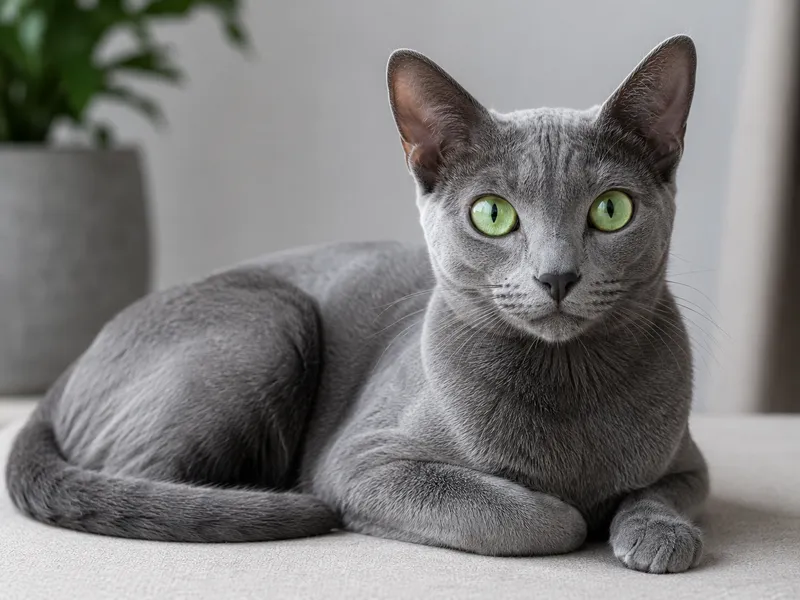
The Korat is a medium-sized, muscular cat with a broad chest, substantial weight for its apparent size, and a body that combines strength with smooth, graceful curves. Its distinctive head forms a heart shape when viewed from the front, while the large, luminous eyes mature toward a vivid peridot green.
The breed occurs in only one accepted color: blue with silver tipping. Its short, fine single coat lies close to the body, with lighter roots, deeper blue along the hair shaft, and silver at the tips creating a luminous halo effect. Kittens may temporarily show faint tabby markings, and the full eye color and silver sheen can take several years to develop.
Known in Thailand as the Si-Sawat cat, the Korat appears among the traditional good-luck cats described in the historic Thai Cat-Book Poems. The first documented breeding pair imported into the United States, Nara and Darra, arrived in 1959, helping establish the modern international pedigree population while maintaining direct ancestry from Thailand.
Are Korats good family cats?
Korats can be affectionate, playful, and devoted family companions. They often live well with respectful children, although their sensitivity means that gentle handling and a predictable home environment are important.
Do Korats get along with other pets?
Many well-socialized Korats live successfully with compatible cats and cat-friendly dogs. Some can become jealous when another animal receives attention, so introductions should be gradual and each pet should receive dependable individual interaction.
Can a Korat live in an apartment?
A Korat can adapt well to apartment living when provided with daily interactive play, climbing opportunities, puzzle activities, scratching surfaces, and regular companionship. The quality of enrichment is more important than the physical size of the home.
Can Korats be left alone during the day?
Most adult Korats can manage ordinary short absences, but the breed generally dislikes frequent prolonged isolation or being ignored. A compatible companion, predictable routine, and extensive enrichment may help in households whose members work away from home.
How much grooming does a Korat need?
The short single coat normally needs only light weekly brushing or combing. Dental care, nail trimming, ear checks, and body-condition monitoring usually require more attention than coat maintenance.
What colors can a Korat be?
A pedigree Korat is accepted only in blue with silver tipping. Cats from related lines that have different colors or pointed patterns may be classified under other breed names by some registries, but they are not shown as Korats.
How is a Korat different from a Russian Blue or Chartreux?
These are separate breeds with different histories and standards. The Korat has a heart-shaped head, a close-lying single coat with pronounced silver tipping, and a compact muscular body, while the Russian Blue and Chartreux have different head structures, coat textures, and breed-specific eye requirements.
What health tests should a Korat breeder provide?
A responsible breeder should provide documented DNA results for both Korat GM1 and Korat GM2 gangliosidosis. Buyers should also ask about family longevity, known illnesses, causes of death, and veterinary screening practices.
- Tür
- Cat
Korat hakkında daha fazla
Pet profilleri ve genel hesaplar yakında açılacak. Şimdilik doğrulanmış ırk rehberlerini atlas’ta keşfedebilirsin.