

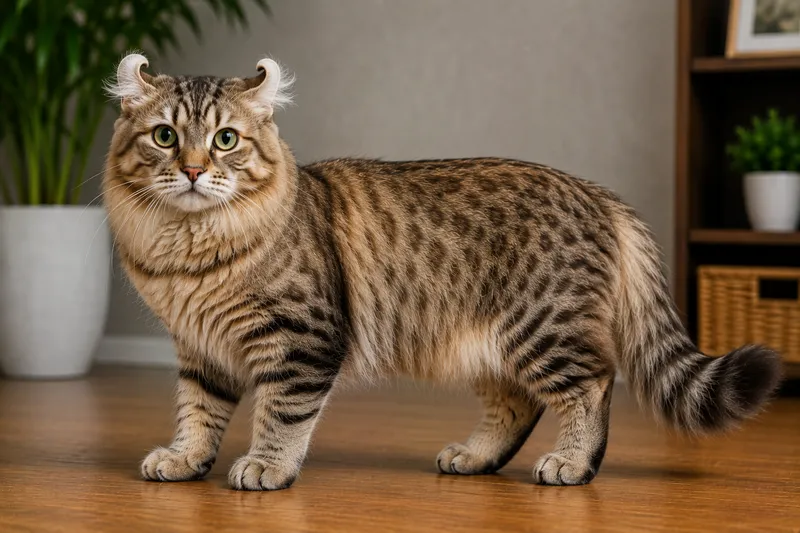
Highlander
The Highlander is a modern North American breed developed to create a powerful domestic cat with a distinctive big-cat appearance. Organized development began in 2004, the Highlander name was adopted in 2005, and TICA…
Tanıyan kuruluşlar: TICA
Boyut
Büyük
Ağırlık
4.5–9.1 kg
Yaşam süresi
10–15 yıl
Irk Özellikleri
Enerji Seviyesi
Çok enerjik
Enerji Seviyesi: 5 / 5
Düşük enerjiYüksek enerjiÇocuk / Aile Uyumu
Yüksek uyum
Çocuk / Aile Uyumu: 4 / 5
Düşük uyumYüksek uyumTüy Bakımı
Orta bakım ihtiyacı
Tüy Bakımı: 3 / 5
Az bakımYoğun bakımEğitilebilirlik
Kolay eğitilebilir
Eğitilebilirlik: 4 / 5
Zor eğitilirKolay eğitilirApartman / Ev Yaşamına Uygunluk
Orta — koşullara bağlı
Apartman / Ev Yaşamına Uygunluk: 3 / 5
Geniş alan / bahçe gerekirApartmana çok uygunYalnız Kalma Toleransı
Yarım gün zorlanır
Yalnız Kalma Toleransı: 2 / 5
Sürekli eşlik isterUzun yalnızlığa dayanırİlk Kez Sahiplenecekler İçin Uygunluk
Rehberlikle yönetilebilir
İlk Kez Sahiplenecekler İçin Uygunluk: 3 / 5
Deneyimli sahip gerekirİlk kez sahiplenmeye çok uygunDiğer Evcil Hayvanlarla Uyum
Genellikle diğer evcil hayvanlarla iyi anlaşır
Diğer Evcil Hayvanlarla Uyum: 4 / 5
Tek evcil hayvanlı ev daha uygunDiğer hayvanlarla çok uyumlu
The Highlander is a modern North American breed developed to create a powerful domestic cat with a distinctive big-cat appearance. Organized development began in 2004, the Highlander name was adopted in 2005, and TICA first accepted the breed into Preliminary New Breed competition in 2008. It later progressed through the new-breed programme and reached TICA Championship status in 2025.
The Highlander is medium to large, muscular, athletic, and rectangular in body, with substantial boning and hind legs that are slightly longer than the forelegs. The head is broad and inverted-pear-shaped, with a wide nose, strong chin, prominent whisker pads, and medium-to-large eyes. The ears are wide at the base and remain erect while the upper portion forms a loose backward curl of no more than about 90 degrees.
The Highlander has a naturally short, thick tail that should contain at least about one inch of bone in an adult and should not extend beyond the hock. Kinks and curves are permitted. In TICA terminology, Highlander represents the longhaired form, while Highlander Shorthair is listed separately; the long coat can reach roughly 2.5 inches and falls smoothly along the sides with longer shaggy belly hair.
Highlanders are generally playful, energetic, confident, and strongly interested in people. Many enjoy greeting family members, following household activity, and becoming involved in games or anything novel happening around them while remaining relatively quiet vocally.
Their muscular build is matched by an active temperament. Chasing games, retrieving, tall climbing furniture, food puzzles, interactive toys, and reward-based training provide useful outlets for their energy and curiosity. A home without regular physical and mental activity may be frustrating for an individual that enjoys frequent engagement.
Well-socialized Highlanders may live successfully with respectful children, compatible cats, and cat-friendly dogs. Individual confidence and play intensity vary, so introductions should still be gradual. Their substantial size and energetic play style should be considered when pairing them with very small, elderly, or timid companion animals.
The long Highlander coat generally benefits from thorough combing once or twice a week, with additional attention during seasonal shedding. Check the belly, armpits, hindquarters, areas behind the ears, toe furnishings, and tail for developing tangles, and remove small knots before they tighten against the skin.
The loosely curled ears should be handled gently and should never be deliberately bent farther backward or repeatedly manipulated. Inspect the visible ear regularly for excess debris, redness, discharge, odor, swelling, or discomfort, and seek veterinary assessment rather than inserting cleaning tools deeply into the ear canal.
The short tail should likewise never be pulled, twisted, or straightened. Daily care should also include vigorous interactive play, sturdy climbing and scratching furniture, dental hygiene, nail trimming, clean litter facilities, and measured portions of a complete life-stage-appropriate diet. Any change in gait, jumping ability, tail movement, or willingness to play deserves attention.
Published Highlander-specific clinical health research remains limited, and no single inherited disease has been established through large studies as a breed-wide disorder. The breed combines two conspicuous structural traits, loosely curled ears and a naturally shortened tail, but the precise genetic basis and long-term clinical implications of those traits have not been adequately characterized in Highlander populations.
Short tails in domestic cats can arise through several different genetic mechanisms, some of which have different implications for vertebral development. It should therefore not be assumed that the Highlander bobtail is genetically identical to the Manx, Japanese Bobtail, American Bobtail, or another bobtailed breed without specific evidence. Normal gait, hind-limb strength, spinal comfort, tail mobility, urinary function, and bowel function are useful practical health observations in breeding cats and kittens.
Prospective owners should request veterinary records and family information covering mobility, spinal or tail abnormalities, urinary and bowel function, chronic ear problems, reproductive outcomes, neonatal losses, longevity, and causes of death. Breeders should combine clinical examination, pedigree management, genetic diversity, and any line-specific testing supported by evidence rather than treating appearance or a broad commercial DNA panel as complete health clearance. This information is for general educational purposes and is not a substitute for diagnosis or treatment by a veterinarian.
Tanıyan kuruluşlar
Bu ırkı listelerinde tutan bağımsız kayıt kuruluşları. Ayrıntı için rozete dokunun.
Bu statüler kuruluşların kayıt ve yarışma sistemlerindeki konumu gösterir; sağlık, kalite veya üstünlük puanı değildir.
Sık sorulan sorular
Are Highlanders good family cats?
Highlanders are generally playful, affectionate, and strongly interested in household activity. They can suit active families that provide regular interaction, vigorous play, climbing opportunities, and respectful handling.
Are Highlanders good with children?
Many well-socialized Highlanders can live successfully with respectful children. Adults should supervise young children, prevent pulling or bending of the ears or short tail, and allow the cat to leave whenever it wants a break.
Do Highlanders get along with other pets?
They commonly have good potential to live with compatible cats and cat-friendly dogs after gradual introductions. Their size and energetic play style may be overwhelming for a very timid or fragile companion, so interactions should be observed carefully.
Can a Highlander live in an apartment?
Apartment living is possible when the home provides substantial vertical territory, sturdy climbing furniture, vigorous daily play, scratching areas, puzzle activities, and secure windows or balconies. A minimally enriched small space is less suitable for this active breed.
Can Highlanders be left alone during the day?
Many adults can manage ordinary short absences, but frequent prolonged isolation is not ideal for this playful and people-oriented cat. A predictable routine and varied enrichment can help, although they do not replace dependable social interaction.
How much grooming does a Highlander need?
The longhaired Highlander generally benefits from combing once or twice a week, with additional care during seasonal shedding. The belly, armpits, hindquarters, toe furnishings, areas behind the ears, and tail should be checked regularly for tangles.
What is the difference between a Highlander and a Highlander Shorthair?
They belong to the same TICA breed group and share the muscular body, loosely curled ears, bobtail, and general temperament. The Highlander has the longer coat, while Highlander Shorthair has a dense short coat and usually requires less grooming.
What health information should a Highlander breeder provide?
Ask for veterinary and family records covering normal gait, spinal and tail comfort, urinary and bowel function, chronic ear problems, reproductive outcomes, kitten losses, longevity, and causes of death. Highlander-specific genetic health evidence remains limited, so no single DNA test currently provides complete breed-wide clearance.
Highlander hakkında daha fazla
Pet profilleri yakında. Şimdilik güvenilir ırk bilgisine Irk Rehberi’nde devam edebilirsiniz.
Irk Rehberine Dön