

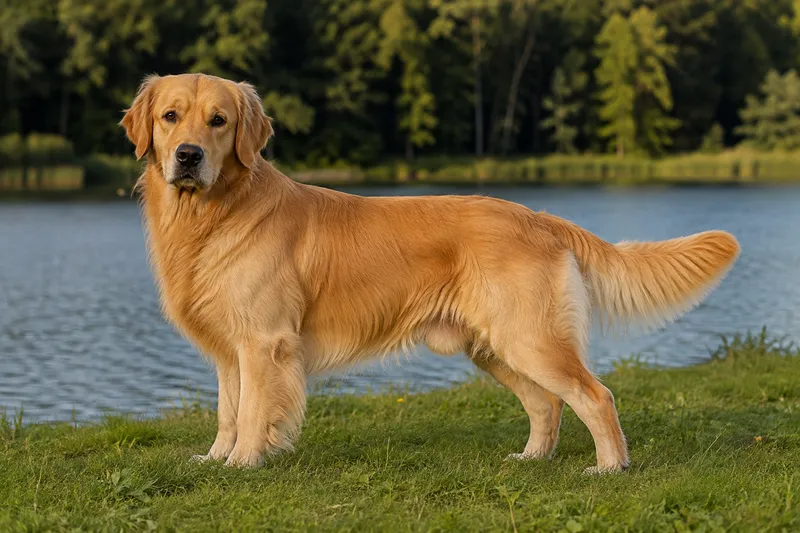
Golden Retriever
The Golden Retriever is a large, balanced gundog with a broad yet refined head, friendly expression, drop ears, and a powerful, athletic body. Its dense, water-resistant double coat may be straight or wavy, with…
Tanıyan kuruluşlar: AKC · ANKC · +5
Boyut
Büyük
Ağırlık
24.9–34 kg
Yaşam süresi
10–12 yıl
Irk Özellikleri
Enerji Seviyesi
Çok enerjik
Enerji Seviyesi: 5 / 5
Düşük enerjiYüksek enerjiÇocuk / Aile Uyumu
Çok yüksek uyum
Çocuk / Aile Uyumu: 5 / 5
Düşük uyumYüksek uyumTüy Bakımı
Yüksek bakım ihtiyacı
Tüy Bakımı: 4 / 5
Az bakımYoğun bakımEğitilebilirlik
Çok kolay eğitilir
Eğitilebilirlik: 5 / 5
Zor eğitilirKolay eğitilirApartman / Ev Yaşamına Uygunluk
Küçük alanda zorlanır
Apartman / Ev Yaşamına Uygunluk: 2 / 5
Geniş alan / bahçe gerekirApartmana çok uygunYalnız Kalma Toleransı
Yarım gün zorlanır
Yalnız Kalma Toleransı: 2 / 5
Sürekli eşlik isterUzun yalnızlığa dayanırİlk Kez Sahiplenecekler İçin Uygunluk
Birçok ilk sahip için uygun
İlk Kez Sahiplenecekler İçin Uygunluk: 4 / 5
Deneyimli sahip gerekirİlk kez sahiplenmeye çok uygunDiğer Evcil Hayvanlarla Uyum
Genellikle diğer evcil hayvanlarla iyi anlaşır
Diğer Evcil Hayvanlarla Uyum: 4 / 5
Tek evcil hayvanlı ev daha uygunDiğer hayvanlarla çok uyumlu
The Golden Retriever is a large, balanced gundog with a broad yet refined head, friendly expression, drop ears, and a powerful, athletic body. Its dense, water-resistant double coat may be straight or wavy, with feathering on the neck, chest, legs, underside, and tail in shades of gold or cream.
The breed was developed in Scotland during the nineteenth century, with Lord Tweedmouth's breeding records documenting the deliberate development of yellow retrievers for work on land and in water. The Royal Kennel Club recognized these dogs as yellow or golden retrievers in the early twentieth century, and the name Golden Retriever became established soon afterward.
Golden Retrievers remain capable sporting dogs as well as popular companions. Their intelligence, retrieving instinct, and cooperative nature also support work in assistance, search, detection, therapy, obedience, and other activities, but they still require daily exercise, training, social contact, and regular coat care.
Golden Retrievers are typically friendly, confident, responsive, and strongly oriented toward people. Many greet strangers and familiar people with enthusiasm, so their sociable reputation should be supported by early training that teaches calm greetings, reliable recall, and appropriate self-control.
The breed is usually eager to learn and often responds very well to reward-based training. Retrieving, swimming, scent games, obedience work, and practical tasks can provide productive outlets for both physical energy and problem-solving ability.
Well-socialized Golden Retrievers often live successfully with respectful children and compatible pets. Their size, strength, and youthful exuberance can still knock over small children or unsettle cautious animals, making supervision and gradual introductions important despite the breed's generally amiable character.
Golden Retrievers need substantial daily physical activity together with training and mental enrichment. Walks can be combined with retrieving games, scent work, safe swimming, and structured play, while puppies and adolescents should avoid repetitive high-impact exercise that is unsuitable for their stage of growth.
The feathered double coat should be brushed several times each week and more frequently during heavy seasonal shedding. Particular attention should be given to areas prone to tangles, and routine care should include nail trimming, dental hygiene, and ear checks, especially after swimming.
Food portions and treats should be adjusted to the individual dog's age, health, workload, and body condition. Maintaining a lean, healthy weight is especially important for joint health, and regular veterinary care can help monitor mobility, skin, ears, eyes, heart, and overall condition.
Hip and elbow dysplasia are important orthopedic concerns in Golden Retrievers. Responsible breeding programs commonly use formal hip and elbow evaluations, while owners can help reduce avoidable joint stress by maintaining an appropriate body condition and using age-suitable exercise.
Eye disease, including inherited forms of progressive retinal atrophy, and certain cardiac conditions are also relevant to the breed. Ichthyosis can be identified through DNA testing, and cancer is an important health concern in Golden Retrievers, although no screening program can eliminate every risk.
Prospective owners should request documented hip and elbow results, a current specialist eye examination, and an appropriate cardiac examination, together with relevant DNA test results such as GR-PRA1, GR-PRA2, and ichthyosis when applicable. This information is for general educational purposes and is not a substitute for diagnosis or treatment by a veterinarian.
Tanıyan kuruluşlar
Bu ırkı listelerinde tutan bağımsız kayıt kuruluşları. Ayrıntı için rozete dokunun.
Bu statüler kuruluşların kayıt ve yarışma sistemlerindeki konumu gösterir; sağlık, kalite veya üstünlük puanı değildir.
AKCTam tanınma (Full recognition)https://www.akc.org/dog-breeds/golden-retriever/ ANKCTam tanınma (Full recognition)https://dogsaustralia.org.au/members/breeds/breed-standards/Golden-Retriever CKCTanınan ırk (Recognized breed)https://www.ckc.ca/en/Choosing-a-Dog/Choosing-a-Breed/Sporting-Dogs/Retriever-Golden FCIKesin tanıma (Definitive recognition)https://www.fci.be/en/nomenclature/GOLDEN-RETRIEVER-111.html NZKCTanınan ırk (Recognised breed)https://www.dogsnz.org.nz/breeds/info/golden-retriever/320 RKCIrk kaydı (Breed Register)https://www.royalkennelclub.com/search/breeds-a-to-z/breeds/gundog/retriever-golden/ UKCTam tanınma (Full recognition)https://www.ukcdogs.com/golden-retriever
Sık sorulan sorular
Are Golden Retrievers good family dogs?
Golden Retrievers are often affectionate, sociable family companions when their needs for exercise, training, and contact are met. Their size and youthful enthusiasm mean interactions with young children should be supervised and children should be taught respectful handling.
How much exercise does a Golden Retriever need?
Most healthy adult Golden Retrievers need substantial daily exercise plus mental activity. Walks, retrieving, training, scent games, and safe swimming can be combined, with intensity adjusted for age, fitness, weather, and veterinary guidance.
Can a Golden Retriever live in an apartment?
A Golden Retriever can live in an apartment if the household consistently provides enough outdoor activity, training, enrichment, and toilet breaks. The breed's size, energy, shedding, and need for companionship can make apartment life demanding.
Can Golden Retrievers be left alone during the day?
Adult Golden Retrievers can learn to manage reasonable periods alone, but they are highly social and may struggle with frequent prolonged isolation. Gradual alone-time training, exercise, safe enrichment, and dependable interaction before and after absences are important.
How much grooming does a Golden Retriever need?
The feathered double coat should usually be brushed several times each week and more often during periods of heavy shedding. Owners should also check areas that tangle easily and maintain routine nail, dental, and ear care.
Are Golden Retrievers easy to train?
Golden Retrievers are generally highly trainable because they tend to be intelligent, cooperative, and motivated by food, play, or retrieving. Consistent reward-based training is still necessary for calm greetings, loose-lead walking, recall, impulse control, and safe behavior around distractions.
Do Golden Retrievers get along with other pets?
Many well-socialized Golden Retrievers live successfully with other dogs and cats. Introductions should still be gradual and supervised, and individual behavior around birds or small animals should be assessed because chasing and retrieving instincts vary.
What health screening should a Golden Retriever breeder discuss?
A responsible breeder should discuss documented hip and elbow evaluations, a current specialist eye examination, and an appropriate cardiac examination. Relevant DNA testing may include GR-PRA1, GR-PRA2, and ichthyosis, but buyers should understand that no set of tests can guarantee lifelong health.
Golden Retriever hakkında daha fazla
Pet profilleri yakında. Şimdilik güvenilir ırk bilgisine Irk Rehberi’nde devam edebilirsiniz.
Irk Rehberine Dön