

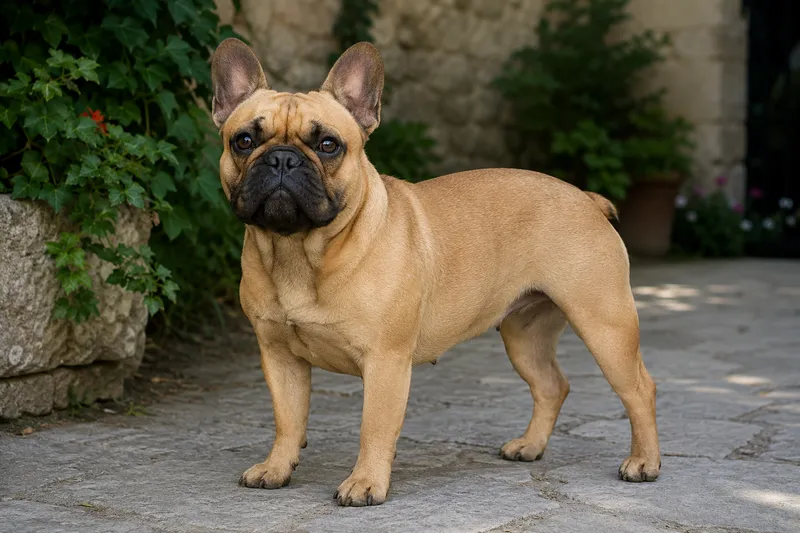
French Bulldog
The French Bulldog is a small, sturdy companion dog with a compact body, large upright bat ears, a short muzzle, and a naturally short tail. Its close, smooth coat requires little grooming and commonly occurs in fawn,…
Tanıyan kuruluşlar: AKC · ANKC · +5
Boyut
Küçük
Ağırlık
8–14 kg
Yaşam süresi
10–12 yıl
Irk Özellikleri
Enerji Seviyesi
Orta enerji
Enerji Seviyesi: 3 / 5
Düşük enerjiYüksek enerjiÇocuk / Aile Uyumu
Yüksek uyum
Çocuk / Aile Uyumu: 4 / 5
Düşük uyumYüksek uyumTüy Bakımı
Hafif bakım ihtiyacı
Tüy Bakımı: 2 / 5
Az bakımYoğun bakımEğitilebilirlik
Kolay eğitilebilir
Eğitilebilirlik: 4 / 5
Zor eğitilirKolay eğitilirApartman / Ev Yaşamına Uygunluk
Apartmana çok uygun
Apartman / Ev Yaşamına Uygunluk: 5 / 5
Geniş alan / bahçe gerekirApartmana çok uygunYalnız Kalma Toleransı
Yarım gün zorlanır
Yalnız Kalma Toleransı: 2 / 5
Sürekli eşlik isterUzun yalnızlığa dayanırİlk Kez Sahiplenecekler İçin Uygunluk
Rehberlikle yönetilebilir
İlk Kez Sahiplenecekler İçin Uygunluk: 3 / 5
Deneyimli sahip gerekirİlk kez sahiplenmeye çok uygunDiğer Evcil Hayvanlarla Uyum
Genellikle diğer evcil hayvanlarla iyi anlaşır
Diğer Evcil Hayvanlarla Uyum: 4 / 5
Tek evcil hayvanlı ev daha uygunDiğer hayvanlarla çok uyumlu
The French Bulldog is a small, sturdy companion dog with a compact body, large upright bat ears, a short muzzle, and a naturally short tail. Its close, smooth coat requires little grooming and commonly occurs in fawn, brindle, or pied patterns within major breed standards.
The breed developed during the nineteenth century from small Bulldogs taken from England to France, where they became associated with working communities and later fashionable Parisian society. Breeding in France established the distinctive companion now recognized internationally as the French Bulldog.
French Bulldogs often adapt well to urban homes because of their size and moderate exercise needs. That convenience comes with important responsibilities: their brachycephalic structure can affect breathing and temperature regulation, so prospective owners should prioritize functional health, responsible breeding, weight control, and careful management in warm weather.
French Bulldogs are typically affectionate, sociable, playful, and alert. Many form close bonds with their household and enjoy being involved in everyday activities, while their expressive behavior and occasional stubbornness can give them a distinctive personality.
They often respond well to short, positive training sessions using food, play, and praise. Early socialization and consistent practice remain important for polite greetings, calm handling, house training, recall, and confidence around unfamiliar people, animals, and environments.
Well-socialized French Bulldogs can live successfully with respectful children and compatible pets. Their compact build does not make them immune to injury, however, so interactions with young children or much larger dogs should be supervised and introductions should proceed gradually.
French Bulldogs benefit from daily activity, but exercise should be moderate and tailored to the individual dog's breathing, fitness, age, and the weather. Several short walks and play sessions are usually safer than prolonged strenuous exercise, especially in warm or humid conditions, and any labored breathing, weakness, or difficulty recovering warrants prompt attention.
The short coat generally needs weekly brushing. Facial folds and the area around the tail should be checked and kept clean and dry, while routine care should include nail trimming, dental hygiene, and ear checks. Because their front-heavy build makes many French Bulldogs poor swimmers, they should never be left unattended near pools or other bodies of water.
Food portions and treats should be measured to maintain a lean body condition, since excess weight can worsen breathing and joint stress. French Bulldogs are also highly social companions and may struggle with frequent long periods alone, making gradual alone-time training and dependable daily interaction important.
Brachycephalic obstructive airway syndrome, or BOAS, is a major health concern in French Bulldogs. Affected dogs may have noisy or labored breathing, reduced exercise tolerance, sleep disruption, or difficulty cooling themselves; these signs should not be dismissed as normal for the breed, and objective respiratory function assessment can support breeding and veterinary decisions.
Other relevant concerns include spinal and intervertebral disc problems, patellar luxation, hip or elbow dysplasia, eye disease, cardiac conditions, and inflammation within skin folds. Individual dogs vary, but the breed's structure can increase vulnerability to heat stress, breathing difficulty, eye injury, and mobility problems.
Prospective owners should request documented respiratory function assessment together with appropriate hip, elbow, patella, eye, and cardiac results, and should ask about juvenile hereditary cataract testing and any additional screening recommended in their region. This information is for general educational purposes and is not a substitute for diagnosis or treatment by a veterinarian.
Tanıyan kuruluşlar
Bu ırkı listelerinde tutan bağımsız kayıt kuruluşları. Ayrıntı için rozete dokunun.
Bu statüler kuruluşların kayıt ve yarışma sistemlerindeki konumu gösterir; sağlık, kalite veya üstünlük puanı değildir.
AKCTam tanınma (Full recognition)https://www.akc.org/dog-breeds/french-bulldog/ ANKCTam tanınma (Full recognition)https://dogsaustralia.org.au/members/breeds/breed-standards/French-Bulldog CKCTanınan ırk (Recognized breed)https://www.ckc.ca/en/Choosing-a-Dog/Choosing-a-Breed/Non-Sporting-Dogs/French-Bulldog FCIKesin tanıma (Definitive recognition)https://www.fci.be/en/nomenclature/FRENCH-BULLDOG-101.html NZKCTanınan ırk (Recognised breed)https://www.dogsnz.org.nz/breeds/info/french-bulldog/732 RKCIrk kaydı (Breed Register)https://www.royalkennelclub.com/search/breeds-a-to-z/breeds/utility/french-bulldog/ UKCTam tanınma (Full recognition)https://www.ukcdogs.com/french-bulldog
Sık sorulan sorular
Are French Bulldogs good family dogs?
French Bulldogs are often affectionate, playful family companions when they receive appropriate training, supervision, and daily interaction. Children should be taught respectful handling, and close supervision is important because the breed's compact body can still be injured by rough play.
How much exercise does a French Bulldog need?
Many healthy French Bulldogs do well with several short daily walks and play sessions rather than prolonged strenuous exercise. Activity should be adjusted for breathing, fitness, age, temperature, and humidity, with exercise stopped if the dog shows distress or recovers poorly.
Can a French Bulldog live in an apartment?
French Bulldogs often adapt very well to apartments because they are small and usually have moderate exercise needs. They still require daily activity, mental enrichment, toilet breaks, training, temperature control, and regular companionship.
Can French Bulldogs be left alone during the day?
Adult French Bulldogs can learn to manage reasonable periods alone, but many are strongly people-oriented and may struggle with frequent prolonged isolation. Gradual alone-time training, safe enrichment, and dependable interaction before and after absences are important.
Do French Bulldogs need much grooming?
The short coat generally needs only weekly brushing, but grooming involves more than coat care. Facial and tail folds should be checked and kept clean and dry, together with routine nail, dental, and ear care.
Are French Bulldogs easy to train?
French Bulldogs can learn quickly and often respond well to food, play, and praise, although some individuals can be persistent or easily distracted. Short, consistent reward-based sessions are useful for house training, calm handling, recall, and everyday manners.
Do French Bulldogs get along with other pets?
Many well-socialized French Bulldogs live successfully with compatible dogs and cats. Introductions should be gradual and supervised, with attention to individual temperament, play style, and the size difference between animals.
What health screening should a French Bulldog breeder discuss?
A responsible breeder should discuss respiratory function assessment and documented hip, elbow, patella, eye, and cardiac results. Buyers should also ask about juvenile hereditary cataract testing, relevant regional screening recommendations, and whether both parents can breathe, move, exercise, and recover comfortably.
French Bulldog hakkında daha fazla
Pet profilleri yakında. Şimdilik güvenilir ırk bilgisine Irk Rehberi’nde devam edebilirsiniz.
Irk Rehberine Dön