

Dachshund
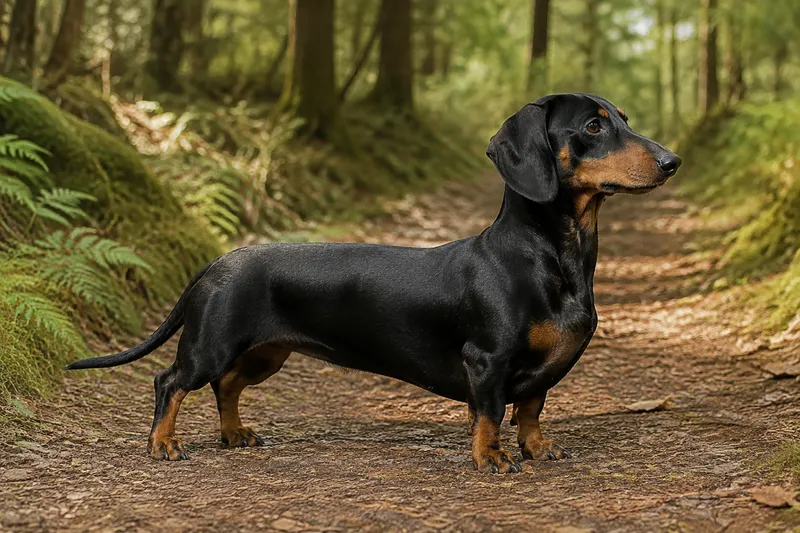
The Dachshund is a low, long-bodied, muscular hound with short legs, an alert expression, and a surprisingly capable working build. Smooth, long, and wire coats are recognized, while size classifications differ by…
Tanıyan kuruluşlar: AKC · ANKC · +5
Boyut
Küçük
Ağırlık
4–14.5 kg
Yaşam süresi
12–16 yıl
Irk Özellikleri
Enerji Seviyesi
Yüksek enerji
Enerji Seviyesi: 4 / 5
Düşük enerjiYüksek enerjiÇocuk / Aile Uyumu
Orta uyum
Çocuk / Aile Uyumu: 3 / 5
Düşük uyumYüksek uyumTüy Bakımı
Orta bakım ihtiyacı
Tüy Bakımı: 3 / 5
Az bakımYoğun bakımEğitilebilirlik
Orta eğitilebilirlik
Eğitilebilirlik: 3 / 5
Zor eğitilirKolay eğitilirApartman / Ev Yaşamına Uygunluk
Apartmanda iyi uyum
Apartman / Ev Yaşamına Uygunluk: 4 / 5
Geniş alan / bahçe gerekirApartmana çok uygunYalnız Kalma Toleransı
Yarım gün zorlanır
Yalnız Kalma Toleransı: 2 / 5
Sürekli eşlik isterUzun yalnızlığa dayanırİlk Kez Sahiplenecekler İçin Uygunluk
Rehberlikle yönetilebilir
İlk Kez Sahiplenecekler İçin Uygunluk: 3 / 5
Deneyimli sahip gerekirİlk kez sahiplenmeye çok uygunDiğer Evcil Hayvanlarla Uyum
Doğru sosyalleştirmeyle uyum sağlayabilir
Diğer Evcil Hayvanlarla Uyum: 3 / 5
Tek evcil hayvanlı ev daha uygunDiğer hayvanlarla çok uyumlu
The Dachshund is a low, long-bodied, muscular hound with short legs, an alert expression, and a surprisingly capable working build. Smooth, long, and wire coats are recognized, while size classifications differ by registry: some recognize standard and miniature dogs, and the FCI also recognizes the smaller Rabbit Dachshund.
The breed was developed in Germany for scent work above and below ground, particularly to pursue badger and other quarry. Its elongated outline and strong forequarters reflect that history, but a Dachshund should still move freely and remain fit rather than appear weak or exaggerated.
Modern Dachshunds can be engaging companions, tracking dogs, and participants in earthdog, scent, obedience, or other suitable activities. Prospective owners should be prepared for an independent hunting temperament, a strong voice, careful lifelong weight management, and practical measures that reduce avoidable strain on the spine.
Dachshunds are commonly bold, curious, lively, and persistent. They often form close bonds with their household and make alert watchdogs, but their hunting background can also produce determined scent-following, digging, chasing, and frequent barking.
They are intelligent but may not respond like a highly handler-focused working breed. Short reward-based sessions, early recall practice, calm handling, and positive exposure to people, dogs, sounds, surfaces, and routine care are more productive than force or repeated confrontation.
Many Dachshunds can live happily with respectful children and compatible pets, especially when socialized early. Because their backs are vulnerable and some individuals guard resources or dislike rough handling, adults should supervise children, provide a quiet resting area, and manage introductions to unfamiliar dogs or small animals.
Healthy adult Dachshunds need regular daily walks, opportunities to sniff, and games or training that engage the mind. Their short legs do not make them inactive, but exercise should suit the dog's age and condition, and repeated high jumps, uncontrolled stair use, rough play, and excess weight should be avoided.
Grooming depends on coat type. Smooth coats usually need light weekly brushing, long coats need more frequent brushing and combing around feathered areas, and wire coats need regular brushing plus periodic hand-stripping or skilled coat care; all varieties also require nail, dental, and ear care.
Keep the dog lean and lift it with the chest and hindquarters supported so the spine stays level. Ramps, barriers, nonslip surfaces, and thoughtfully placed furniture can reduce avoidable jumping, while gradual alone-time training and sufficient companionship help prevent distress or nuisance barking.
Intervertebral disc disease is the principal health concern associated with the Dachshund's long-backed, short-legged structure. It can cause pain and spinal cord injury, so sudden back or neck pain, an unsteady gait, limb weakness, loss of movement, or loss of bladder or bowel control requires urgent veterinary attention.
Other concerns can include patellar problems, cardiac disease, and inherited eye disorders, with some DNA tests applying only to particular coat or size varieties. Breeding two dapple-patterned Dachshunds together increases the risk of serious vision and hearing defects and should be avoided.
Prospective owners should request documented patella, cardiac, and specialist eye evaluations and ask whether the parents have been assessed through an available IVDD radiographic scheme. They should also request any variety-specific DNA results recommended by the relevant national breed program and remember that screening reduces uncertainty but cannot guarantee lifelong health. This information is for general educational purposes and is not a substitute for diagnosis or treatment by a veterinarian.
Tanıyan kuruluşlar
Bu ırkı listelerinde tutan bağımsız kayıt kuruluşları. Ayrıntı için rozete dokunun.
Bu statüler kuruluşların kayıt ve yarışma sistemlerindeki konumu gösterir; sağlık, kalite veya üstünlük puanı değildir.
AKCTam tanınma (Full recognition)https://www.akc.org/dog-breeds/dachshund/ ANKCTam tanınma (Full recognition)https://www.dogsaustralia.org.au/members/breeds/breed-standards/Dachshund---Standard-Long%2C-Standard-Smooth%2C-Standard-Wire%2C-Miniature-Long%2C-Miniature-Smooth%2C-Miniature-Wire CKCTanınan ırk (Recognized breed)https://www.ckc.ca/en/Choosing-a-Dog/Choosing-a-Breed/Hounds/Dachshund-Standard-Smooth FCIKesin tanıma (Definitive recognition)https://www.fci.be/en/nomenclature/DACHSHUND-148.html NZKCTanınan ırk (Recognised breed)https://www.dogsnz.org.nz/breeds/select-breed RKCIrk kaydı (Breed Register)https://www.royalkennelclub.com/search/breeds-a-to-z/breeds/hound/dachshund-smooth-haired/ UKCTam tanınma (Full recognition)https://www.ukcdogs.com/breed-standards/dachshund
Sık sorulan sorular
Are Dachshunds good family dogs?
A well-socialized Dachshund can be an affectionate and entertaining family companion. Children should be taught to handle the dog gently and interactions should be supervised because rough lifting, squeezing, or jumping can injure the back.
How much exercise does a Dachshund need?
Most healthy adults benefit from daily walks, sniffing opportunities, and short training or play sessions rather than an inactive lifestyle. The amount and intensity should reflect age, health, conditioning, and weather, with repeated high-impact jumping and uncontrolled stair use minimized.
Can a Dachshund live in an apartment?
Yes, a Dachshund can adapt well to an apartment if daily exercise, toilet access, enrichment, and companionship are reliable. Owners must also manage the breed's tendency to bark and should use nonslip surfaces or ramps where the home layout would otherwise encourage repeated jumping.
Can Dachshunds be left alone during the day?
Dachshunds can learn to tolerate reasonable periods alone, but many are strongly attached to their people and may bark or become distressed when isolation is prolonged. Alone-time training should begin gradually, with exercise, enrichment, and dependable social contact provided around absences.
How much grooming does a Dachshund need?
Grooming varies by coat: smooth coats need light brushing, long coats need regular combing to prevent tangles, and wire coats need brushing plus periodic stripping or skilled trimming. Every variety also needs routine nail care, dental hygiene, and ear checks.
Are Dachshunds easy to train?
Dachshunds are clever and capable learners, but their independent hunting style can make them persistent and easily distracted by scent. Brief reward-based sessions, early recall work, consistent household rules, and patient repetition usually work better than harsh corrections.
Do Dachshunds get along with other pets?
Many Dachshunds live successfully with other dogs or cats when introductions are controlled and early experiences are positive. Compatibility varies, and their prey drive means supervision and secure management may be necessary around small pets or wildlife.
What health screening should a Dachshund breeder discuss?
A responsible breeder should provide documented patella, cardiac, and specialist eye evaluations and discuss IVDD radiographic screening where an official scheme is available. Buyers should also ask about variety-specific DNA tests, the health of close relatives, and why two dapple-patterned parents should never be bred together.
Dachshund hakkında daha fazla
Pet profilleri yakında. Şimdilik güvenilir ırk bilgisine Irk Rehberi’nde devam edebilirsiniz.
Irk Rehberine Dön